

Optimizing Internal Communications at Flagger Force: Challenges and Solutions
Flagger Force partnered with Cerkl Broadcast to enhance their internal communications, streamline information delivery, and maintain brand consistency within the company.

2000 Employees

Transportation

US, Across 10+ States
About Flagger Force
Flagger Force is a traffic control company committed to education, innovation, and technology. They aim to improve work zone safety for every motorist, pedestrian, and worker traversing our roadways. The company manages over 1,000 job sites daily throughout the eastern United States.
Flagger Force’s top priority is ensuring everyone makes it home safely. This includes their employees, clients, and sometimes even an impatient motorist! Flagger Force’s Tamara Palmer, Internal Communications Manager, and David Rosati, Internal Communications Coordinator, told us more about their communication challenges and how Cerkl Broadcast has provided solutions.

Company Challenges
Creating a Unified Employee Experience
Communications content was different for their in-office and in-the-field audiences.
Measuring the Impact of their Communication Efforts
The company needed a system that enabled them to measure their communication efforts.
Managing their Rapidly Growing Audience
Ensuring the right audiences received the right communications at the right time.
When the Flagger Force team of over 2,000 employees reached out to Cerkl, they were engaged in more than 10 states. These dispersed employees form the backbone of their company’s operations. Flagger Force communicates with, and connects this diffused workforce with their custom mobile app. Launched in 2018, their award-winning communication channel enjoys a 98% voluntary activation rate, with more than 60% of employees logging in daily. It is the go-to source for field communications and resources. However, their successes with app-based communications for these dispersed field employees did not translate one-to-one with their office team. Compared to communications within the field, they stated, “Our office communication channels had been standardized and relied on the benefit of in-person interactions.”
Additionally, email was the primary communication channel. Most office staff needed to check their email to retrieve information. This meant that they sometimes missed the rich content, visually stylized, and on-brand messaging curated and published via the employee communication mobile app used by Flagger Force. It was important to offer a mechanism that would activate high levels of office employee engagement, supporting their informational needs and augmenting company culture, regardless of size and scale.
As a result, the company’s internal communicators searched for a new solution that would allow employees to receive information (via email) in the office.
Communicators within the company had been doing their best to produce good, relevant content as quickly as possible. They were acutely aware of the need to focus on critical issues that would help to keep up with the company’s success and growth. But without a system that provided data on open, read, and click-through rates, they were missing a key aspect of measuring their efforts.
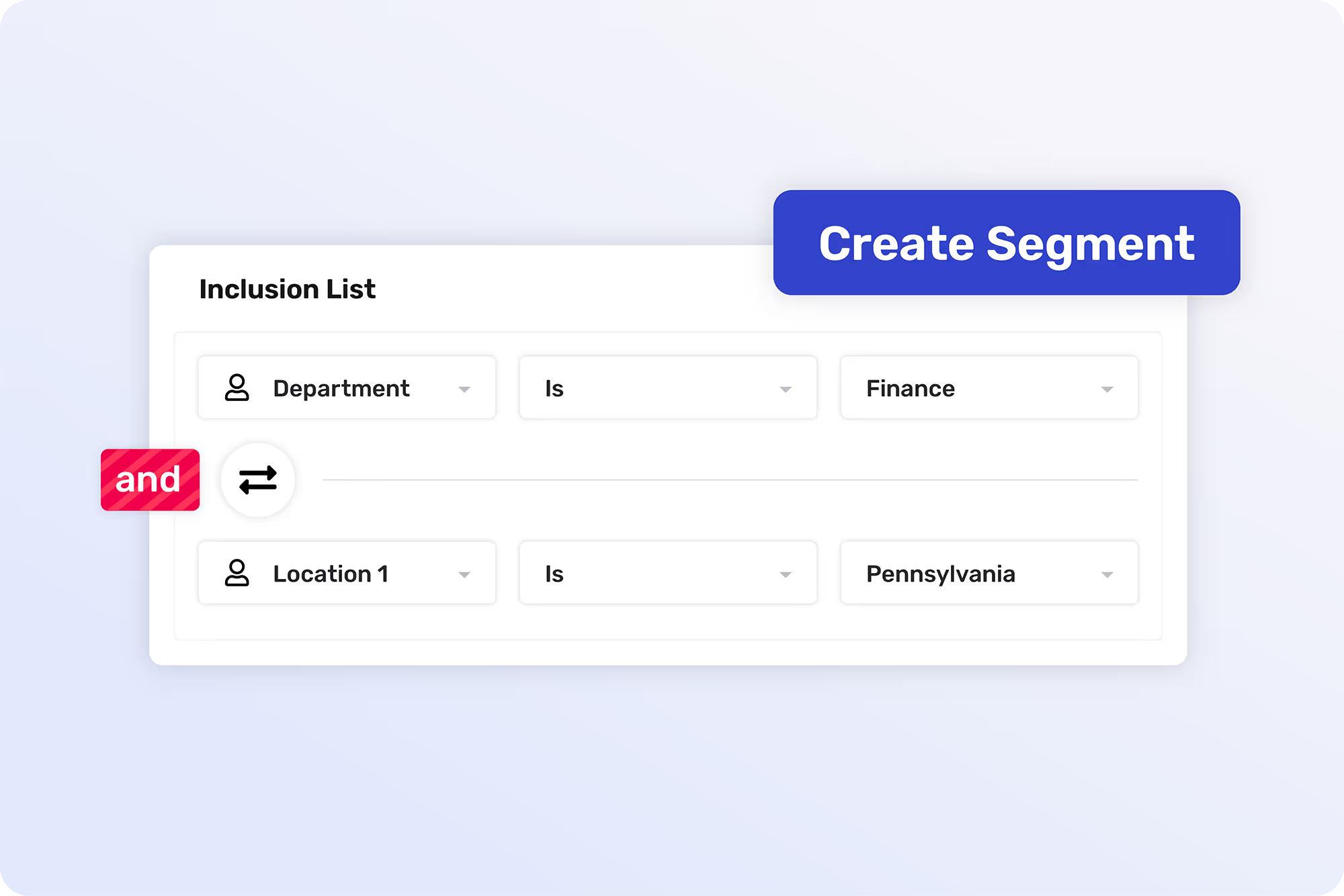
“Other than office-based in-person socialization, it was difficult to know if people were reading and enjoying our content.” Additionally, the internal communications team email campaigns relied on previously created Outlook email groups populated with employees according to their assigned departments. The team needed the flexibility to rapidly create distribution groups based on communication objectives, greatly enhancing their ability to send targeted messaging.

They figured this was a good problem to have for the company, but it presented challenges in making sure the right audiences received the right communications at the right time.
Goals and Objectives

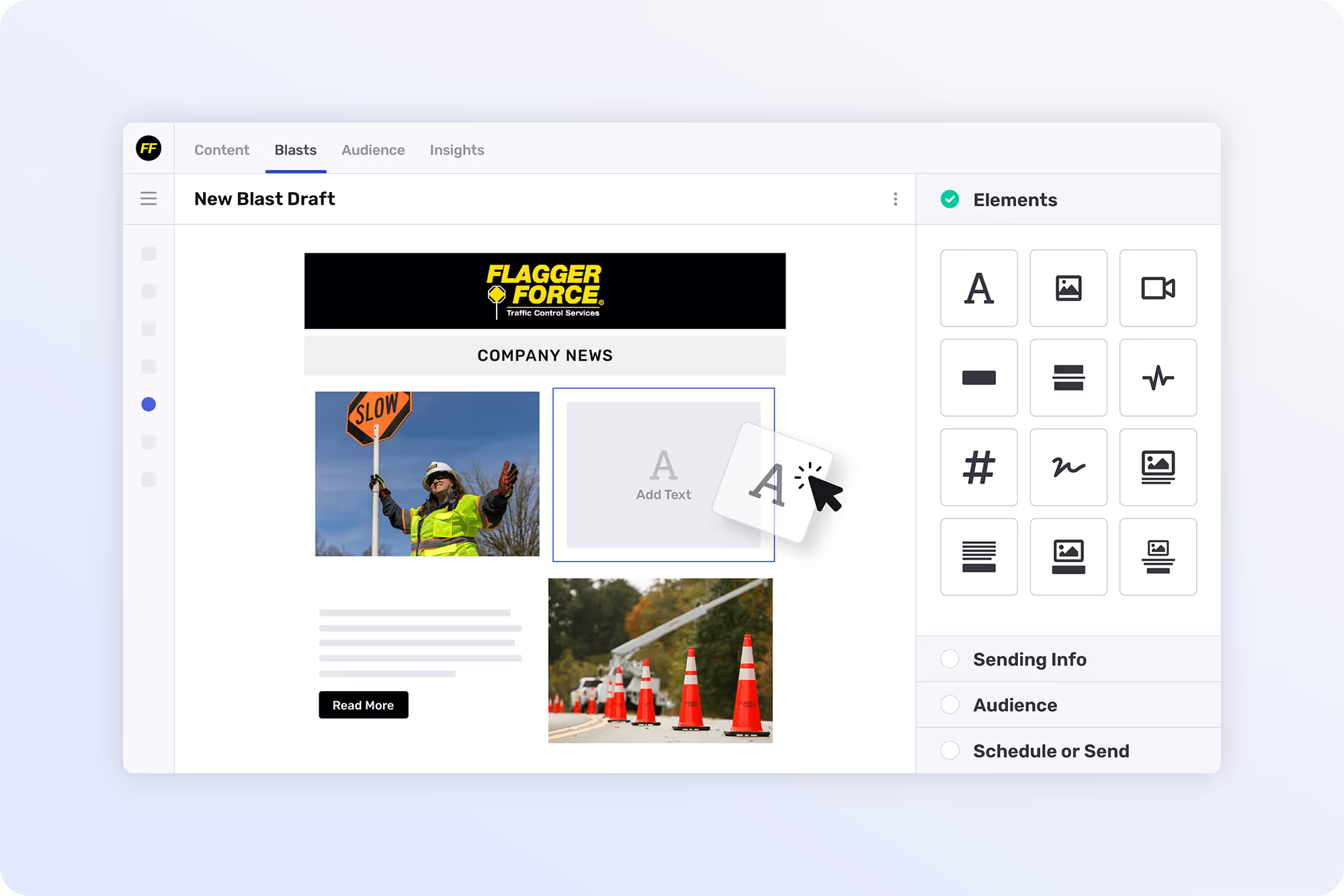
Create Consistently Branded and Professional Content
Track Communications and Measure Open Rates and Click Rates
Deliver Content to the Right People at the Right Time
The Flagger Force goals were relatively simple. They wanted unmistakable branded and professional-looking content that they could ensure was delivered to the right people on time.
Their decision-makers considered all the other features included in the Broadcast package a bonus. “Our core focus was on the organization, the look, and the system’s communication capabilities.”
Ultimately, as Flagger Force increased its employee count and expanded its footprint into new states, it needed to disseminate on-brand messaging efficiently and scalably to all office staff. Communications needed to be trackable to measure open rates and click rates, allowing them to define KPIs and make analytical data-driven decisions.
It was essential that their brand identity was present within all their communications.
Getting it done
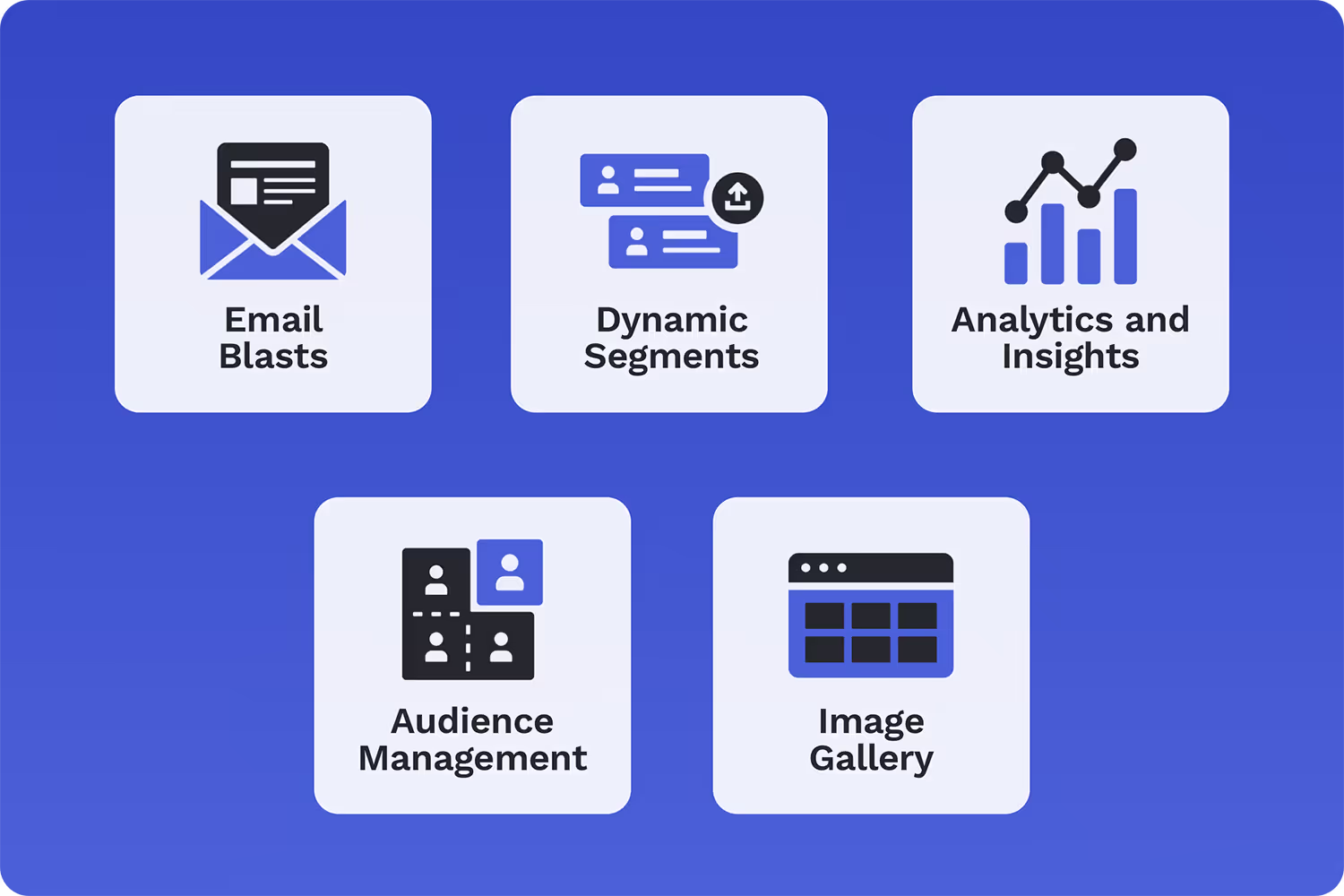
The main features Flagger Force has utilized to resolve their challenges include:
- Email Blasts
- Dynamic Segments
- Analytics and Insights
- Audience Management
- Image Gallery
Broadcast Solutions and Feedback...
Email Blasts
Analytics and Insights
Intranet Upgrade
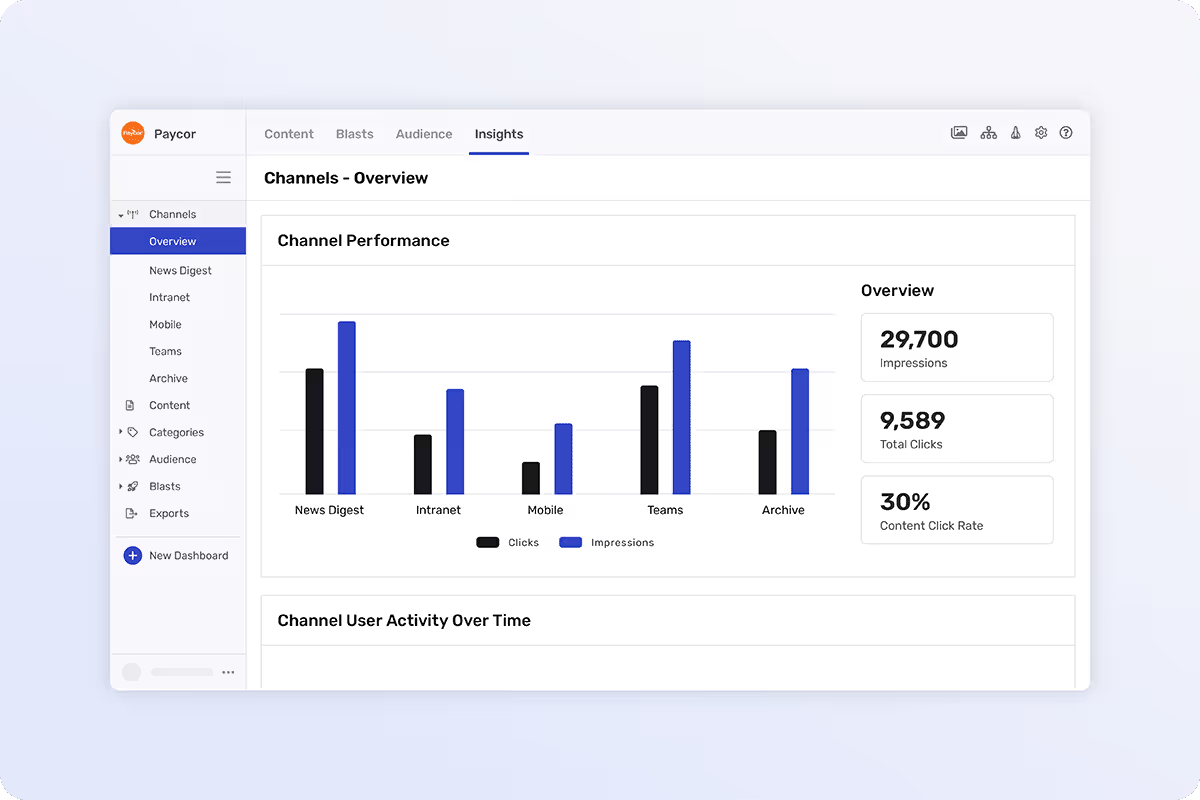
Audience Management
Implementation of Broadcast Solutions
Flagger Force has integrated Broadcast into its human resources (HR) team, which has been primarily where they’ve had the most seamless transition. Additionally, their public affairs team, which operates separately from HR, sends updates to the leadership team.
Their internal communications team recognized Broadcast as the primary “tool” in delivering impactful, up-to-date information to Flagger Force decision-makers. By collaborating with the public affairs team, updates on company-impacting legislation are delivered promptly to bolster the executive team’s strategic planning.
Ultimately, the Flagger Force internal communications team recognizes Broadcast as a “tool” that helps to keep their decision-makers up-to-date on legislation that impacts their company. From here, they are training the technology team to utilize the hardware-related system better and improve the account preparation done by their teams when onboarding new employees into the growing company.
Results and Metrics*
58
%
68
%
2.56
x
It’s vital to measure the results of any internal communication strategy. Keeping track of results and metrics ensures that communication efforts are effective and identifies areas for improvement to achieve organizational goals.
When Flagger Force decided to implement the Cerkl Broadcast platform, it had minimal email communications data about its internal communications outcomes. Now, it has ‘a lot of data.”
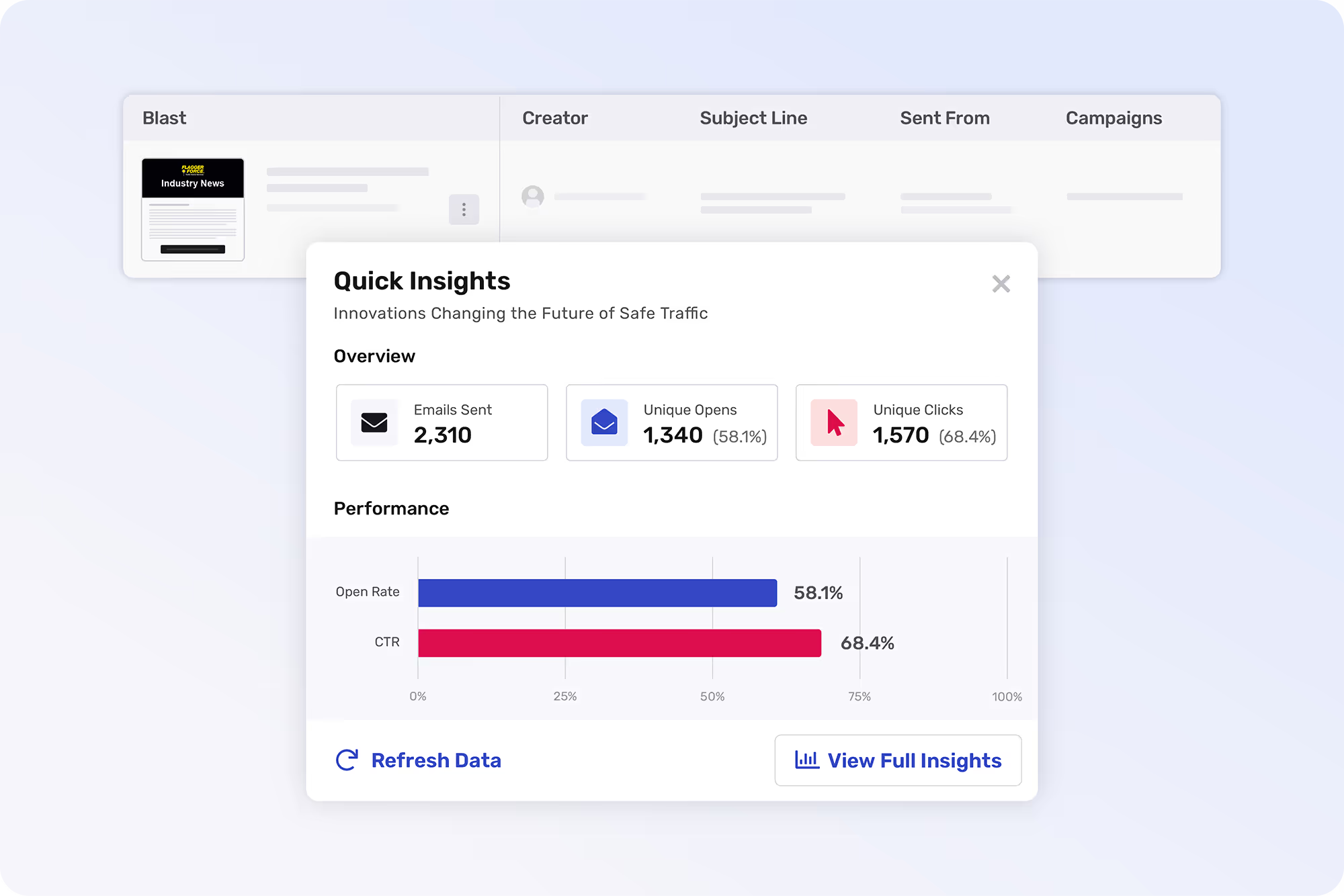
In little over a year, they’ve sent over 85 internal communications via the Broadcast system. Because they lacked a baseline of email open and read rates data, “We haven’t been able to measure a statistically accurate increase. But I can tell you we aim to have our internal communications achieve a minimum of 50% open rates. Beyond that, click-through rates are even more important for internal communications. We try to meet a 20% click-through rate threshold.
So far, our data shows that out of all our communications, we have a 58% open rate and a 68% click-through rate.”
* Average outperformance is calculated by adding the rate at which each goal is met and dividing by the number of goals
From the Communicator...
The Flagger Force internal communications team has found Cerkl Broadcast easy to use, especially for “an engaging content creation process.”
Tamara Palmer, Internal Communications Manager

Let's discuss your internal communication goals.
Schedule a ChatMore Case Studies...

Church & Dwight
See how Cerkl Broadcast powered Church & Dwight to reimagine its employee engagement strategy, including its internal communications approach.
Paycor
See how Cerkl Broadcast powered Paycor to send 614K Email Blasts with a 34% click rate and achieve 68% audience reach with My Paycor News.
Stanislaus State
Stanislaus State proved the ROI of their communications with 68% audience personalization and 34% of employees revisiting content via Cerkl Broadcast.