AI internal communications authenticity is the gap between a polished draft and a workforce that trusts the person who signed it. AI can write your all-staff email in minutes. It cannot make anyone believe the message belongs to a leader they know, or prove who engaged after send. That belief gap is where employees stop granting the sender credit, even when the facts are clean and the subject line looks urgent.
Cerkl Foundations closes the operational half of that gap this week. Purpose-built internal email plus Insights move you from "we sent it" toward who engaged, without waiting on a new AI policy deck.
The belief gap behind a polished all-staff
Picture a Thursday afternoon. The CEO needs a note on a restructure. A communicator feeds the talking points into a model, then edits for brand and hits send from the executive alias. The message is tidy and Legal is calm. Within an hour, managers hear the same questions in every stand-up. "Did she write this?" "Is this the real plan or corporate filler?" Opens look fine while belief stays thin.
Reading and believing are related jobs, and they fail in different places. A post on how agentic AI still cannot make employees read a newsletter covers the attention problem. Belief is the next failure, and it lands after the open. Employees discount the voice and wait for a human to confirm what the email already said. Leadership thinks the update landed. The floor treats it as noise with a signature.
How AI drafts erode leadership voice
Leadership voice internal communications works when employees can hear a person they recognize. AI drafts tend toward generic warmth and phrases the leader never uses in a room. The grammar is clean while the presence stays thin. Over a quarter of similar notes, employees learn that important news arrives in a voice that could belong to anyone.
That pattern costs more than style points. People who stop trusting the signature route around the channel. They ping their manager or wait for the town hall, then act late. Wrong facts are one failure mode, and AI hallucinations in internal communications deserve their own accountability loop. Hollow voice is quieter. The content can be accurate and fail to persuade, because the audience no longer grants the sender credit.
Volume makes it worse, because faster drafts invite more all-staff traffic. More polished notes train people to skim for keywords and ignore the rest. Employees stop trusting authenticity in the pile of similar notes the same way they do after a single weak paragraph.
What AI internal communications authenticity requires
AI internal communications authenticity runs as practice you can schedule.
A named human owns the message. Someone with authority reviews the draft and accepts the send. The model is a drafting assistant. The accountable person stays on the byline.
The voice has to match how that leader speaks under normal conditions. Cut the borrowed cadence. Keep the concrete detail the leader would say out loud. Raise the review bar for change news and hard updates.
Proof after send closes the loop. Authentic AI-assisted internal communications fail when you cannot see who engaged and who ignored the note. Belief is hard to score on a survey alone in the first forty-eight hours. Engagement and acknowledgments give you an operational proxy for who confirmed and who needs a conversation.
Keep AI in the draft seat; keep humans on belief-critical jobs
AI earns its seat on first drafts and reformats. Those jobs save hours without pretending to be a relationship. Put the same tool in charge of a CEO note after layoffs or a safety directive that must feel owned, and you ask software to do social work it cannot do.
A practical rule holds. If employees will ask "do you mean this," a human must own the send. If the job is "turn these bullets into a readable first pass," AI can start the page. The wider map of where AI belongs in the communications stack sorts more jobs the same way. Authenticity is the filter for leadership and trust-sensitive work inside that map.
Write the review step into the workflow so deadline pressure cannot erase it. Require a voice pass from the named sender or their designated editor. Ban "ship the first model output" for high-stakes audiences. Keep a short list of phrases your leaders never use, and strip them before send.
Internal emails shouldn't be a black box.
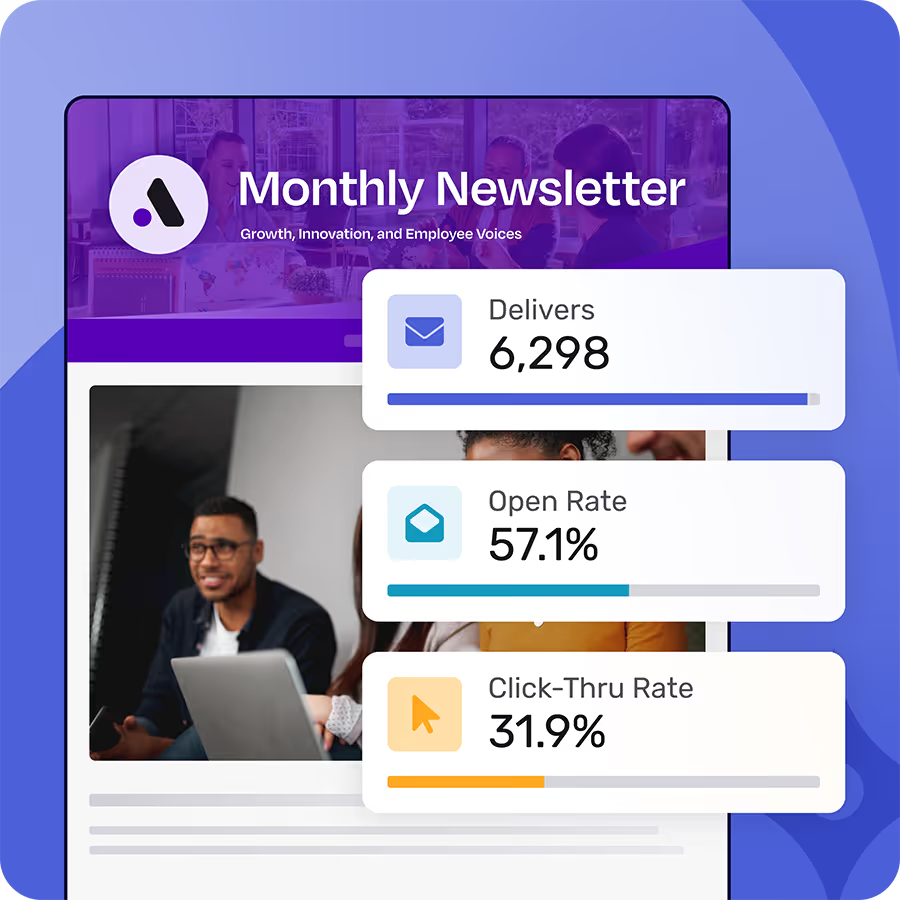
Foundations shows who opened, clicked, and engaged with your employee communications so you know what’s actually working. All for free - forever.
Learn more about FoundationsMeasurement as the authenticity reality check
You cannot manage belief with send status. An aggregate open rate will not tell you whether the warehouse leads who must change a process engaged with the note, or whether corporate staff opened it three times while the plant stayed dark. To prove employees read an AI-drafted message in a way leadership respects, you need resolution down to people and segments.
Per-employee engagement and acknowledgments turn a vague trust worry into a follow-up list. Retarget the miss list and leave people who already confirmed alone. Ask managers to speak with the groups that stayed dark. Authenticity becomes an operating system with human voice on the way out and proof on the way back.
Cerkl Broadcast analytics and Foundations Insights give communicators a view of engagement on email sends so the second touch is narrow. Once the scorecard names people who have not engaged, AI draft debates quiet down. Communicators optimize for coverage and conversation.
Start on Foundations, prove reads before you scale AI drafts
You do not need a multi-quarter AI governance program to change the all-staff habit. Cerkl Foundations is free forever for purpose-built internal email. Build the blast, target a real audience with Audience Manager, send, and review engagement in Insights. That stack is enough to pair careful human-owned leadership notes with proof of who engaged.
Foundations-level work gets you four concrete wins this week.
- Leadership and change notes aimed at the people who must act
- Segments you reuse under pressure so you skip another company-wide list
- A view of who engaged so follow-up is human and specific
- Room to use AI for drafts without pretending the draft is the strategy
Cross-channel depth and richer personalization are the next step when the program needs them. That depth lives on Omni AI. Foundations keeps targeting and email Insights on the free plan. Be clear with stakeholders about the line. Free targeting and email Insights are enough to retire "we sent the AI note" as proof of belief. Omni AI analytics depth is how larger programs keep one view when the same story travels further.
The internal communications question stays stable at every tier. The update has to sound like a person employees trust and reach the people who must act. If the plan ends at a polished draft, the plan is incomplete.
Bottom line
AI can write your all-staff email. It cannot make anyone believe it. AI internal communications authenticity is human-owned leadership voice plus proof of engagement after send. Keep models in the draft seat and keep leaders on belief-critical jobs. Measure who engaged and follow up with the miss list. Start on Foundations if you need a purpose-built email path this week. Organizations that keep trust while they adopt AI will treat belief as an operating problem they can schedule and measure.
If you're frustrated with Outlook or Gmail for your employee emails, we understand.
That's why we built Foundations. Purpose-built for internal email with all the features you wish you had - drag-and-drop email builder, analytics, employee segmentation and much more. All for free (forever). No credit card, no contracts, no setup fees.
Learn more about FoundationsFAQ
What is AI internal communications authenticity?
AI internal communications authenticity is the practice of keeping a named human accountable for voice and judgment on employee messages, while using AI for drafting support, then proving who engaged after send. It separates a polished all-staff note from a workforce that trusts the sender.
Can AI write leadership emails without hurting trust?
AI can prepare a first draft. Trust holds when a leader or designated editor owns the voice pass and raises the bar for change news and hard updates. Shipping unedited model output from an executive alias is what trains employees to discount the channel.
How do you prove employees read an AI-drafted message?
Use per-employee engagement and acknowledgments, then retarget people who did not engage. Aggregate open rate is a weak proxy. Named coverage among the audience that must act is the operational answer leaders can use. Foundations Insights and Broadcast analytics support that view on email sends.
Where should AI stop in employee communications?
Keep AI on drafts and reformats. Stop short of letting the model own belief-critical leadership sends. Authentic AI-assisted communications programs draw that line in the workflow, then verify reach with measurement so the draft is not mistaken for belief.