

Internal Communications Blog

Our Most Recent Internal Comms Research
Internal Communications Measurement That Proves Employees Read It
Internal communications measurement fails when open rates and ROI hide who engaged. Prove employees read it with per-employee opens and acknowledgments.
How AI Is Changing the Internal Communications Role
September 14, 2026
Cerkl vs Workshop: Free Forever Plus Proof vs a Paid Newsletter Floor
September 10, 2026
How Approval Workflows Work for Internal Comms
September 3, 2026
Internal Email Communication
How AI Is Changing the Internal Communications Role
How AI is changing the internal communications role: faster drafts, same trust and read gaps. The job shifts to judgment, targeting, and proof of landing.
Cerkl vs Workshop: Free Forever Plus Proof vs a Paid Newsletter Floor
Cerkl vs Workshop compared honestly: free forever Foundations with per-employee proof against Workshop's paid newsletter floor and 14-day trial.
Reach Every Employee in Internal Communications, Then Prove Who Read It
Reaching every employee in internal communications starts with delivery. The half that matters is proving which employees read the message, by name.
AI Can Write Your All-Staff Email. It Can't Make Anyone Believe It
AI internal communications authenticity means human-owned leadership voice plus proof who read the message. Drafts alone cannot make employees believe it.
Internal Communication Strategy
Internal Communications Measurement That Proves Employees Read It
Internal communications measurement fails when open rates and ROI hide who engaged. Prove employees read it with per-employee opens and acknowledgments.
How Approval Workflows Work for Internal Comms
Approval workflows for internal communications put Create vs Approve gates before content can send. How Broadcast Content Hub Queue works, and how to start.
How MyNews Works for Internal Comms
MyNews internal communications delivers a personalized employee news feed per person. How Broadcast News Digests work, where they change the job, and how to start.
Audience Sync for Internal Communications vs Static Lists
Audience sync internal communications keeps HRIS and directory data live so you reach the right people. How it works, why static lists fail, and how to start.
Internal Communications Measurement
Free Internal Communications Platform: What "Free Forever" Should Actually Mean
Free internal communications platform buyers need: free forever vs trial vs demo wall, public pricing checks, and what Cerkl Foundations includes.

SharePoint Personalization: A 2026 Playbook for Internal Communications
SharePoint personalization for internal comms: a 2026 playbook to target employee content by audience, reach every channel, and measure what actually landed.
The AI Execution Gap in Internal Communications (And Why "Generation" Isn't the Answer)
The AI execution layer is what separates real AI for internal communications from generation-only tools. Here are the four layers, and what to ask your vendor.
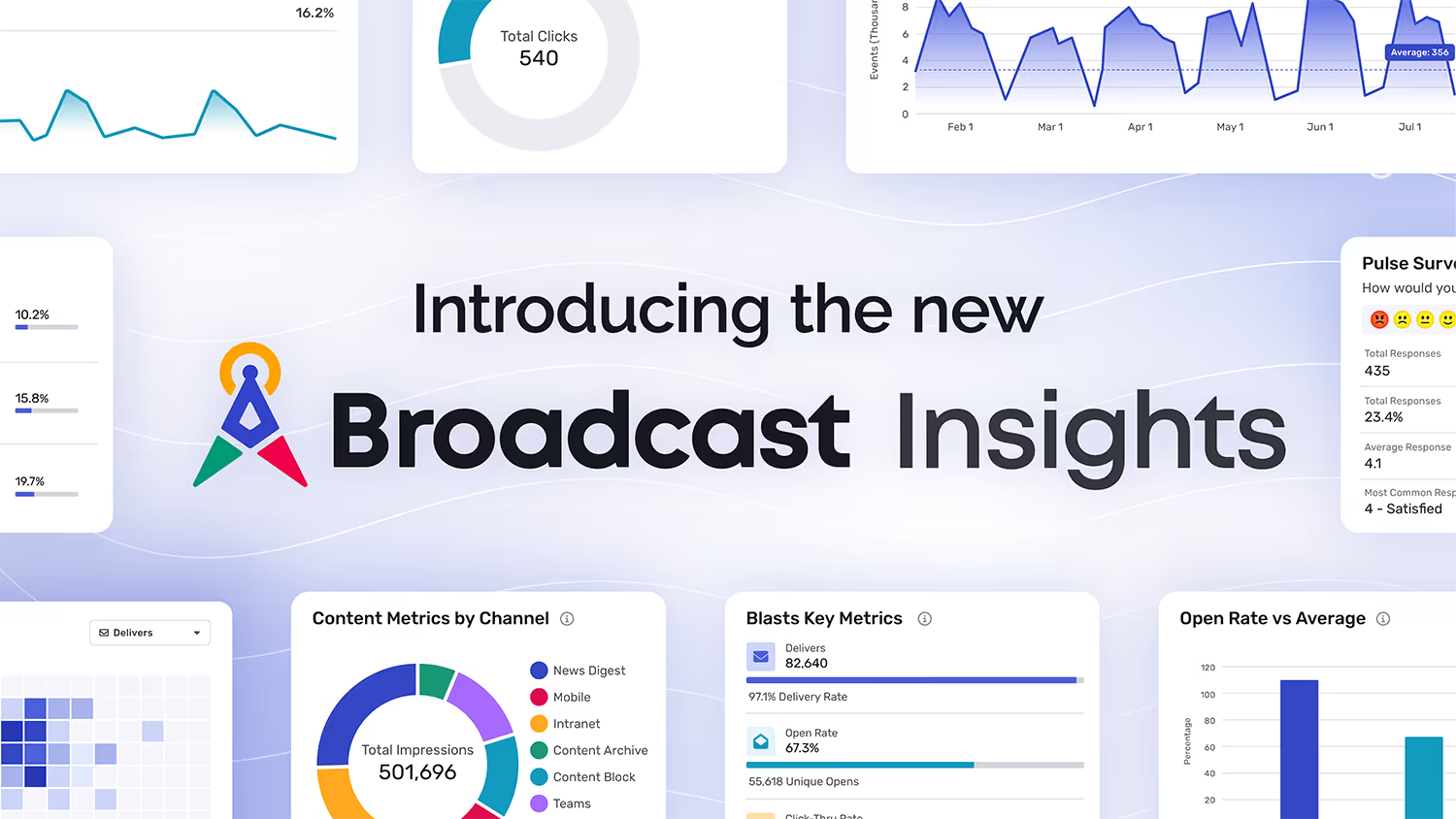
Insights Is Here: A Rebuilt Analytics Experience for Broadcast
Cerkl Insights is live in Broadcast on June 20, 2026. A rebuilt analytics experience with clearer visuals, faster navigation, benchmark comparisons, and shareable dashboards.
Employee Engagement & Experience
How to Fix Internal Comms Without Replacing Your Intranet
Internal comms without replacing your intranet: add a delivery and measurement layer that reaches employees where they are and proves, by name, who read it.
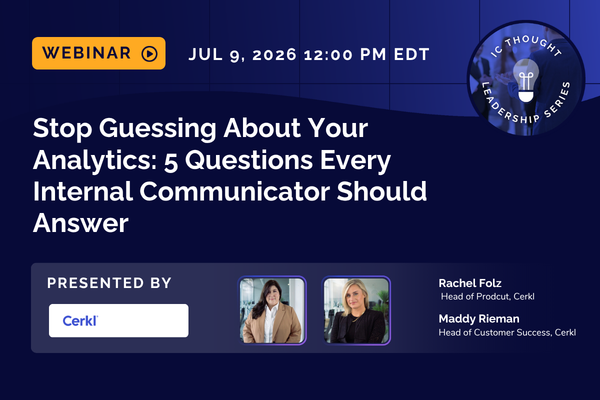
The 5 Questions Every Internal Communicator Should Be Able to Answer
Join Cerkl’s free July 9 webinar to learn five practical questions every internal communicator should be able to answer about reach, engagement, impact, and analytics.

How to Claim Your Strategic Seat in Internal Communications
The strategic role of internal communications is changing in 2026. Here is how IC leaders claim the seat at the table, and the conversations that defend it.
.png)
Internal Communications in Manufacturing — A 2026 Frontline Playbook
Internal communications in manufacturing run on shifts, safety messaging, and multi-site reality. The 2026 playbook for reaching a 17%-engaged frontline workforce across 15 plants.
Frontline & Mobile Workforce Communication
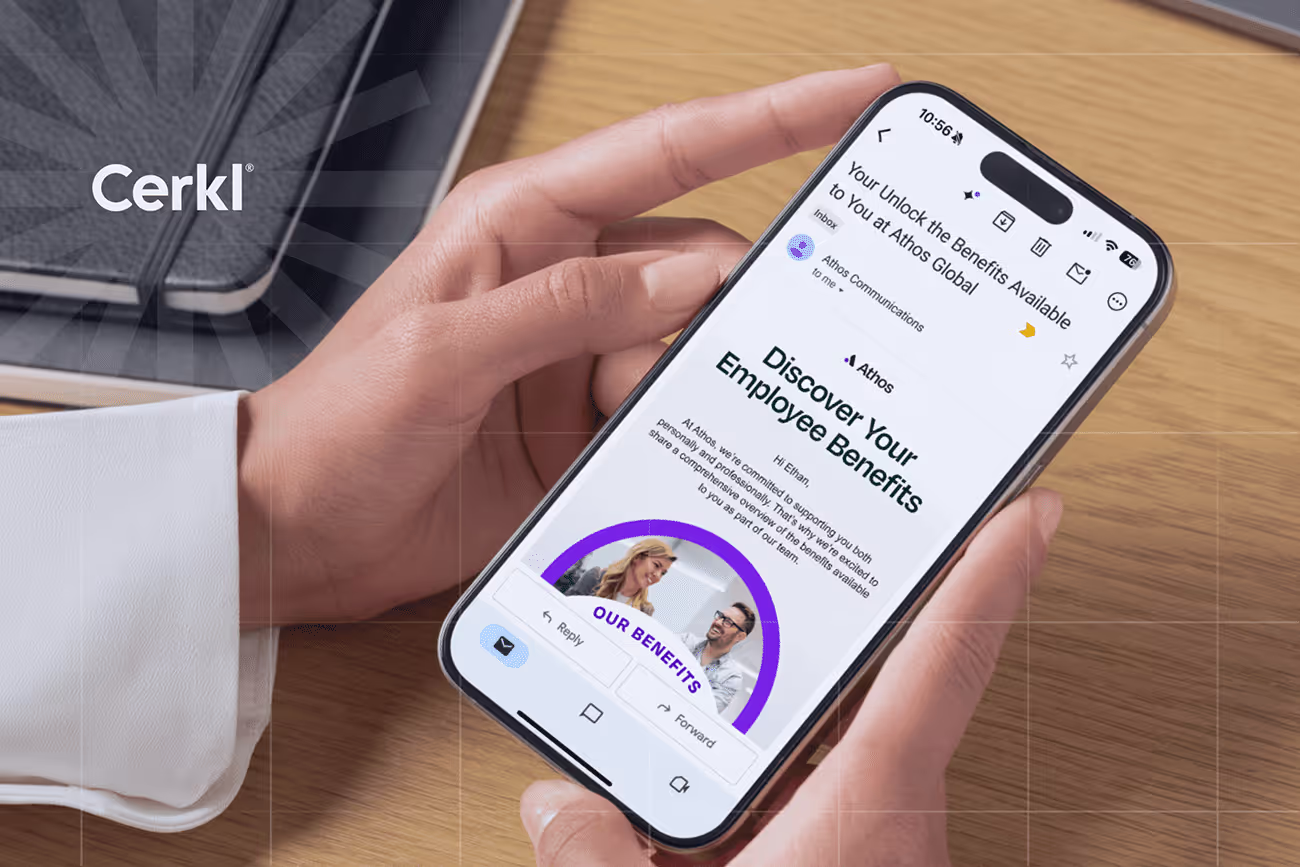
How to Create Mobile-Friendly Email Designs for Employees
This article discusses optimizing internal emails for mobile viewing. It focuses specifically on email formatting and responsiveness. The challenge centers on email usability. It aligns with email execution optimization.
Scaling Deskless Comms with AI-Driven Content Distribution
This article focuses on ai content distribution as an internal email execution problem. It highlights practical tactics to improve deliverability, engagement, and consistency. Use it to standardize your approach, reduce manual work, and get better results from employee email. Ideal for teams relying on Gmail or Outlook as the primary channel.

Personalized Communication Solutions for Healthcare’s Deskless Workforce
This article covers personalized internal communication healthcare in the context of broader employee communication systems. It emphasizes coordinating messaging across channels, audiences, and governance needs. Use it to reduce fragmentation, improve reach to different worker types, and measure impact across touchpoints. Best fit when email is not the only channel that matters.
Closing the Campus Communication Gap and Engaging Deskless Workers
This article focuses on communication challenges for deskless workers in higher education. It addresses mobile access and non-email channels. Because the audience does not rely primarily on email, the solution requires multi-channel delivery. It aligns with omni-channel orchestration.