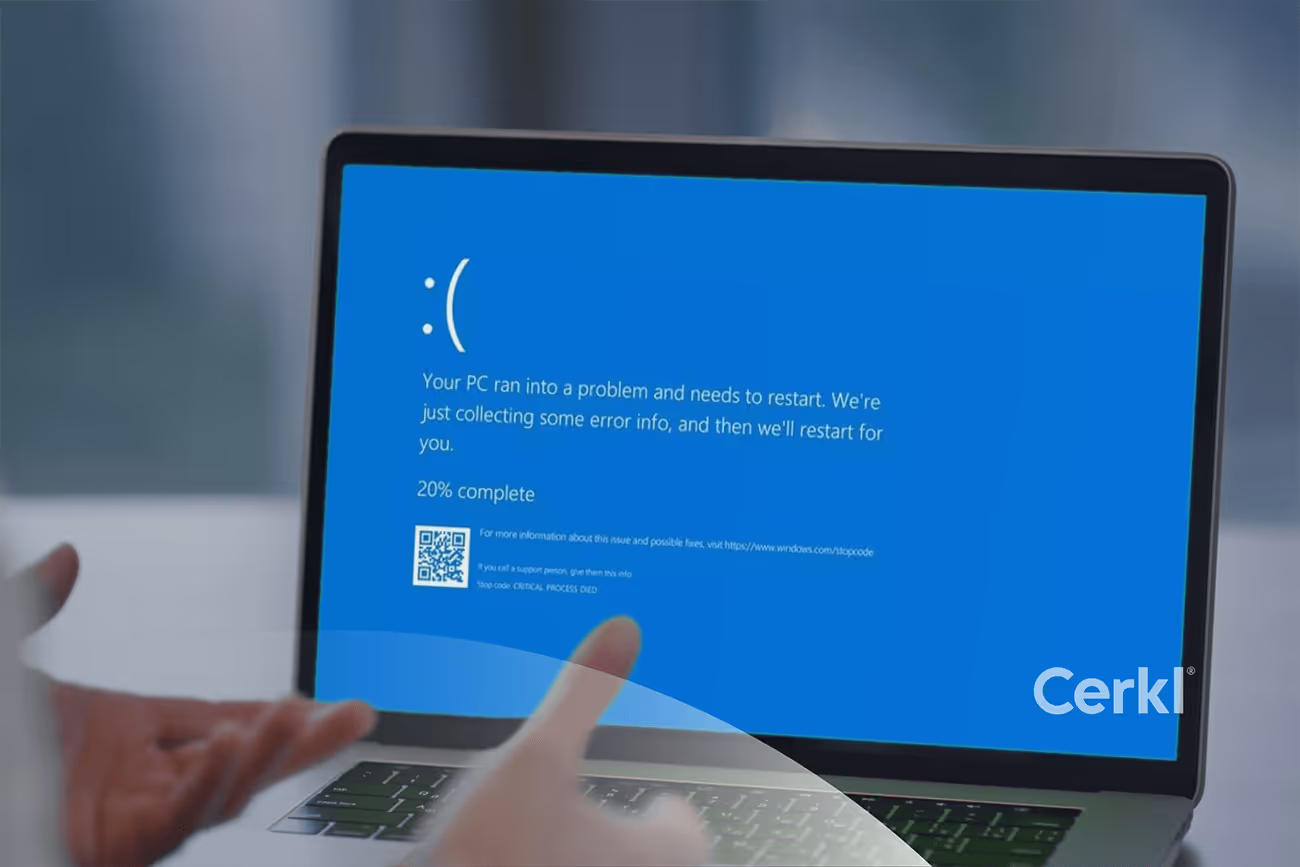
IT systems have been crashing worldwide. It’s made international news, with media reports reassuring consumers that it wasn’t a cyber attack. CrowdSrike, the company responsible for the global outage, has been apologizing for the unprecedented effects of the crash.
Airlines, and financial services including banks, and hospitals have been negatively affected globally.
Millions of people are affected, An article in Forbes published on July 19 tells the story. CrowdStrike Windows Outage-What Happened And What To Do Next by Kate O’Flaherty was quick on the mark. But, when it comes to what to do, she says, “It’s not easy to say what to do next. While there is a workaround, it’s not scalable, as it would need to be applied manually, system by system. In a large company, this could take hours or more to get back up and running.” And she’s not wrong.
So, let’s take a quick look at what happened and what you can do to prevent being implicated if it happens again.
What Happened?
On July 19, 2024, the world experienced a significant technological disruption that impacted numerous sectors, from airlines and banks to hospitals and government agencies. The root cause of this widespread outage was traced back to a faulty cybersecurity update deployed by CrowdStrike, a leading cybersecurity firm.
While the CrowdStrike security update was intended to bolster digital defenses, it inadvertently triggered a global disruption that reverberated far beyond IT departments. The outage, which compromised system accessibility for countless organizations, exposed the fragility of modern business operations and the critical role of internal communications.
In an update posted to LinkedIn late Sunday, CrowdStrike confirmed that the outage impacted an estimated 8.5 million Windows devices worldwide. This caused disorder at airports, outages for 911 services, and challenges at healthcare facilities.
The impact and consequences have been far-reaching. There has been air travel chaos, incredibly bad financial disruptions, and challenges that have impacted hospitals and medical facilities as well as government agencies.
Unsurprisingly, the world is in shock!
The Impact of CrowdStrike Outage
While the primary concern has centered on the vulnerability of systems to cyberattacks, the broader implications for business operations have been, and continue to be, substantial.
Disruption of business operations
The CrowdStrike outage has precipitated a domino effect, disrupting operations across industries from manufacturing to finance. Businesses have been grappling with halted production lines, inaccessible customer data, and crippled communication channels. They are all impacted.
Security concerns and data breaches
Paradoxically, a security update that was meant to protect data has ended up exposing enormous vulnerabilities. With systems offline, organizations are at a heightened risk of cyberattacks, data breaches, and financial loss.
Financial implications
The outage had incurred substantial financial costs for businesses. These include lost productivity, system recovery expenses, and potential legal liabilities compounded to create a significant financial burden.
The Role of Reliable Internal Communications
The CrowdStrike outage serves as a stark reminder of the critical importance of robust internal communication systems. In today's interconnected world, where businesses rely heavily on digital infrastructure, disruptions can have far-reaching consequences. Effective communication ensures that organizations can quickly respond to crises, coordinate efforts, and minimize downtime. By investing in reliable communication channels and developing comprehensive crisis management plans, businesses can mitigate risks and build resilience in the face of unexpected challenges.
Here are a few things organizations can do.
Create a crisis communication plan
A well-defined crisis communication plan is essential for managing unforeseen disruptions. It outlines roles, responsibilities, and communication protocols, ensuring swift and effective response. You can use it to establish roles, responsibilities, and communication protocols for swift and effective response during crises.
Send key messages and information dissemination
Clear and consistent messaging is crucial during crises. Organizations must provide accurate and timely information to employees, customers, and stakeholders.
Maintain employee engagement and morale
Disruptions can erode employee morale. Effective communication helps maintain engagement, addresses concerns, and fosters a sense of unity.
Build trust and transparency
Open and honest communication builds trust. By sharing information transparently, organizations can mitigate rumors and maintain credibility.
Impact on IT Professionals Worldwide
IT professionals bore the brunt of the CrowdStrike outage. They were tasked with troubleshooting system failures, restoring operations, and implementing contingency plans. The incident highlighted the need for comprehensive IT disaster recovery strategies. It impacted every aspect of internal communications as well as Microsoft software many were using.
Impact on Internal Communicators Worldwide
Internal communicators found themselves in the epicenter of the crisis. They are the people responsible for crafting messages, managing communication channels, and supporting employees. The outage exposed the challenges of relying on digital tools for internal communication and the importance of having alternative channels.
Impact on Microsoft 365 Suite
As a cornerstone of many organizations' digital infrastructure, Microsoft 365 was significantly impacted by the CrowdStrike outage. Email, document sharing, and Sharepoint were disrupted, hindering productivity and communication. Many professionals didn’t have another option.
Impact on Outlook 365
Outlook, a core component of Microsoft 365, experienced widespread outages. This impacted email communication, calendar management, and task coordination, causing significant disruptions for employees. Again, those dependent on Outlook 365 were hamstrung.
Impact on Outlook Add-ins and Third-Party Service Providers
Importantly, the outage also affected Outlook add-ins and third-party service providers. These tools, often essential for internal communication, were rendered inoperable, further compounding the challenges faced by communicators.
The CrowdStrike outage serves as a stark reminder of the interconnectedness of modern business systems and the critical role of internal communications in managing crises. There is no doubt that organizations must invest in robust communication infrastructure, develop comprehensive crisis plans, and foster a culture of resilience to mitigate the impact of future disruptions.
Cerkl Broadcast: A Solution to Internal Communication Challenges
The CrowdStrike outage underscored the critical need for resilient and adaptable internal communication systems. Tools like Cerkl Broadcast offer a potential solution to mitigate the risks associated with platform dependencies.
Cerkl Broadcast is an internal communication software designed to enhance employee engagement and productivity. By centralizing communication and offering diverse delivery channels, it can help organizations overcome challenges posed by outages like the one experienced with CrowdStrike.
Key benefits of using Cerkl Broadcast
Here’s how you can use Cerkl Broadcast if you are faced with anything like a CrowdStrike outage.
- Reduced reliance on single platforms: Cerkl Broadcast provides multiple channels for communication, such as email, personal notifications, and in-app messaging, reducing dependency on a single platform like Microsoft 365.
- Improved crisis communication: The platform's ability to quickly disseminate critical information to employees can be invaluable during a crisis, ensuring everyone is informed and updated.
- Enhanced employee engagement: By offering personalized content and interactive features, Cerkl Broadcast can maintain employee engagement even during disruptions.
- Data security: With robust security measures, Cerkl Broadcast can help protect sensitive information from breaches.
By incorporating Cerkl Broadcast or similar tools into their communication strategy, organizations can bolster their resilience against future disruptions and improve overall internal communication effectiveness. And that applies to you!
What's Next?
None of us wants to be struck down by anything that even vaguely resembles the recent CrowdStrike issue. Of course not. So what can you do to protect yourself and your organization?
Your answer is to choose software that will protect you. It really is that simple, and Cerkl Broadcast can help you do just this. Download our comprehensive guide on how to choose the optional internal communication software and decide for yourself. No obligation - and it’s totally free.
Access Now