Intranet personalization matches updates to the people who need them and delivers those updates into channels employees already open, with proof of who read the message. For years the default plan was simpler. Build one intranet homepage for everyone and promote it in onboarding. Treat visits as proof that communications worked. That plan is failing in plain sight. Critical updates still miss the people who must act, while leadership stares at homepage traffic that cannot answer a basic question. Leadership still cannot name who among the affected group read this.
The shared homepage was never built to be a personal newsroom across every role and site at once. Cerkl Foundations is a practical place to start a different model this week. Targeted internal email and reusable audiences, with engagement views, move you from vanity visits toward per-person proof without waiting on another homepage redesign.
The promise of one home for everyone
Picture a company that spent two quarters refreshing the intranet home. New hero, clearer navigation, a news carousel, and a mandate that "everything important lives here." Onboarding decks show the URL. Leaders tell managers to check it daily. After launch, visits look respectable for a month. Then a benefits deadline slips past half the eligible population, a safety bulletin misses the night shift, and the all-hands Q&A fills with "I never saw that." The homepage still has traffic. The people who needed the message still missed it.
That is the one home for everyone intranet bargain in miniature. The destination is visible and easy to defend in a steering committee. It feels like strategy because it is a place. Engagement depends on employees choosing to arrive and find the right tile before the deadline passes. Desk staff who live in email and chat skip the visit. Frontline staff who open a browser between tasks skip it more. A polished homepage does not change those habits.
Leaders often measure what the homepage makes easy to count, such as sessions and clicks on featured stories. Those numbers can look healthy while the operational truth is thin. A thousand visits do not tell you whether the 180 people on the medical plan read the enrollment change. Intranet homepage engagement reported as aggregate traffic is a weak proxy for communication success.
Why a shared homepage cannot carry personalization
A single canvas cannot stay relevant to plant supervisors, corporate finance, new hires, and contractors on the same morning. Role, location, tenure, and employment type pull the content map in different directions. Everything competing for the same hero slot turns the homepage into a compromise feed. The feed is broad enough that few readers feel spoken to, and crowded enough that the urgent item scrolls away by lunch.
The deeper constraint is the pull model. Content sits and waits. Busy employees do not open the intranet to discover a policy change the way they open an inbox for a message addressed to them. You can improve findability and governance with solid employee intranet best practices, and you should. Destination hygiene still leaves a delivery gap. If the only path to the update is a voluntary visit, personalization on the page cannot rescue people who skip the trip.
Aggregate homepage metrics hide the miss list. Page views and click maps cannot name the nurses who skipped the schedule change or the store managers who skipped the wage update. Without per-person resolution, teams respond the only way a destination system allows. They add another carousel tile, then another "please check the intranet" reminder that trains people to ignore the channel.
What intranet personalization means in practice
Intranet personalization means audience-matched messages pushed into the channels people already use, paired with proof of who read them. Personalized intranet content is deciding who receives which story on which channel, then following up with the people who did not engage.
The intranet can keep doing valuable work as archive and system of record. Employee intranet personalization that works treats that destination as one surface among several, and puts delivery and accountability at the center of the program. For a safety note or enrollment deadline, the primary motion is a targeted send with a clear call to action, plus a way to see who engaged. The homepage companion post can exist for people who browse. Treat it as backup while delivery carries the bet.
Personalizing communication across channels is hard to manage manually.
Broadcast Omni AI lets you deliver personalized messages across email, mobile, Teams, intranet, and more while keeping audiences and messaging aligned.
Learn more about Omni AIDeliver into channels employees already use
Start where attention already is. For most organizations that starts with email, with collaboration chat and mobile as later depth. Publish the same underlying story in shapes that fit the audience. Send a short action note for people who must enroll, and a manager cascade pack for people who must brief a team. Keep an intranet archive page for reference. The internal communication channels map is the inventory; the personalization job is choosing which channel and which segment for each send.
Teams that already decided to keep their intranet and fix reach will recognize the keep-and-layer pattern in how to fix internal comms without replacing your intranet. This post focuses on the homepage habit inside that broader problem. Stop treating a shared home visit as the engagement plan. Push the high-stakes updates first and let the destination hold the record.
A coordinated omnichannel employee experience is the longer build. You do not need every channel live on day one to change the operating rule. You need one reliable push channel and clean audiences, plus the discipline to retarget people who did not engage instead of refreshing the hero image again.
Audience cuts and read proof that make personalization real
Before every "all company" intranet feature or all-staff note, name the groups that matter for this send:
- Who must act
- Who must know
- Who can skip this one
Cut by role or department, location or site, tenure, and employment type. An employee audience manager that syncs identity data turns those cuts into reusable segments instead of a spreadsheet rebuilt under deadline pressure.
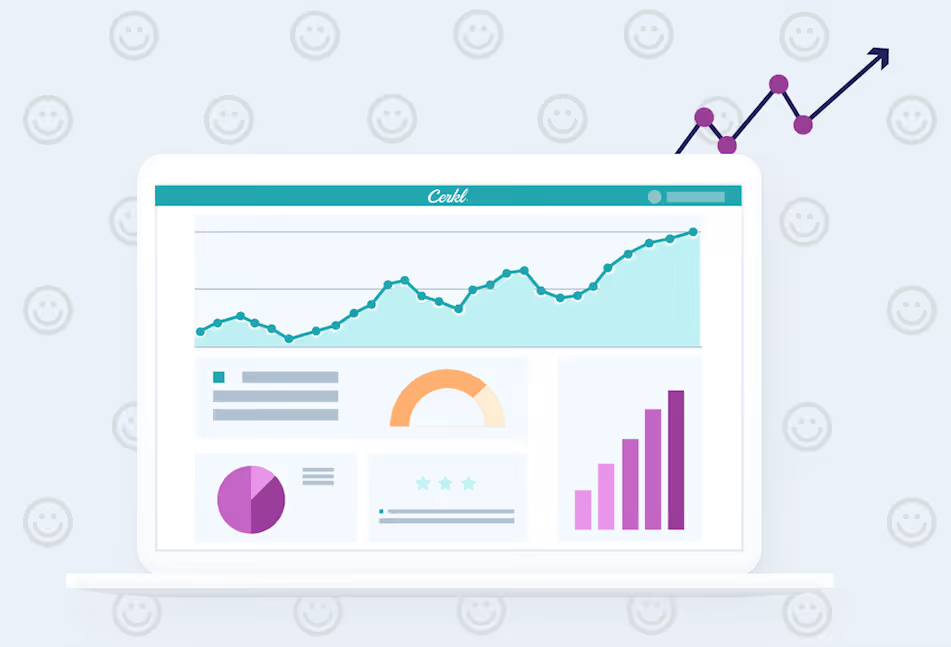
Read proof closes the loop. Leadership's useful question is who among the affected group read the message, by person, so follow-up can be narrow. Retarget non-readers. Leave the people who already acted alone. That is how volume drops and coverage rises without another company-wide homepage campaign. Insights on Foundations give you engagement visibility on email sends; deeper cross-channel analytics matter when the same story travels across more destinations and you need one view of reach.
As the scorecard moves from homepage sessions to named coverage on the people who must act, redesign debates quiet down. Teams start optimizing for delivery and proof.
Start on Foundations, grow channel depth when you need it
You can change the homepage habit without a multi-quarter personalization platform project. Cerkl Foundations is free forever for purpose-built internal email. Build the blast, target a real audience with Audience Manager, send, and review engagement in Insights. That stack is enough to move critical updates off "please visit the intranet" and onto a message aimed at the right list.
Foundations-level work gets you this week:
- Segments you reuse instead of pasting the company directory
- Sends limited to people who need the action
- A view of who engaged so the second touch is narrow
- Room to prove intranet personalization as delivery and proof before anyone funds a broader stack
Multi-channel personalization depth is the next step when the program needs it. Run the same story across email and collaboration destinations, with AI-assisted digests and cross-channel dashboards on paid Broadcast surfaces such as Omni AI. Be clear with stakeholders about the line. Free targeting and email Insights are enough to retire the shared-homepage-as-strategy habit. Paid channel depth is how larger programs keep relevance when the map of roles and workplaces gets complex.
The internal communications question stays stable at every tier. Ask whether this update reaches the people who must act, and whether you can prove it. If the plan still depends on the full directory finding the same homepage tile, the plan is incomplete.
Bottom line
A shared intranet homepage can be tidy and on-brand, and still fail as an engagement strategy. Intranet personalization that works pushes relevant updates into channels employees already open and proves who read them. Keep the intranet for what it does well. Run audience cuts before you hit send. Retarget the miss list. Start on Foundations if you need a purpose-built email path this week, and add channel depth when complexity shows up. The organizations that get unread critical updates under control will be the ones that stopped waiting for everyone to come home.
If you're frustrated with Outlook or Gmail for your employee emails, we understand.
That's why we built Foundations. Purpose-built for internal email with all the features you wish you had - drag-and-drop email builder, analytics, employee segmentation and much more. All for free (forever). No credit card, no contracts, no setup fees.
Learn more about FoundationsFAQ
What is intranet personalization?
Intranet personalization is matching message content and audience so employees receive what applies to their role and location, delivered into channels they already use, with a way to see who engaged. It goes beyond rearranging a shared homepage. It includes segments, suppressions, push delivery, and per-person follow-up.
Why do employees stop reading the intranet homepage?
Employees stop reading when the homepage feels generic or optional relative to email and chat. A one home for everyone intranet asks every role to browse the same feed. People with full inboxes and little browser time skip the visit, so intranet homepage engagement falls even when the design looks current.
How do you improve intranet homepage engagement without another redesign?
Treat the homepage as archive and reference, and move high-stakes updates into targeted sends on channels people already open. Improve destination hygiene where it helps findability, then measure success as coverage among the affected audience ahead of session counts. Personalized intranet content in the inbox or chat will do more for completion than another hero image.
What is the difference between personalizing an intranet homepage and personalized delivery?
Personalizing a homepage changes what someone sees if they arrive at the destination. Personalized delivery sends the right update to the right people on a channel they already use, then tracks who engaged so you can follow up. Employee intranet personalization that includes delivery and read proof answers leadership questions a tailored home tile cannot.
Did you enjoy this content?
Please share it with your internal comms friends and colleagues.
Just click on any of the links below.