Reaching every employee in internal communications starts with delivery. That half of the job is now table stakes across the category. Hubs and email-first tools alike lead with the same promise that the message will land in every inbox or feed. The half most programs still cannot answer is harder. You need to know which employees read it.
Cerkl Foundations is a practical place to close that gap this week. Purpose-built internal email with reusable audiences, plus Insights and acknowledgments when you need a confirmed read, gives you reach plus proof without waiting on a rip-and-replace project.
The crowded reach claim after a clean send
Picture the Monday after a holiday week. Leadership asked for a policy update to hit everyone before operations resume. You targeted the right groups and sent on time. The delivery report looks clean. In the standup someone asks the only question that matters. "Did people read it?" The room points at send status. Send status answers a different question.
That scene is common because the category made "reach every employee" the default hero line. Delivery language is easy to demo and easy to report. It also trains leaders to treat a successful send as a finished job. Quiet calendar weeks around Labor Day make the gap between a delivered message and a read message show up faster. Fewer competing launches leave the same hard questions from executives who want coverage they can name.
Reach is still a real job. Deskless shifts and multi-site orgs do not share one channel habit on their own. Fixing internal comms without replacing your intranet is often the right move. Keep the hub employees already know, and treat deliberate delivery as the layer that carries important updates into email and other channels people open. The mistake is stopping the definition of success at "we reached them."
Delivery vs read internal communications as separate jobs
Delivery vs read internal communications is a job split. Delivery answers infrastructure. The message was accepted by the server and published to the channel. Read coverage answers attention among named people. It shows who opened and who never touched the message.
Those jobs fail in different places. A blast can deliver to four thousand addresses and still miss an entire third shift that opens email on Wednesday. A Teams post can show in the channel and still sit unread under a pile of chat. Aggregate open rate blends those outcomes into one reassuring percentage. The cross-channel read gap is what happens when each surface reports its own average while the miss list stays invisible.
Attention is also a separate failure from drafting. A post on how agentic AI still cannot make employees read a newsletter covers the generation trap. Faster content does not create readers. Louder reach claims do not create proof either. You can win delivery and still lose the people who must act.
If your scorecard ends at sent or delivered, you are managing infrastructure. Leadership and compliance are asking for coverage.
What reaching every employee in internal communications requires
Reaching every employee in internal communications has two parts you can run as practice.
Reach puts the message in front of the people who must act, on channels they use, with audiences that match how the org works. Company-wide lists under deadline pressure are how plants and roles disappear inside a blended number.
Proof keeps a person-level record of engagement after send. Per employee read attribution turns "we think it landed" into a miss list you can sort and close. Acknowledgments add a confirmed-read timestamp when the message carries policy or safety weight.
That definition is the operating bar. Run the loop on your next high-stakes send and take the miss list into a leadership conversation before you expand channels.
Internal emails shouldn't be a black box.
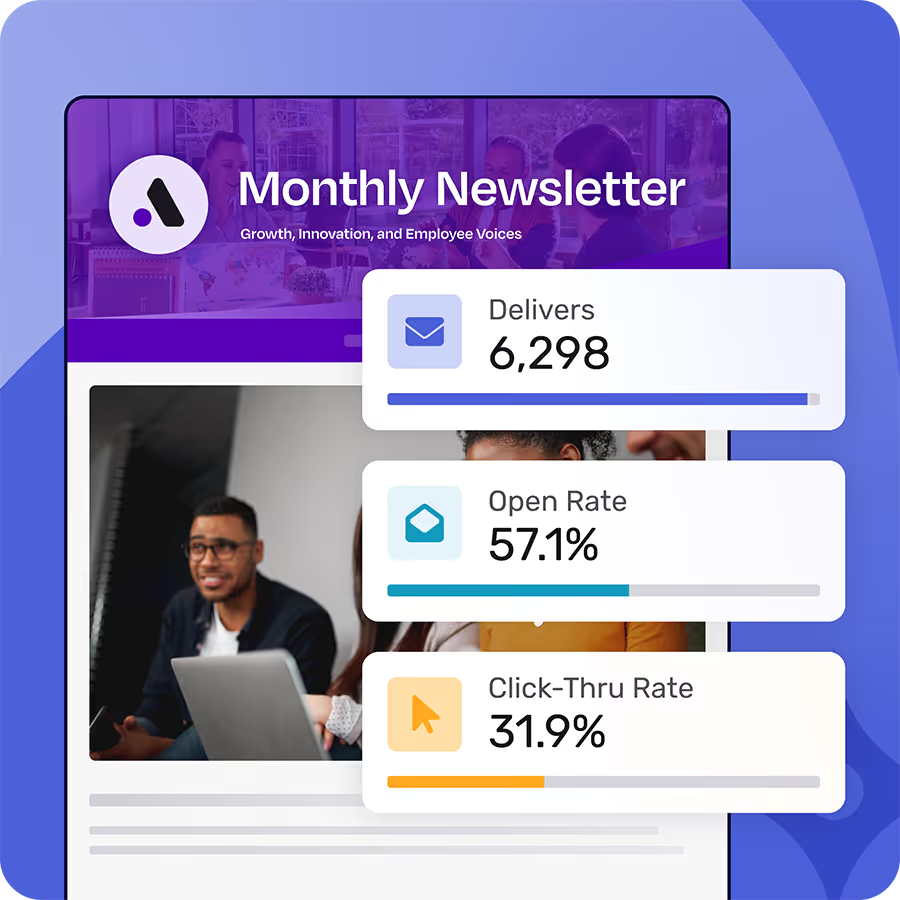
Foundations shows who opened, clicked, and engaged with your employee communications so you know what’s actually working. All for free - forever.
Learn more about FoundationsOperate reach plus proof on the next high-stakes send
Pick one message that cannot hide behind a blended open rate. A safety update or benefits deadline is enough. Define the audience that must act before you write the subject line. Role and site beat "all staff" when the risk is uneven across the org.
Send through a purpose-built internal email path that records delivery and engagement against each recipient. After send, open the audience view and sort to people who did not open or did not acknowledge. That list is the job. Retarget only the holdouts, or hand named non-readers to managers with a clear ask and a deadline. Leave people who already engaged alone.
How per-employee read receipts work walks the mechanism in more depth, including acknowledgments and retargeting as a pipeline. The strategy point here is narrower. To prove which employees read message traffic in a way leadership respects, you need resolution down to people and segments.
Cerkl Broadcast analytics and Foundations Insights give communicators that view on email sends so the second touch is narrow. When the scorecard shifts from "we published" to "here are the named people who have not engaged," the reach claim has an operational finish line.
Turn the miss list into a strategic conversation
Employee communication reach proof matters because executives lose sleep over the site that never saw the update and the role still operating on last year's rule. A miss list is a leadership artifact. It shows coverage among the affected group and names follow-up owners with a date when silence stops being acceptable.
That is how IC moves from channel plumber to operator with a seat in the room. Claiming a strategic seat in internal communications depends on evidence leaders can act on. Named non-readers are sharper evidence than a polished delivery narrative. Bring the list and the follow-up plan. Skip the category buzzwords.
Use the quiet weeks on the calendar to practice that motion on one high-stakes send. Labor Day week and similar lulls are low-noise windows to prove the loop works before the next enrollment or change wave.
Start on Foundations this week
You do not need a multi-quarter platform migration to change the reach definition. Cerkl Foundations is free forever for purpose-built internal email. Build the blast, target a real audience with Audience Manager, send, review engagement in Insights, and add acknowledgments when you need confirmed reads. That stack is enough to pair deliberate reach with proof of who engaged.
Foundations-level work gets you these wins this week.
- High-stakes notes aimed at the people who must act
- Segments you reuse instead of another company-wide list under pressure
- A view of who engaged so follow-up is human and specific
- Acknowledgments when policy or safety needs a timestamp
Cross-channel depth is the next step when the same story must travel through Teams and intranet with one reporting view. That depth lives on paid Broadcast surfaces. Free targeting and email Insights are enough to retire "we reached everyone" as proof of readership. Paid analytics depth is how larger programs keep one miss list when the story spans more channels.
The internal communications question stays stable at every tier. The update has to reach the people who must act, and you need to show who still needs a human follow-up. If the plan ends at delivery status, the plan is incomplete.
Bottom line
"Reaches every employee" is where everyone starts. Delivery claims are table stakes. Reaching every employee in internal communications finishes when you can prove which employees read the message and close the miss list on purpose. Run that loop on your next high-stakes send and bring named coverage to leadership. Start on Foundations if you need a purpose-built email path this week. The programs that keep trust through busy seasons will treat read proof as part of reach.
If you're frustrated with Outlook or Gmail for your employee emails, we understand.
That's why we built Foundations. Purpose-built for internal email with all the features you wish you had - drag-and-drop email builder, analytics, employee segmentation and much more. All for free (forever). No credit card, no contracts, no setup fees.
Learn more about FoundationsFAQ
What does reaching every employee in internal communications mean?
Reaching every employee in internal communications means putting important updates in front of the people who must act, on channels they use, then proving who engaged after send. Delivery alone is incomplete. The operating definition includes a miss list you can close.
Is delivery the same as proving employees read a message?
No. Delivery confirms the message was accepted by the channel or mailbox. Proving a read requires person-level engagement or an acknowledgment. A clean delivery report can still hide shifts or roles that never opened the message.
How do you prove which employees read an internal message?
Use per-employee open tracking and, for high-stakes content, acknowledgments. Sort to non-readers and retarget or cascade the holdouts. Report coverage among the affected audience. That is per employee read attribution leaders can act on.
Can you start reach-and-proof measurement on a free plan?
Yes. Cerkl Foundations includes blasts, Audience Manager, Insights, and acknowledgments on the free plan, so email-level reach and proof can start without an enterprise re-platform. Cross-channel analytics depth is a later upgrade when the program needs it.
Did you enjoy this content?
Please share it with your internal comms friends and colleagues.
Just click on any of the links below.