How Can AI Transform Employee Onboarding
This article explores AI applications in onboarding communications. Onboarding communication typically spans multiple channels. The solution exceeds email alone. It aligns with omni-channel orchestration.


This article explores AI applications in onboarding communications. Onboarding communication typically spans multiple channels. The solution exceeds email alone. It aligns with omni-channel orchestration.
Artificial intelligence (AI) is transforming employee onboarding from a tedious, one-size-fits-all process into a streamlined, engaging, and highly personalized experience. By automating repetitive tasks and delivering tailored content across channels, AI ensures new hires feel welcomed, informed, and connected from day one.
That might seem counterintuitive, since employee onboarding is often seen as a deeply personal experience. However, when AI is used thoughtfully, it can enhance that personal touch by delivering timely, relevant information tailored to each new hire’s role, team, and location. Done well, AI-powered onboarding will inspire confidence in new employees and help them feel valued and supported. It will also accelerate their understanding of the company’s mission, values, and culture, helping them feel like part of the organization from the first day they start work.
This transformation is not just about efficiency, it’s a strategic imperative. According to McKinsey & Company, organizations that excel in strategic workforce planning, leveraging AI to anticipate talent needs and align them with business goals, can achieve as much as 300% more revenue per employee compared to the median firm. AI facilitates this by enabling companies to proactively identify skill gaps, personalize training, and adapt onboarding processes to meet evolving workforce demands.
By integrating AI into onboarding processes, organizations can create a more agile and responsive workforce, better equipped to adapt to the dynamic demands of today's business environment.
Onboarding shouldn’t begin with paperwork, it should begin with connection. AI helps by automating repetitive administrative tasks, giving HR more time to focus on creating a meaningful welcome for each new hire.
AI lightens the load on HR teams by handling time-consuming administrative tasks. These include form pre-fill and e-signature workflows that eliminate manual data entry. Additionally, chatbots are designed to answer policy-related FAQs around the clock, and integrations with HRIS, payroll, and IT systems reduce delays.
In practice, as Business Insider reports, companies like Hitachi and Texans Credit Union have successfully implemented AI-driven onboarding solutions, and they save HR days of time. A March 2025 article reveals that Hitachi reduced its onboarding time by four days and cut HR involvement from 20 hours to just 12 per new hire using an AI assistant. Texans Credit Union used robotic process automation to grant system access in under a minute, down from 15 to 20 minutes.
These examples show how automation not only streamlines admin but also improves the onboarding experience, enabling HR to focus on building human connections.
Through machine learning algorithms, onboarding platforms can now assess a new employee’s background, including prior knowledge, departmental needs, and even time zone or local compliance training, which effectively adjusts the order, pace, and format of learning materials.
For example, adaptive content sequencing adjusts based on role-specific skills, location, and prior experience. More specifically, a remote software engineer might receive technical documentation and collaboration tool training earlier in the process, while an in-office marketing coordinator might be directed toward brand guidelines and office culture first.
According to the Deloitte Insights 2024 Human Capital Trends report, companies that leverage intelligent personalization in learning and development are better positioned to enhance learner engagement, speed up time-to-productivity, and create more meaningful employee experiences.
By focusing on the human performance outcomes of learning, rather than just skills delivery, companies can support onboarding that aligns more closely with employee needs, preferences, and roles.
Additionally, bite-sized learning modules delivered at the right moment are key to maintaining engagement without overwhelming new hires. These “nudges” are sent through channels the employee already uses, such as Slack, Microsoft Teams, email, or mobile apps.
Research by global industry analyst Josh Bersin emphasizes that AI-driven personalization in learning and development enables the delivery of contextually relevant content, enhancing employee engagement and retention. By analyzing user behavior and performance, AI facilitates the creation of tailored learning experiences that align with individual needs and preferences.
In an article he wrote, "AI Is Transforming Corporate Learning Even Faster Than I Expected," Bersin discusses how “AI can dramatically reduce the time and complexity involved in content creation" and "convert comprehensive operational information into a series of instructional activities", highlighting the role of AI in delivering personalized learning experiences.
AI is transforming employee onboarding by enabling companies to immerse new hires into the organization's culture from the day they arrive. This immediate cultural alignment fosters a sense of belonging, enhances engagement, and contributes to long-term retention.
Here’s how AI does this:
AI-powered onboarding platforms can automatically curate a "Day 1 Digest" for new employees. This digest includes tailored content such as the company's mission, core values, team introductions, and logistical information relevant to the new hire's role and location. By delivering personalized content, organizations are able to ensure that new hires receive information that resonates with their specific context, promoting a deeper connection to the company's culture.
AI algorithms analyze engagement patterns to determine the optimal times to send onboarding communications. This send-time optimization ensures that messages are delivered when new hires are most likely to engage, increasing the effectiveness of the onboarding process. For instance, remote workers might receive communications during their peak productivity hours, while deskless workers would get updates aligned with their shift schedules.
AI facilitates the inclusion of remote, hybrid, and deskless workers by delivering consistent and personalized onboarding experiences across various locations and roles. This inclusivity ensures that every new hire feels integrated into the company culture, regardless of their physical work environment.
According to a 2024 Forbes article, AI-powered onboarding can make new hires feel more welcomed, engaged, and invested from day one, which is crucial for fostering a cohesive organizational culture. The Future Of New Hire On-Boarding Is Embedding Generative AI by Jeanne Meister, founder of Future Workplace, states that AI-powered onboarding can make new hires feel more welcomed, engaged, and invested from day one, which is crucial for fostering a cohesive organizational culture.
“Leveraging the power of gen AI can also support new hires by personalizing the communication and designing quizzes to identify skill gaps and assess knowledge.”
Jeanne Meister
The immediate cultural alignment achieved through AI-driven onboarding has tangible benefits. A 2025 report by inFeedo highlights that organizations with robust AI onboarding processes see an 82% improvement in new hire retention and a 40% reduction in the time it takes for employees to reach peak performance. The Truth About AI Employee Onboarding: What HR Teams Need to Know in 2025 also states that companies using AI-powered onboarding solutions “retain 82% more new hires and save over $18,000 each year.” She admits that there are challenges, especially when there are data security and system integration concerns, but “smart strategies can help teams overcome these obstacles.”
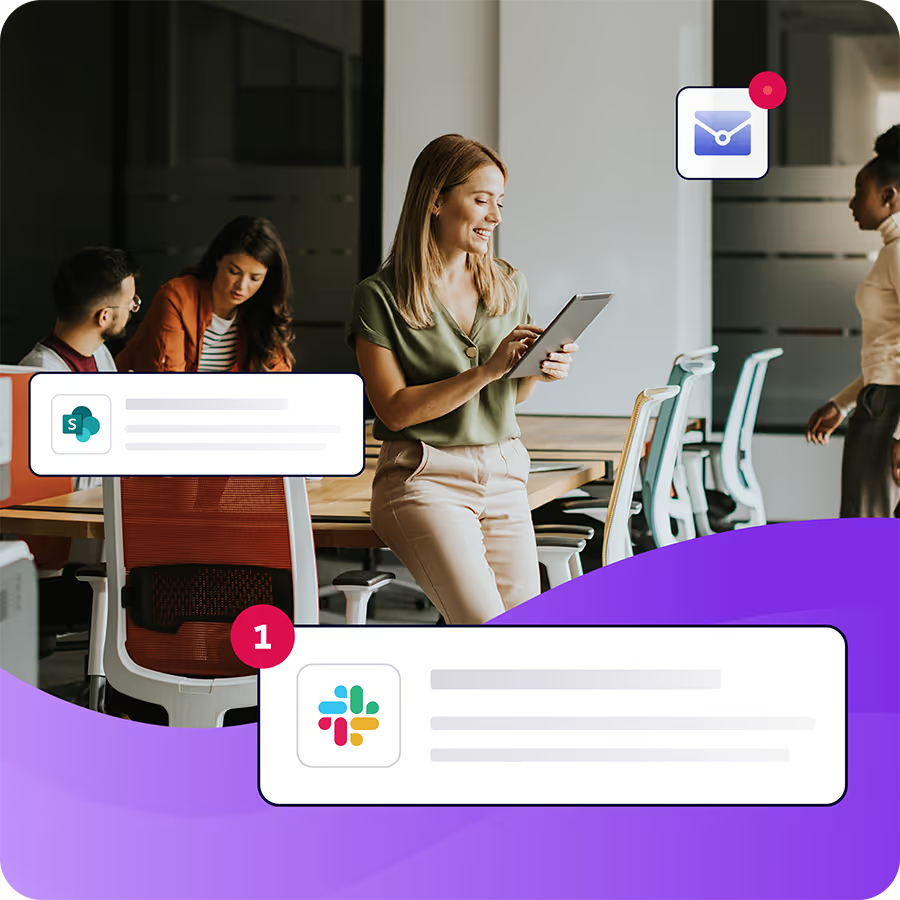
Broadcast Omni AI helps large organizations deliver personalized communication across email, mobile, Teams, intranet, and more. Content orchestration at scale.
Learn more about Omni AIAI-powered analytics are revolutionizing the onboarding process by providing HR teams and managers with immediate, actionable insights. This real-time visibility enables organizations to tailor support, enhance engagement, and proactively address potential challenges during the critical early stages of employment.
Modern onboarding platforms equipped with AI capabilities offer interactive dashboards that track essential metrics such as module completion rates, time spent on content, and employee sentiment derived from pulse surveys or behavioral signals. These dashboards highlight areas where new hires may be disengaging, allowing HR professionals to quickly adjust workflows and content to improve employee retention and satisfaction at the start.
AI algorithms analyze patterns in new hire behavior, internal communication, and feedback to identify individuals who may be at risk of disengagement or early departure. By flagging these at-risk employees promptly, HR teams can initiate targeted interventions like personalized support or mentorship programs, in this way addressing concerns before they escalate.
Platforms like Cerkl Broadcast provide analytics that monitor how onboarding messages and content are consumed. HR teams can assess open rates, click-throughs, and content preferences in real time, enabling them to refine the delivery cadence, tone, and format of information. This continuous feedback loop ensures that onboarding materials remain relevant and engaging for new hires.
Frontline managers often lack visibility into the onboarding progress as it relates to their new team members. AI-driven dashboards bridge this gap by delivering manager-specific insights, such as tracking which new hires are behind on, onboarding milestones, or reporting low satisfaction scores. Armed with this information, managers can schedule timely check-ins, reinforce key messages, and allocate resources effectively to support and encourage their new employees.
Deloitte's 2024 Global Human Capital Trends report mentioned earlier emphasizes the importance of leveraging AI and data analytics to enhance human performance and organizational outcomes. By integrating real-time analytics into onboarding processes, organizations can create a more responsive and supportive environment for new hires, ultimately driving higher engagement and retention rates.
While AI accelerates and personalizes onboarding, it must be implemented with rigorous attention to security, data privacy, and ethical standards. Organizations cannot afford to compromise trust or regulatory compliance when deploying AI tools to handle sensitive employee information. This is critical advice!
AI onboarding systems process a wide range of personal data, from contact details and demographic profiles to behavioral signals and engagement patterns. To ensure compliance with privacy laws like GDPR, CCPA, and other emerging regional regulations, platforms must incorporate consent management, secure data storage, and limited data access protocols. Role-based access controls and data encryption are standard practices that help ensure only authorized personnel can view or modify sensitive information.
Without proper oversight, AI models can unintentionally reinforce bias, especially in tasks like personalized learning paths or performance predictions. To mitigate this risk, ethical AI onboarding tools implement algorithmic transparency and bias audits, ensuring that all recommendations are based on objective, job-relevant data. This helps maintain fairness and equity in the new hire experience, which is especially important in diverse, global workplaces.
Leading onboarding platforms adhere to recognized security frameworks such as SOC 2 Type II, ISO 27001, and NIST guidelines. These standards offer assurance that the systems used to process and store onboarding data meet stringent operational and security benchmarks. Following these frameworks not only protects your organization, it also strengthens employer branding by demonstrating responsible AI use.
Employees must trust that their data is handled ethically. Clear communication about how AI is used during onboarding, what it tracks, why, and how long data is stored will build this trust. Many companies now include a brief AI use disclosure or onboarding data FAQ to promote transparency and reduce anxiety about automation in HR processes.
A secure, compliant AI onboarding process doesn't just tick legal boxes. It protects brand reputation, supports employee confidence, and lays the foundation for responsible innovation. By pairing powerful personalization with robust protections, organizations ensure that their onboarding journeys are not only efficient and engaging but also secure and trustworthy.
Artificial intelligence is a powerful tool. However, successful onboarding transformation requires thoughtful implementation, perhaps more so when AI is part of the process. This four-step playbook helps you strategically adopt AI to personalize and optimize the employee onboarding experience.
Identify bottlenecks and redundancies in your current onboarding process.
Start by mapping every step of your existing onboarding process from pre-boarding communications to training milestones and cultural integration. Identify where the process may or does break down.
Are new hires overwhelmed with information? Is HR spending too much time answering repetitive questions? Are managers unsure when to step in?
An AI-enhanced system will thrive on good inputs, so answer these questions to uncover bottlenecks, duplicate steps, and content gaps. Document your tools (for example, HRIS, LMS, and comms platforms), people involved, and typical timelines to build a clear foundation for change.
Set metrics for engagement, time-to-productivity, and retention to measure AI’s impact. AI alone is not going to guarantee results. You need to define what success looks like. To do this, choose key performance indicators (KPIs) such as:
Align these metrics with business goals and benchmark them against past performance. With clear KPIs, you can objectively measure the value AI brings to the onboarding journey.
Test your AI-powered onboarding approach with a single department or location.
Rather than overhaul the entire system at once, start with a pilot program such as onboarding for a specific department, region, or role. Select a group where onboarding has been a challenge or where managers are open to innovation.
By opting for a smaller scope, you will find it a lot easier to test AI features such as adaptive content delivery, nudges, or automated check-ins in a controlled environment. Gather both quantitative results and qualitative feedback from new hires and stakeholders.
Use real-time insights to refine content, cadence, and delivery.
AI-powered platforms deliver real-time data on how users interact with content, what they skip, and where they drop off. Use these insights to continuously refine your onboarding experience:
This feedback loop will make onboarding a living process that is responsive to both individual needs and organizational change.
Cerkl Broadcast transforms the traditional onboarding experience into a seamless, intelligent journey that is tailored to each new hire and scalable across your entire organization.
At the heart of this transformation is MyNews Engine, which automatically curates a personalized “Day‑1 Digest” for every employee. Based on their role, team, location, and engagement history, internal communicators can ensure that each new hire receives relevant introductions, resources, and tasks, all delivered at the right moment to reduce overload and maximize retention. This adaptive approach boosts engagement and ensures new hires receive manageable, meaningful content from day one.
As Josh Bersin emphasizes, employees retain more when information is delivered in context and spaced out over time. This is something that Cerkl enables through AI-driven delivery and ongoing content engagement. So be sure to consider Cerkl Broadcast when you are looking for the best onboarding solutions for your organization.
So, where to from here? That’s up to you. However, to simplify the process, we have created an Employee Experience Journey Mapping Template that will help you plan touchpoints from preboarding to long-term engagement. And it’s 100% free for you to use.
With this tool, you can define and track goals, visualize how new employees are interacting within your organization, develop actionable strategies, monitor progress, adapt when necessary, and tailor messaging throughout the onboarding process. Because this is an interactive template, you can adapt it to fit the organization's unique needs.
Broadcast Omni AI helps internal communicators deliver personalized messages across email, mobile, Teams, intranet, and more from a single platform.
Learn more about Omni AIHow is AI used in the onboarding process?
AI streamlines onboarding by automating repetitive tasks, delivering personalized learning experiences, and optimizing message timing. It also tracks engagement and provides real-time insights to improve the overall experience.
Can onboarding be automated? Yes, many onboarding components like document completion, IT provisioning, training modules, and welcome messages can be automated with AI. This reduces administrative workload and ensures consistency across new hire experiences. But human interaction is vital!
Which AI tool is known for automating onboarding programs?
Cerkl Broadcast is a leading AI-powered platform that delivers curated content, smart segmentation, and actionable analytics for onboarding. It personalizes communication based on role, department, and behavior, making it highly effective for HR teams.
What channels can you use to reach new hires?
You can reach new hires via email, mobile apps, intranet, SMS, Slack, or Microsoft Teams. AI helps match the right message to the right channel based on employee preferences and accessibility.