How AI is changing the internal communications role is clearer once you separate production from outcomes. A model can draft an all-staff and a manager cascade before lunch, and employees still decide on their own whether to read it and whether to believe who signed it. The job is tilting away from "person who writes everything" toward judgment, audience design, trust stewardship, and proof of landing.
Cerkl Foundations gives communicators a free place to practice that shift this week. Purpose-built internal email, Audience Manager, and Insights show engagement beyond send status.
The IC job is changing in one direction
Picture a Monday that used to take three full days of drafting. Benefits open enrollment and a leadership note both need to ship, and with AI assist the first passes appear in an hour. Legal reviews them anyway, and the calendar fills with Slack pings asking whether anyone saw the note. AI reshaping internal communications shows up first as speed, then as a quieter problem. The constraint has moved downstream, into whether people read the note and believe who sent it.
That shift is the real identity pressure. Leaders watch draft volume climb and ask whether the IC team can shrink, and communicators feel the fear underneath the question. Writing was always one part of the craft. Delivery, targeting, timing, voice ownership, and follow-through decided whether a message landed. AI made the drafting layer cheap and left the harder layer exposed.
AI can take drafting off your plate
AI earns real hours on first drafts from bullet points, alternate subject lines, shorter versions for mobile, and plain-language rewrites of dense policy text. It can turn a long leadership brief into a readable first pass and free a communicator to spend the afternoon on who must receive the note and who must own the follow-up.
Offloading blank-page labor is a legitimate win. Keep the claim narrow, because a faster draft is only inventory until someone lands it. The plate still holds audience design, executive coaching on voice, channel choice, acknowledgment design, and the awkward conversation when a plant lead never opened the safety update.
Put a human on anything where a wrong tone or a missed segment does lasting damage, and let AI have the rest. Guarding that category is how the role survives.
Limits AI keeps running into
The outcomes leaders buy from IC sit past the draft. They need employees who read and act, plus a communicator who can be named when coverage fails.
Reading is the hard limit underneath all of it. A polished newsletter that nobody opens is still a miss, and agentic AI that builds the newsletter still cannot make employees read it. Trust sits close behind, because employees discount generic leadership voice even when the facts are clean. Political judgment stays further out of reach, since models do not sit in the room where a restructure gets timed against a union vote or a leaked rumor. And when a message fails, someone has to own the second touch and sit in the meeting where that gets decided.
Those limits redraw the job description around the communicator who decides what ships, to whom, in whose voice, and with what proof.
The new center of the internal communicator job
Four habits define the future of the internal communicator job, and together they describe an operator of attention and trust.
Judgment comes first. Decide which messages need a human-owned voice pass, and set the bar high for change, safety, values, and hard news. Routine reminders can start as model drafts.
Audience design is the habit most teams skip. Default all-staff sending wastes the hours AI freed. Smaller segments and a clear rule about why this person gets this note are where the freed time pays. Send less when the audience is wrong.
Employees still need to hear a leader they recognize on the messages that define their relationship with the company, so trust stewardship stays human. Coach executives out of borrowed cadence and keep a short list of phrases your leaders never say out loud.
Proof closes the loop. The path to claiming a strategic seat in internal communications runs through a question that only coverage data answers, which is who still needs a manager conversation about this message. The wider map of where AI belongs in the communications stack puts generation in one seat and leaves landing and accountability in others. Build your week around those seats.
Communicators who can show judgment and coverage build the kind of career AI does not threaten.
Internal emails shouldn't be a black box.
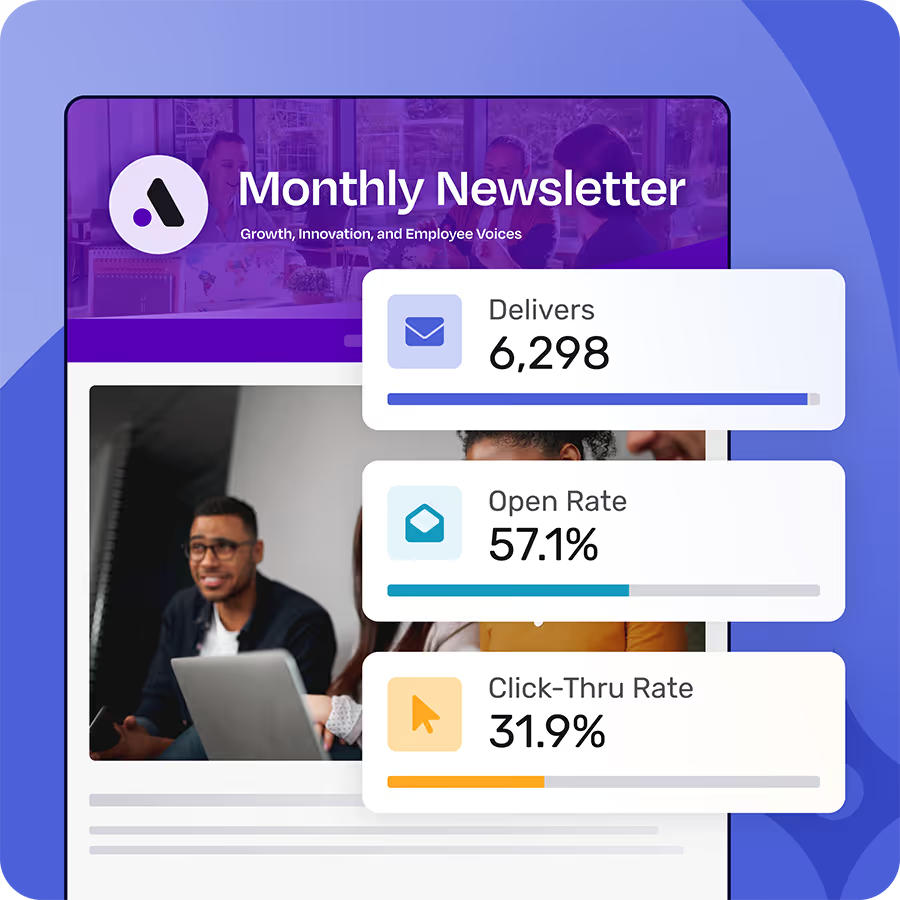
Foundations shows who opened, clicked, and engaged with your employee communications so you know what’s actually working. All for free - forever.
Learn more about FoundationsProve landing, the part of the role AI cannot fake
Send status is a weak finish line. An aggregate open rate will not tell you whether the warehouse supervisors who must change a process engaged, or whether corporate staff opened the note three times while the floor stayed dark. The role that survives automation is the one that can put names and segments on the miss list.
Per-employee engagement and acknowledgments turn "hope they saw it" into a follow-up queue. Retarget the people who never engaged and ask managers to speak with the segments that stayed dark. Running that rhythm is career insurance, because it lets you show leadership who the message reached and what you did about the gap.
Both Cerkl Broadcast analytics and Foundations Insights support that view on email sends without adding a heavy new reporting layer. Once the scorecard is written in named coverage, the AI draft debates quiet down and the team starts working on landing.
Start on Foundations while the role is shifting
You do not need a multi-quarter AI governance program to change how the role runs this week. Cerkl Foundations is free forever for purpose-built internal email. Build the blast, target a real audience with Audience Manager, keep a human on the high-stakes voice pass, send, and review engagement in Insights.
That stack supports four concrete moves this week. Pair every AI-assisted leadership note with a named reviewer. Cut one all-staff into two tighter audiences. Turn the non-reader list into manager follow-ups within forty-eight hours. Report coverage to leadership in people and segments.
Foundations covers Blasts, Audience Manager, and Insights. Cross-channel publishing, richer personalization, and omni-channel analytics sit on paid Omni AI when complexity shows up. Do not wait on those features to practice the new center of the job. The identity shift starts on email proof and human judgment.
Bottom line
How AI is changing the internal communications role comes down to which parts of the craft stay scarce. Readership, trust, judgment, and proof stayed scarce after drafting got cheap. Communicators who spend the freed hours on audiences and named coverage keep a job leaders defend.
Treat internal communications strategy as the practice of landing messages people read and believe, with AI as draft labor inside that practice. Start on Foundations and prove who engaged, so the role can grow toward the work software cannot finish.
If you're frustrated with Outlook or Gmail for your employee emails, we understand.
That's why we built Foundations. Purpose-built for internal email with all the features you wish you had - drag-and-drop email builder, analytics, employee segmentation and much more. All for free (forever). No credit card, no contracts, no setup fees.
Learn more about FoundationsFAQ
How is AI changing the internal communications role?
AI is accelerating drafting and first-pass production while readership, trust, political judgment, and post-send accountability stay human work. The role tilts toward judgment, audience design, voice stewardship, and proof of landing.
Will AI replace internal communications jobs?
AI will replace a portion of draft labor, and the outcomes leaders hire IC for sit past the draft. They still need employees who read and act, plus a communicator who owns the follow-up when coverage fails. Teams least exposed are the ones that can show named engagement and judgment on high-stakes sends.
What skills matter most for the future of the internal communicator job?
Stakes judgment, audience design, leadership voice coaching, and measurement that resolves to people and segments. Draft craft still matters, and the scarce center of the role has moved past it. An internal comms career in the AI era rests on judgment and on proof of who engaged and who still needs a human conversation.
How should IC teams use AI without losing trust?
Keep AI on drafts and low-stakes first passes. Require a human voice pass on change, safety, values, and hard news. Pair every important send with engagement follow-up so trust problems surface as coverage gaps you can name and act on.