Key Points for a Successful Employee Pulse Survey
- Employee pulse surveys are short, frequent surveys designed to capture real-time insights into employee engagement, satisfaction, and workplace sentiment. They offer a more agile alternative to traditional annual engagement surveys.
- Traditional engagement surveys remain more widely adopted, but pulse surveys are gaining traction, as nearly half of organizations now use them. Many are finding them more valuable for timely, focused feedback.
- Despite mixed satisfaction levels with pulse survey tools, 60% of those who use them say they provide valuable, actionable feedback that supports informed decision-making and workplace improvements.
- Well-designed pulse surveys can support timely, data-driven action, uncover subtle shifts in employee sentiment, and foster trust, transparency, and a culture of continuous improvement.
- Survey frequency should balance insight and sustainability, with many organizations opting for quarterly or bi-monthly pulse surveys, supported by tools that prioritize anonymity, mobile access, real-time analytics, and clear follow-through.
In today's fast-paced business landscape, a company's greatest asset is its workforce. But keeping them engaged, motivated, and satisfied can be a constant challenge. Traditional annual engagement surveys, while well-intentioned, can feel like a relic of the past, missing the nuances of employee sentiment shifts throughout the year. Employee pulse surveys are potentially a game-changing tool that provides real-time feedback, enabling organizations to stay attuned to the pulse of their people and respond promptly to concerns.
While employee pulse surveys appear to have gained in popularity, they continue to lag behind traditional engagement surveys in terms of adoption. According to Gallagher’s Employee Communications Report, based on their State of the Sector 2024/25 report, while 75% of organizations use engagement surveys, only 48% utilize pulse surveys.
The report states that the most divided area of channel satisfaction is the ability to perform a pulse listening activity. Survey results show that 24% are satisfied, 39% dissatisfied, and 27% neither satisfied nor dissatisfied. However, encouragingly, of the 48% of communicators who utilize pulse surveys as a listening channel, 60% said this channel was valuable in providing usable feedback to enable decisions.
It’s interesting to compare the perceived value of engagement surveys in general vs more specific pulse surveys. While the Gallagher survey didn’t compare the effectiveness of pulse surveys to engagement surveys, 75% of communicators stated they used engagement surveys, and 69% have found them to be of value, which is 9% more than those committed to pulse surveys.
Ultimately, it is vital that the benefits of real-time feedback and sentiment analysis aren’t overlooked. Thoughtfully designed, pulse surveys can uncover subtle shifts in employee sentiment, enabling timely, data-informed decisions. For organizations willing to invest, they offer a path to more responsive communication and a culture of continuous improvement.
What is an Employee Pulse Survey?
An employee pulse survey is a short questionnaire that is designed to quickly and regularly gauge the opinions, attitudes, and sentiments of employees within an organization. A primary purpose of an employee pulse survey is to provide a snapshot of the current state of employee engagement, satisfaction, and well-being, as well as identify areas for improvement.
Unlike lengthy annual surveys that are often conducted annually or biannually, an employee pulse survey is:
- Shorter and more focused on specific areas of interest at a particular time.
- More frequent than other types of surveys. They are conducted regularly, often quarterly or bi-monthly.
- Actionable, providing timely data so that organizations can address emerging issues and implement improvements.
Typically, an employee pulse survey includes a mix of questions that assess:
- Job satisfaction and employee engagement
- Communication and feedback
- Leadership and management
- Work-life balance and well-being
- Recognition and rewards
- Professional development and growth opportunities
- Company culture and values alignment
Employee pulse survey answers empower organizations to:
- Monitor trends and changes in employee sentiment over time
- Identify and address issues quickly, before they become major problems
- Make data-driven decisions to improve employee engagement and overall organizational performance
- Identify areas for improvement
- Develop targeted initiatives to address employee concerns
- Track progress and measure the effectiveness of initiatives
- Inform strategic decision-making and organizational planning
Overall, employee pulse surveys provide a powerful tool for organizations to listen to their employees, understand their needs, and make data-driven decisions to drive employee engagement, retention, and overall business success.
Employee surveys shouldn’t require email workarounds.
Foundations includes built-in pulse surveys so you can collect employee feedback directly in the same email you’re already sending.
Learn more about FoundationsBenefits of Pulse Surveys vs. Traditional Engagement Surveys
Traditional annual engagement surveys can offer valuable insights, but they usually lack the immediacy needed to capture the ever-evolving dynamics of a workplace. Because they are shorter and more frequent, pulse surveys provide a real-time snapshot of employee sentiment on specific topics. Here’s how they differ:
Gallagher’s 2025 Workforce Trends Report Series: Talent Benchmarks focuses on employee engagement together, with inclusion and diversity objectives. It states that the survey process and subsequent reporting should drive actionable changes rather than merely collecting data. Despite their State of the Sector 2024/25 survey finding that 75% of organizations use engagement surveys, data and insights featured in their U.S. Workplace Trends Report on talent benchmarks show that only 58% have conducted any sort of survey to measure employee engagement within the last two years. Additionally, 15% plan to conduct a survey within the next two years, and 9% conducted one more than two years ago, with 19% having no plans to conduct a survey to measure engagement.
While they don’t highlight pulse surveys, they do talk about frequency. And, of course, pulse surveys can be used to delve into elements of employee engagement.
Chris Dustin, Gallagher’s Managing Director, People and Workplace Experiences, states that employee listening - which is new in Gallagher’s State of the Sector 2024/25 survey - is essential. However, the way surveys are perceived depends on what happens after the data is collected. (That would apply to all types of surveys, including an employee pulse survey.)
“If employees notice meaningful changes and see that their feedback is being used positively, that’s way more effective than just doing monthly surveys. Surveys should act as a catalyst for change, and having a solid action plan is key to making it all work.”
Chris Dustin
How to Design an Effective Employee Pulse Survey
Crafting an effective pulse survey requires careful planning. Here's what you need to consider:
- Define your goals and objectives: What specific aspects of employee sentiment do you want to understand?
- Choose the right questions: Mix multiple-choice, Likert scale (which measures attitudes and opinions), and open-ended questions for a well-rounded view.
- Keep it short and engaging: Aim for 5-10 minutes to maximize participation.
- Ensure anonymity and confidentiality: Build trust by guaranteeing employee privacy.
What Should Your Employee Pulse Survey Tool Include?
When selecting an employee pulse survey tool, consider the following essential features to ensure you're getting the most out of your surveys:
- You want employee pulse surveys to be easy to create. They should also be mobile-friendly. Look for a tool that allows you to quickly build surveys and access them on any device, ensuring seamless participation from your employees.
- Aim for clear analytics and allow anonymous responses. Choose a tool that provides easy-to-understand data visualizations and guarantees the anonymity of employee responses, fostering a safe and honest feedback environment.
- Multiple-question formats work well. Opt for a tool that offers a variety of question types, such as multiple-choice, open-ended, and rating scales, to gather a comprehensive understanding of employee sentiment and provide a comprehensive data view.
- Action planning and integration are essential. Select a tool that enables you to turn insights into actionable plans. Make sure it integrates with your existing HR systems, allowing you to track progress and make data-driven decisions.
Additionally, consider the following features to further enhance your employee pulse survey tool:
- Automated reporting: A tool that provides automated reporting will save you time and effort in analyzing and presenting survey results.
- Customization options: Choose a tool that allows you to customize your survey questions, layout, and branding to fit your organization's unique needs.
- Real-time Feedback: A tool that provides real-time feedback and analytics will enable you to quickly address employee concerns and make data-driven decisions.
- Integration with other tools: Consider a tool that integrates with other HR systems, such as HRIS, LMS, or performance management software. This will help you to streamline your workflow and improve employee engagement.
Employee Pulse Survey Questions
It’s important to realize that pulse survey questions are short and used to gauge employee sentiment on specific aspects of the workplace. Typically, they consist of a small set of questions, often 5-10, that are designed to be quick and easy to answer. They may include:
- Multiple-choice questions
- Rating scales (e.g., 1-5)
- Open-ended questions
- Net promoter score (NPS) questions
- Agree or disagree
Here are some sample questions you can adapt to your specific needs:
- How satisfied are you with your current role? (Scale of 1-5)
- I feel invigorated by the tasks I undertake daily. (Agree/Disagree)
- Do you feel you have a good work-life balance? (Yes/No)
- Overall, how would you rate your experience working here? (Scale of 1-5)
- Is there anything we can do to improve your work experience? (Open-ended)
Launching and Promoting Your Survey
Before sending out your survey, think about these key factors:
- Timing is everything: Decide how often you want to send out your survey (e.g. every month or twice a month) and choose the best times for people to participate.
- Choose the right platform: Pick a user-friendly platform like Cerkl to streamline and simplify the process.
- Encourage participation: Make sure people understand the purpose of the survey, and that their responses will be kept anonymous. You can also consider offering a little something extra to incentivize and motivate people to take part.
How Often Should You Send Pulse Surveys?
The frequency of pulse surveys should strike a balance between staying informed and avoiding survey fatigue. While there’s no universal rule, many organizations find that sending surveys quarterly or every two months allows them to keep tabs on employee sentiment without overwhelming teams or compromising response quality.
Monthly or even weekly pulse surveys can be effective in fast-moving environments or during times of major change, such as mergers, restructures, or crisis response. However, higher frequency requires strong internal processes to quickly analyze and act on feedback. If employees don’t see visible outcomes from frequent check-ins, trust in the process may erode. At the same time, the more frequently an employee pulse survey is sent out, the shorter it should be. For instance, if you opt for a monthly survey, 10-15 questions is optimum, while a quarterly pulse survey should contain 15-20 questions.
Ultimately, the right frequency is one your organization can support with consistent follow-through. Pulse surveys should be part of an ongoing conversation, not a box-checking exercise. Whether you survey every four weeks or every quarter, the key is to communicate findings, take action, and close the loop every time.
Nevertheless, there is a caveat. According to the Qualtrics 2025 Employee Experience Trends report, employers aren’t bombarding employees with daily, weekly, or even monthly surveys. Instead, they are focusing on “passive listening” and tapping into what they call unsolicited data. Examples they cite include employees who decline meetings, answer questions on public platforms, or email customers.
“Employees don’t want to fill in surveys every day, but they also want their employers to understand and improve their experiences. This is why organizations are going beyond surveys with passive listening, making better use of the data that already exists in their work systems.”
Qualtrics
Analyzing and Interpreting Results
The true value of an employee pulse survey lies in taking action based on the results. Despite advances in employee listening technology, many organizations aren’t harnessing the opportunities presented by valuable employee feedback.
Qualtrics is now focusing on employee listening. Their 2025 Employee Experience Trends report examines “the state of employee listening,” finding that the percentage of employees asked for feedback more often than once a year rose from 35% in 2024 to 48% in 2025.
However, they also found that many leaders are making daily decisions that impact people without timely, relevant employee experience data.
“Leaders will struggle to build trust if they only have access to and inform their decisions based on financial and operational information. It’s experience data that helps them make smarter, better decisions that build trust, increase profitability, and enhance experiences for employees.”
Qualtrics
Whatever data and information you extract from pulse surveys, there are steps you need to take to make the best of it.
- Analyze and interpret results: Identify trends, patterns, and areas requiring attention.
- Benchmark against industry standards: Understand how your employee sentiment compares to similar companies.
- Utilize open-ended responses: Gain a deeper understanding of employee concerns and suggestions.
- Develop action plans: Prioritize issues, assign ownership, and establish timelines for improvement.
- Communicate and demonstrate progress: Keep employees informed of actions taken based on their feedback.
Building a Culture of Continuous Improvement with Cerkl
Employee pulse surveys are a powerful tool for fostering a culture of continuous improvement within your organization. By regularly gauging employee sentiment and taking action based on feedback, you can create a more engaged and productive workforce.
Cerkl Broadcast Pulse Survey solution makes it easy to design, launch, analyze, and take action on your pulse surveys. Just be aware that you have only one Pulse Survey question available for each Broadcast Email Blast you send. For this reason, instead of sending employee pulse surveys weekly or monthly, it works to continue the survey over five days to a week. The benefit is that you can improve employee engagement because the questions will be part of a single theme. Still, if you do this, it’s important to plan your questions in the same way you would for any other pulse survey.
We asked members of the Cerkl Customer Services (CS) team to provide insights into how Cerkl Broadcast clients use pulse surveys.
How Do Organizations Use Cerkl Broadcast Pulse Surveys?
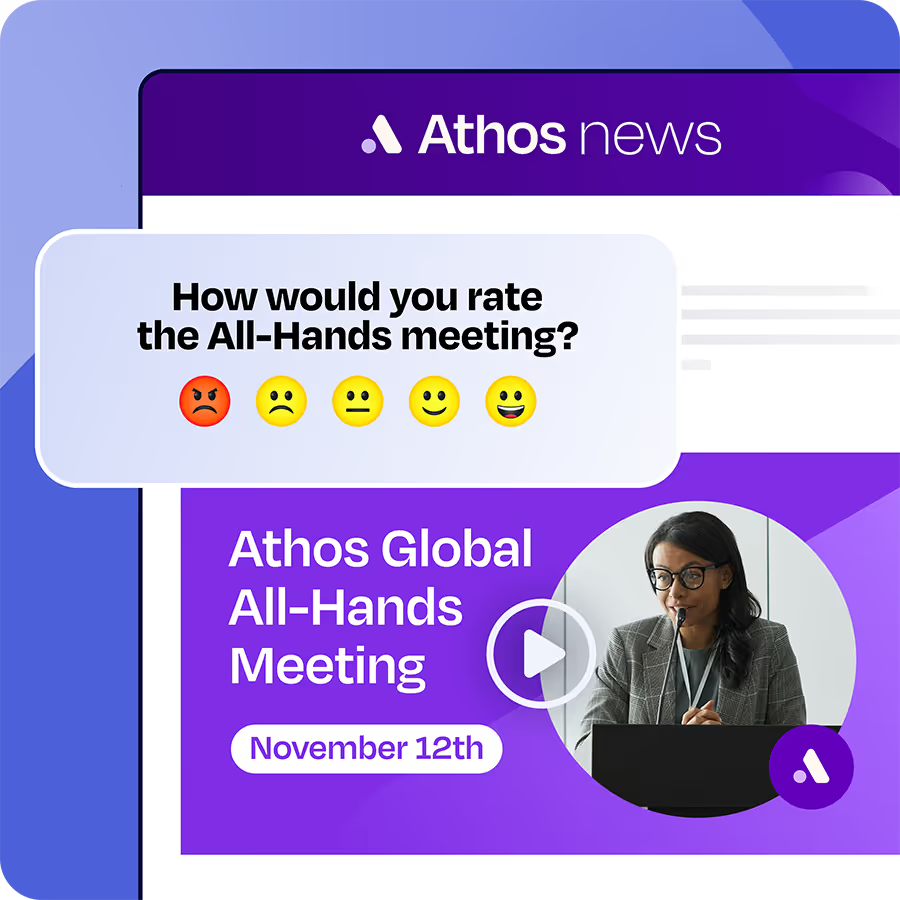
Typically, Cerkl clients use Broadcast Pulse Surveys at the bottom of the Email Blasts for quick feedback. They also use them to encourage ideas and employee engagement.
Questions might include:
- How would you rate your onboarding experience?
- How are you feeling about your job today?
- Have you heard about our new feature?
- How likely are you to recommend our company to a friend?
It might even simply ask if the email Blast was helpful.
Sometimes they include an invitation for employees to add something further. For example, the Pulse Survey question might ask if they enjoyed this week’s Broadcast News Digest. This is followed by a request for more ideas to be emailed or added to a collaboration channel like Teams or Slack.
Another idea some Cerkl clients love is to use the Pulse Survey for a question of the week. They can be trivia questions about the company or feedback/questions on timely topics. Then, they’ll put the responses from the previous week in each newsletter. This is a fantastic way to increase employee engagement.
What’s Next?
With Cerkl Broadcast, you can add a quick pulse survey right at the end of your Email Blast. This is perfect for gathering real-time reactions, sparking new ideas, or even running a “question of the week.” It’s an easy, low-effort way to keep employees talking and teams listening.
You can experience how simple feedback can inspire meaningful action. Start using Broadcast pulse surveys today. The function comes with our free Foundations Subscription Tier, which will also enable you to send up to 5,000 employee emails monthly, bring three team members on board, and learn firsthand how Broadcast helps you move from sending messages to driving outcomes.
Sign up now.
If you're frustrated with Outlook or Gmail for your employee emails, we understand.
That's why we built Foundations. Purpose-built for internal email with all the features you wish you had - drag-and-drop email builder, analytics, employee segmentation and much more. All for free (forever). No credit card, no contracts, no setup fees.
FAQ
What is an employee pulse survey? An employee pulse survey is a short, frequent, and informal survey that measures the sentiment and opinions of employees on specific topics, providing a snapshot of their feelings and attitudes toward their work, organization, and leadership. It is typically used to gauge employee sentiment and identify trends and areas for improvement.
What are questions for a pulse survey? Questions for a pulse survey can vary depending on the organization's goals and objectives, but common examples include questions about employee satisfaction, engagement, communication, leadership, teamwork, and job satisfaction. Some examples of pulse survey questions include "How would you rate your overall job satisfaction?" or "Do you feel valued and recognized by your manager?"
What is the difference between pulse survey and employee engagement survey? The main difference between a pulse survey and an employee engagement survey is the frequency and scope of the survey. Pulse surveys are typically shorter, more frequent, and focused on specific topics or issues, while employee engagement surveys are longer, less frequent, and more comprehensive, aiming to measure overall employee engagement and satisfaction.
Why do employees do pulse surveys? Employees participate in pulse surveys because they want to be heard and have their voices amplified, allowing them to provide feedback and input on issues that matter to them. By participating in pulse surveys, employees feel more connected to their organization and more likely to feel valued and recognized, which can lead to increased job satisfaction and reduced turnover.
Did you enjoy this content?
Please share it with your internal comms friends and colleagues.
Just click on any of the links below.