10 Best Employee Communication Software Options for 2026
10 Best Employee Communication Software Options for 2026
This guide compares leading employee communication software platforms and explains what matters most as comms gets more complex. It emphasizes mass personalization, stronger segmentation, and analytics that link comms to productivity and outcomes. Use it to shortlist tools based on channels, targeting, and measurement depth. The bottom line: platform fit should match your workforce complexity, not just features.
Written By:
Cerkl Research Team
Published:
December 26, 2025
When internal communication works, everything else runs more smoothly. Collaboration improves, engagement rises, and people are more likely to read the messages you send. That’s why more companies are turning to sophisticated employee communication software to streamline how they connect with their workforce.
According to Project.co’s Communication Statistics 2025, 67% of companies implemented new communications tools “in the last 12 months.” At the same time, they found that 63% of people admitted to wasting time and 59% said they had missed messages as a result of communication issues in their businesses.
Grammarly’s 2024 State of Business Communication report stated that companies with effective internal comms practices had increased their teams’ productivity by 55%. However, their 2025 annual report, The Productivity Shift, reveals that workplace productivity is at a breaking point. The reason, they state, is “communication inflation - an excessive or unnecessary increase in the volume of communication that outpaces its value, diminishing productivity and clarity,” stifling productivity and growth. Their research shows that 60% of professionals struggle to focus on tasks because of the constant flow of notifications. The bottom line is that this problem costs companies $9.3 million annually for every 1,000 employees.
As organizations grow more distributed and complex, the value of personalized, scalable communication has never been more apparent.
But not all tools are created equal. Some platforms are still built for one-size-fits-all messaging. Others are evolving fast, using AI and behavioral data to tailor communication down to the individual employee.
At Cerkl, we believe that effective employee communication channels, including automated news digests, significantly improve engagement through personalizing messaging at scale. However, the landscape is brimming with tools, each with unique strengths. Before evaluating our top 10 contenders, let’s touch upon the importance of personalization and its effects on both companies and employees.
Mass Personalization: A Must-Have Feature of Employee Communication Software
Personalization is changing how internal teams communicate. However, many existing communication tools fall short when it comes to delivering the required capabilities for internal communicators.
According to Gallagher’s 2025Employee Communications Report, 49% of internal comms professionals still have low levels of satisfaction when it comes to personalizing content. This response is based on satisfaction with the tools they have to do the job. Furthermore, only 30% are content with their tools.
Gartner predicts that by 2028, more than 20% of workplace applications will incorporate AI-driven personalization algorithms to create adaptive, user-centric experiences for employees.
Tori Paulman, VP Analyst at Gartner, emphasizes that the apps used for work should feel as intuitive and empowering as the most popular consumer apps.
“That's exactly what employees are craving - a seamless, personalized, and omnichannel digital experience that mirrors the ease and consistency of mainstream consumer applications.” Tori Paulman
Whether it’s through AI-curated newsletters, behavior-based segmentation, or smart delivery timing, mass personalization is quickly becoming the new baseline for internal communication tools. If you’re evaluating new employee comms software this year, it should be at the top of your checklist.
How We Conducted This Analysis
To provide an unbiased and comprehensive view of the leading employee communication platforms, I do a regular evaluation of how alternative solutions perform against Cerkl Broadcast in the realm of mass personalization.
This analysis focuses on core capabilities, including:
AI-driven content, timing, and channel personalization
Behavioral data usage for targeting
Manual vs. automated segmentation
Multichannel content delivery
Real-time employee experience customization
We have compared Cerkl Broadcast to major players, Firstup, Poppulo, Staffbase, Workvivo, Haiilo, Unily, ContactMonkey, Simpplr, and Axios HQ.
For convenience, I’ve also compiled my findings into this easy-to-read summary so internal communicators, IT, and HR leaders can quickly assess the platforms side by side.
Snapshot: 10 Best Employee Communication Software Options for 2026
Platform
AI-Driven Personalization
Automated Audience Segmentation
Behavioral Targeting
Multichannel Personalization
Real-Time Customization
Cerkl Broadcast
Yes - AI (MyNews) curates content per employee, optimizing content and send-time per person.
Yes - Dynamic segments from HR/SSO data; rule-based and auto-updating.
Yes - Learns from engagement (opens, clicks, interests) to tailor future content.
Yes - Real-time AI recommendations and instant adaptations.
Comparative Analysis of the Best Employee Comms Platforms
Use this analysis to see where each platform excels - and where it doesn’t - so you can align features with your communication strategy and program scale.
#1 Cerkl Broadcast
Cerkl Broadcast is an internal communication platform designed to intelligently deliver the right content to the right employee at the right time, across multiple channels - email, intranet, and mobile. Unlike platforms that rely solely on audience segmentation or manual distribution, Cerkl Broadcast uses AI-powered personalization to scale 1:1 communication without creating more work for internal comms teams. Its advanced personalization model goes beyond static audience groups and introduces dynamic, behavior-driven delivery that continuously adapts to each employee.
Mass Personalization
Employee-level curation: MyNews assembles content per person using role, location, declared interests, and live engagement signals.
Dynamic segments: Auto-update from HRIS/SSO attributes and behavior; minimal manual list work.
Real-time customization: employees set interests/frequency, send-time adapts, and personalized previews before sending.
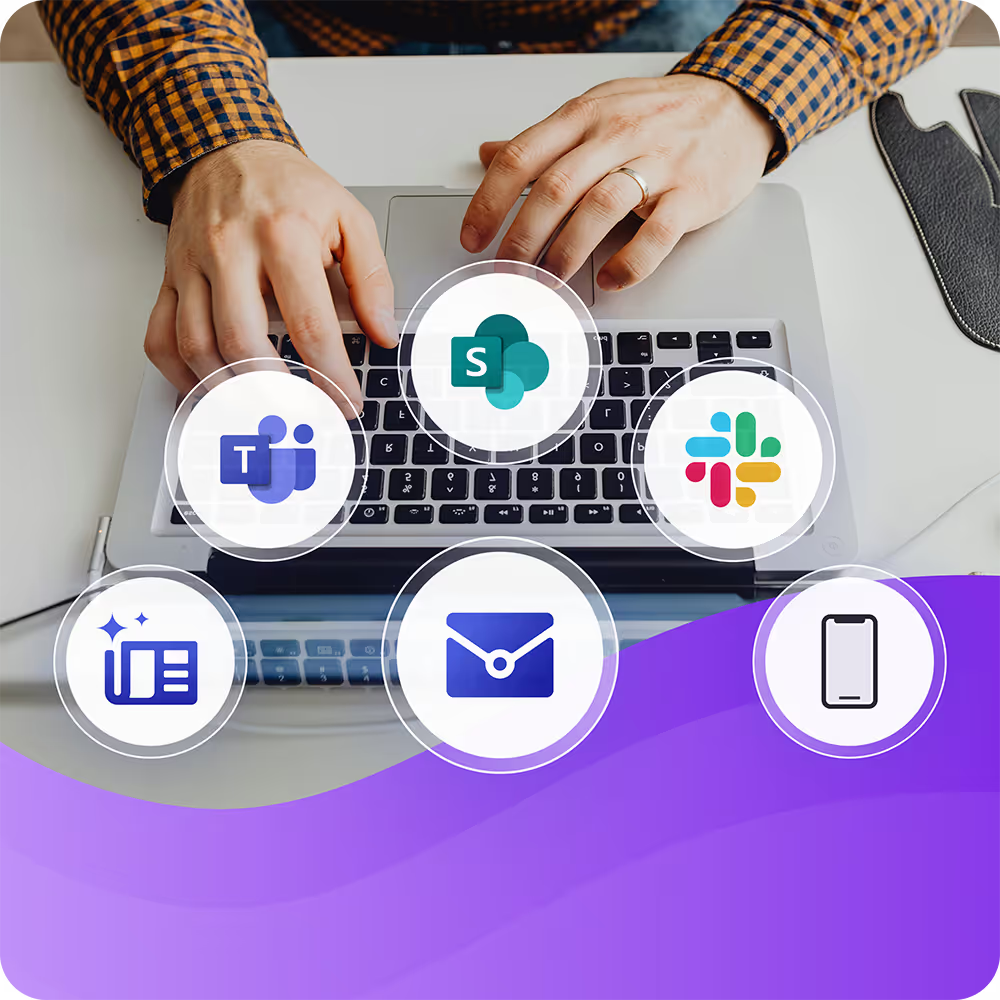
Multichannel: Email Digests (News Digests and Email Blasts), intranet widgets, Teams/Slack, mobile - respects employee channel preferences.
Strengths
Proactive delivery engine that pushes priority updates directly with no reliance on intranet visits. Important messages surface even for passive users.
Raises relevance while reducing blast fatigue.
Works across channels from one content pool and produces strong analytics.
Privacy comes first. Fully GDPR-compliant, transparent personalization logic with clear opt-in controls.
Proof: St. Elizabeth Healthcare saw 54% opens (employees) and 46% (medical staff) after moving to personalized News Digests.
Limitations
Not a full intranet/ESN. Pairs with existing hubs.
Best results require clean directory/HRIS data and basic setup for integrations.
Advanced personalization can exceed the needs of very simple, one-channel use cases.
Relying on multiple employee communication channels?
Broadcast Omni AI helps large organizations deliver personalized communication across email, mobile, Teams, intranet, and more. Content orchestration at scale.
An enterprise-grade intranet/employee experience platform that provides a customizable digital workplace with rich integrations, content management, and centralized employee services.
Mass Personalization
AI-assisted content recommendations within the intranet experience.
Role/location/topic-based targeting for pages, news, and widgets.
Personalization is primarily delivered during intranet visits (pull model).
Strengths
Flexible UX with widgets and strong Microsoft 365 alignment.
Mobile app and email notifications support.
Scales well for complex, global intranet use cases.
Limitations
Engagement reliant on intranet adoption/logins.
Per-user, cross-channel, send-time optimization is limited.
Enterprise setup and governance can be resource-intensive.
#3 Haiilo
Haiilo is an employee experience platform combining intranet, advocacy, and survey/listening tools that are accessible via web and mobile.
Mass Personalization
Manual audience segmentation plus automated newsletters. AI assists with creation/summaries, but delivery is mainly segment-based.
Basic targeting by groups/departments; advanced targeting typically requires additional modules.
Pull-oriented model (intranet/mobile): personalization happens at the audience level rather than per-user behavior.
Strengths
Broad platform with intranet + mobile + advocacy + surveys in one.
Automatic translations and frontline reach features.
Solid engagement features and reporting.
Limitations
No deep, behavior-driven 1:1 delivery by default.
Intranet-first approach risks lower reach without active visits.
Some advanced analytics/features are add-ons.
#4 Workvivo
Workvivo is a social intranet and employee app focused on engagement, community, and leadership visibility. It is mobile-first with a familiar social feed.
Mass Personalization
Social feed; targeted posts/streams by role, location, and groups.
Primarily app/web feed. Email notifications are available.
Strengths
High engagement via social UX and executive comms.
Strong mobile experience and digital signage options.
Backing and integrations within the Zoom ecosystem.
Limitations
Not built for individualized send-time/content assembly per-user.
Partial multichannel beyond its own app/web plus email notifications.
Requires moderation/governance at scale.
#5 Staffbase
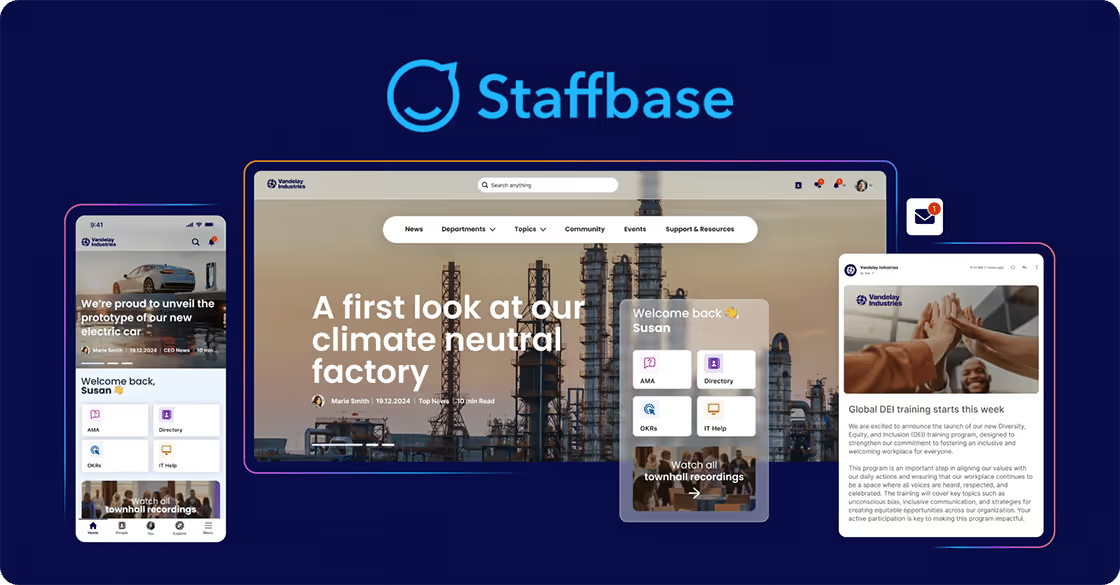
Staffbase is a comprehensive internal communications platform that combines intranet, employee app, and internal email for centralized content, branding, and distribution.
Mass Personalization
AI-assisted content creation and strategic timing/journeys, and personalization via segments/tokens.
Dynamic groups (e.g., new hires) and campaign targeting.
Strong branding, content workflows, and templates.
Mature analytics and governance for larger programs.
User preference controls available.
Limitations
Personalization is largely segment-based, not per-employee autonomous/predictive delivery.
Total cost can increase with add-ons/modules.
Requires process discipline for best outcomes.
#6 Poppulo
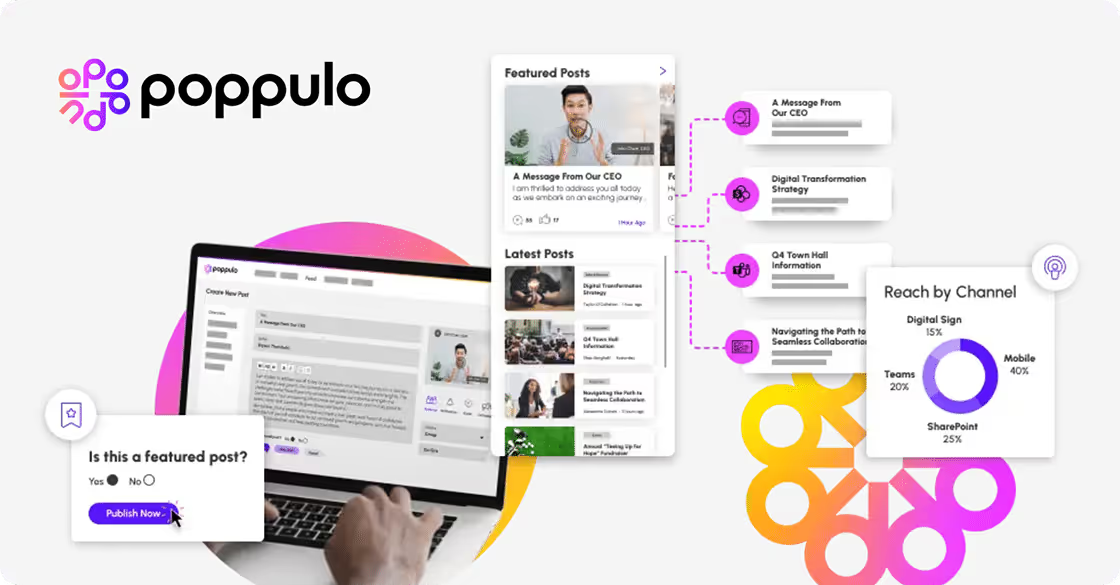
Poppulo is an omnichannel employee communications platform with roots in internal email, now spanning email, mobile, signage, Teams/SharePoint, and personalized feeds.
Mass Personalization
Personalized feeds with attribute-based targeting. Employees can follow topics/groups.
Auto-segmentation from HR data, plus EngageAI assists segment formation as the organization changes.
Predictive analytics inform channel/time. Depth of per-employee optimization varies by setup.
Strengths
Broad analytics and enterprise scalability.
Digital signage plus workplace integrations broaden reach. Real-time alerts across channels.
Omnichannel (email, mobile app Feeds, intranet, digital signage, Teams/SharePoint). Good fit for multi-site, multichannel organizations.
Limitations
Complexity can be high for smaller teams.
Depth of per-user prediction depends on enterprise configuration.
Less focus on per-user digest assembly than on feed orchestration.
#7 ContactMonkey
ContactMonkey is an internal email solution embedded in Outlook and Gmail (with optional SMS). It is focused on simple creation, delivery, and feedback inside existing mail clients.
Mass Personalization
Dynamic/conditional content blocks and segmented lists.
Minimal AI (e.g., subject line help). No behavior-driven AI curation or per-user send-time optimization.
Email-first (limited beyond email/SMS). Basic SharePoint/Teams sharing in some tiers.
Strengths
Low-friction adoption in Microsoft/Google environments.
In-email polls/reactions for quick feedback.
Familiar adoption path and workflows for comms teams.
Limitations
Essentially one-channel (email) personalized.
Follow-ups are manual, with no autonomous retargeting beyond basic rules.
User-friendly, structured comms and content discoverability.
Strong search, governance, and analytics direction.
Good Microsoft ecosystem compatibility.
Limitations
Not optimized for per-user, cross-channel send-time/content assembly.
Reach depends on intranet adoption.
Requires page/content ownership discipline.
#10 Axios HQ
Axios HQ is a writing-focused communication platform built around Smart Brevity® to improve clarity and engagement in internal updates.
Mass Personalization
Audience lists/segments, with no behavior-driven per-user curation.
Distributes to email and can share to Slack, Microsoft Teams, and SharePoint (summary + link).
AI assists with brevity/structure more than targeting.
Strengths
Excellent for clarity, consistency, and editing guidance.
Simple multichannel sharing from a single edition.
Useful analytics for message performance.
Limitations
Not an intranet or full EXP.
Personalization depth is limited to manual segments.
Automation/orchestration is lighter than suite platforms.
Final Verdict: The Best Employee Communication Software
After examining each platform, we recognize that in late 2025, most vendors now offer some form of “AI,” but it’s often aimed at creation, insights, or audience-level targeting. Cerkl Broadcast remains differentiated by employee-level content and timing via MyNews plus dynamic segments across channels-reducing blast fatigue and lifting relevance-while intranet-first tools (Unily, Simpplr, Workvivo) and orchestration suites (Firstup, Poppulo, Staffbase) vary in how far they go beyond segment-based delivery. ContactMonkey and Axios HQ remain lighter, email-centric options.
How to Choose Your Ideal Communication Companion
Choosing the right employee communication software for your organization starts with understanding your current landscape and aligning on needs across Comms, HR, and IT. Weigh total cost (license + rollout + admin) against the value you’ll get from adoption, integrations, and analytics.
Mobile access for frontline and on-the-go employees
Robust analytics and reporting
Surveys and pulse listening
These capabilities enable targeted, multichannel messaging. When platforms also use behavioral data (opens, clicks, preferences), relevance and action rates improve, increasing the effectiveness and relevance of internal messaging.
Before you decide which employee communication software you are going to use for internal communications, you need to know what capabilities you need from your internal communication software for business. Be sure to tailor your choice to your needs. For instance, consider your company size, employee count, communication needs, and desired features.
Take stock of your current communication landscape. Do a quick audit of how your teams communicate now. Identify any pain points or areas for improvement. Get input from relevant teams to understand their communication needs. This will help you choose a platform that solves real problems and boosts collaboration. Focus on features that address your priorities.
Once you understand your communication needs, prioritize features that directly address them. Integration capabilities, file sharing, and employee data management might be crucial depending on your findings. Also, ask yourself whether it’s user-friendly, cost-efficient, and mobile accessible - and be sure it has great security features.
Consider integrations with other essential applications, such as project management tools and small business CRM systems, because these can enhance communication efficiency immensely. Establish the total cost of ownership, including licenses, implementation, training, and ongoing admin.
The Cerkl Broadcast Advantage
By specializing in dynamic newsletters, Cerkl empowers you to hyper-personalize communication at scale. This targeted approach fosters a more engaged workforce, reduces information overload, and keeps everyone aligned. Don’t settle for generic communication - unlock the power of personalization with Cerkl.
Mass personalization has been key for Stanislaus State University. With around 10,000 students, personalization provided by Cerkl Broadcast has enabled them to drive engagement in a way they never dreamed possible. “Partnering with Cerkl has been a game-changer for our campus community. Their innovative approach to email communications has not only streamlined our internal messaging and significantly boosted open and click-through rates, but also provided us with the ability to measure the success of our communication strategies,” says Stan State’s Director for Communications and Creative Services, Kristina Stampe
“AI saved our inboxes and we couldn’t be happier.” Kristina Stampe
St. Elizabeth Healthcare initially partnered with Cerkl to improve employee engagement with personalization. While they have subsequently embraced many more Broadcast features, mass personalization and segmentation remain their heroes of the platform.
Communications manager, Chad Schwalback, says what attracted them to Cerkl Broadcast was “the personalization aspect.” And they aren’t sorry.
“The biggest thing we’ve noticed, since implementing Cerkl Broadcast, is that our readership, our clicks, and our opens, are all up - and they’re all above national averages. And so, not only is it satisfying for me as a communicator to know that we’re reaching people, we’re giving them information that engages them, and it makes it easier to go up the chain.” Chad Shwalback
Why not improve internal communication with Cerkl Broadcast? Our audience management platform delivers personalized newsletter and email content to engage and inform employees. Join millions of satisfied employees who trust us to streamline their companies’ communication and improve employee satisfaction. To learn more, schedule a chat with us.
Employee communication software is a digital toolbox designed to improve internal communications within an organization. It enhances the flow of information, collaboration, and engagement among employees-regardless of location or work setup. Common features include chat, video calls, and news feeds to keep teams informed and connected.
What is the best communication method for employees?
There is no single best method for employee communication, as different situations require different tools. Effective communication typically involves a mix of approaches, such as instant messaging for quick updates and video conferencing for in-depth discussions. Intranet or digital workplace platforms have become especially important for centralized communication and engagement.
Which software helps in communication?
Many software solutions support employee communication, including platforms that offer chat, file sharing, and social-media-style feeds. These tools help centralize communication and keep everyone aligned. Common employee communication devices include desktop computers, laptops, and smartphones.
Did you enjoy this article? Please share it with your internal comms friends and colleagues. Just click on any of the links below.