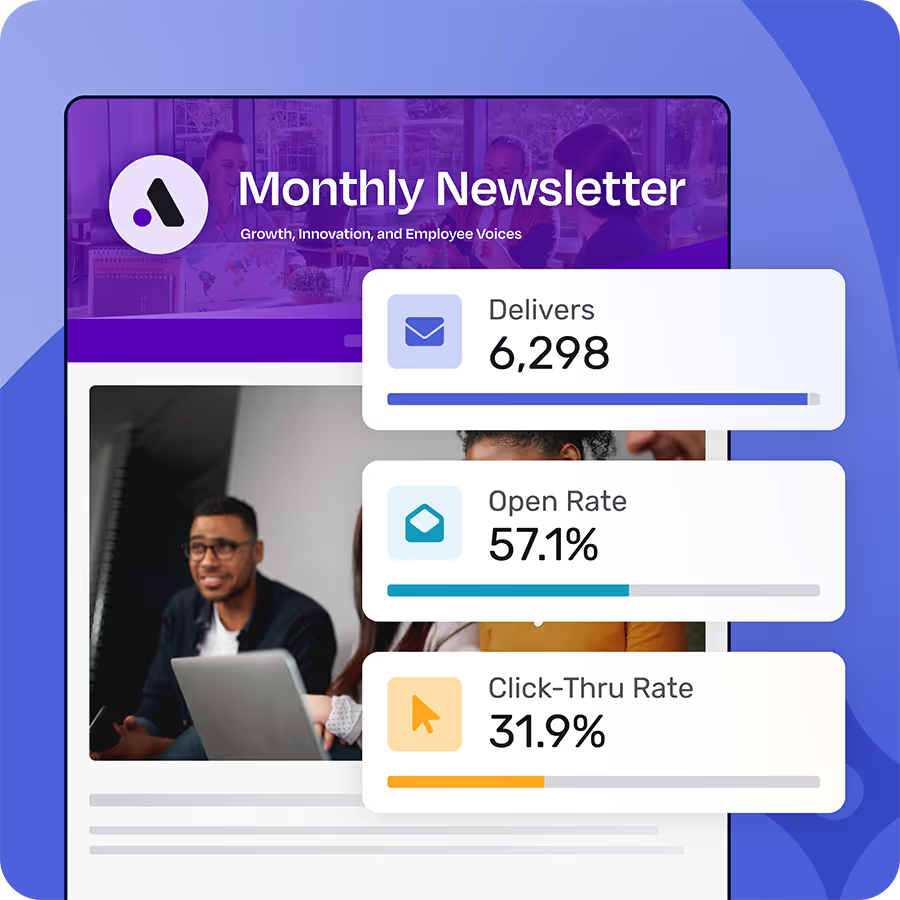
Most internal communicators can tell you how many emails they sent last month. Far fewer can tell you what those emails changed. That gap is the whole problem with how to measure internal communications: teams track activity, leadership expects outcomes, and the space between the two is where a communicator's credibility lives. Closing it does not take a data analyst. It takes answering five questions about your last send, in order, and letting the answers steer your next move. Rachel Folz and Maddy Rieman, who lead product and customer success at Cerkl, have spent a decade watching communicators get stuck on these same five, and the questions double as a self-diagnosis you can run against your last campaign today.
Question 1: Who received the message?
This sounds like a settled question until a stakeholder reopens it. Someone claims they never got a critical email, their manager escalates, and now you are digging through exports and screenshots to prove a message was delivered instead of writing the next one. "You waste probably an hour of your life trying to dig through this," Folz said, "and this happens all the time." Reach is the foundation everything else sits on, so confirm it before you measure engagement.
Answering this well means visibility that starts before you hit send, not after the complaint lands. Build an audience and you should see exactly who is in it, with the ability to search for a specific person. After the send, an audience report should let you slice delivery down to a single subscriber, so "did Maria get it?" takes ten seconds rather than an afternoon. These are the internal comms metrics that matter first, because they answer the question leadership asks before any other.
Question 2: Who is engaged, and who isn't?
Open and click rates make useful benchmarks, and they also hide the stories that matter most. "A strong open rate might still mean a key audience was missed," Folz said. A low click rate might mean employees got what they needed from the message itself. The number that looks fine at the company level can mask a frontline that never opens the portal, managers who skim leadership updates, or one location slipping.
The fix is to stop looking at everyone at once. Group your audience into segments and compare them, frontline versus corporate or new hires versus tenured staff. A cohort of January new hires engages differently than employees three years in, and watching that curve tells you whether onboarding communication is landing. This is where measurement moves beyond open rates into something closer to understanding behavior, which is the point Folz kept returning to. Measurement should tell you what employees do with a message, past whether they opened it.
Question 3: When should you send?
Every communicator has heard "we need this out right now." Emergencies are real, and most sends are not emergencies. Leadership feels urgency, employees are already flooded, and the timing of a message shapes whether anyone absorbs it. "The best send time is rarely determined by opinion," Folz said. "It's determined by audience behavior."
Read that behavior before you schedule. Filter to the audience you care about, say employees in one office, and look at their delivery, open, and click patterns over time. You will often find a message sent at 10 a.m. Tuesday gets opened at 4 p.m. Thursday, or that certain days are already crowded with competing communication while others sit empty. A heatmap of when people engage turns the scheduling debate into evidence. Instead of guessing, you can tell a leader that Wednesday at 3 p.m. has performed well for this audience, a very different conversation to have with a numbers-driven executive. You bring the craft of communication; the data supplies the timing.
Question 4: What content actually resonates?
Clicks and opens confirm that something happened. They do not tell you what an employee valued. Once you know who received a message and who engaged, the next question is what people respond to, and that answer reshapes your editorial calendar. Look at performance across categories, campaigns, and channels rather than one message at a time. Benefits reminders behave differently than culture stories, and the same content can perform one way in email and another in a mobile app.
Patterns are where the value shows up. You can see which topics consistently earn attention, which formats drive action, and which categories employees ignore. Rieman describes pairing a topic people already want with one they tend to skip: "A lot of our customers see the lunch menu being super engaging, because they want to know what's on the menu today. So how can you pair that with other content?" Left without data, content decisions fall to habit or whoever argues loudest in the room. With it, you can say that stories of one type outperform another and spend your limited hours on what employees return to. Measurement here becomes a source of organizational intelligence about what your workforce needs and pays attention to.
Internal emails shouldn't be a black box.
Foundations shows who opened, clicked, and engaged with your employee communications so you know what’s actually working. All for free - forever.
Learn more about FoundationsQuestion 5: What should you improve next?
The most useful analytics do more than explain what happened. They tell you what to change. This is the shift from reporting to optimization, and it is the question that separates a communicator who sends from one who advises. The data surfaces underperforming categories worth rethinking, and senders whose messages outperform a generic company address. It also flags audiences that are getting more than they can absorb. Find a manager or executive whose name drives engagement and you have a repeatable tactic. A segment going quiet is an early warning leadership will want.
Tie those findings to a business outcome and the reporting lands differently. Rieman points to a campaign to move employees off a legacy tool before a contract renewed: "Being able to say we completed this migration on time and saved the business this many dollars immediately earns you a seat at the table." That framing turns a communication result into a business result, which is what a leadership audience funds. A recurring internal comms report built around one or two outcomes like this does more for your standing than a dashboard of twenty metrics nobody asked for.
From measurement to a strategic seat
Answer these five questions consistently and the job changes. You stop being the person who sends messages and become the person leadership consults before deciding, because you hold data no one else in the building has, the cause and effect between a message and how an audience behaved. That is what Folz means when she calls data a superpower for communicators. None of it requires an analytics background. A tool built for communicators rather than analysts should let you build a leadership-ready view in minutes, the premise behind Cerkl Broadcast's analytics and the free Foundations plan, where you can send from your own domain and read these signals without a contract. If you want to hear Folz and Rieman work through all five questions in detail, the full conversation is here. Start with your last send, ask who received it, and follow the questions from there. The answers will tell you what to do next.
If you're frustrated with Outlook or Gmail for your employee emails, we understand.
That's why we built Foundations. Purpose-built for internal email with all the features you wish you had - drag-and-drop email builder, analytics, employee segmentation and much more. All for free (forever). No credit card, no contracts, no setup fees.
Learn more about FoundationsFAQ
What should internal communications measure beyond open rates?
Open and click rates are useful benchmarks, but they hide differences between audiences. Measure delivery and reach first, then compare engagement across segments like frontline staff, managers, new hires, and locations. The more valuable signals are which content categories earn sustained attention, when specific audiences engage, and whether a message drove the behavior it was meant to.
How do you measure internal communications without a data analyst?
Use a platform built for communicators rather than analysts. The work comes down to five questions: who received the message, who engaged, when your audience is most likely to read, what content resonates, and what to improve next. Tools like Cerkl Broadcast surface these through audience reports, segments, and heatmaps, so a communicator can build a leadership-ready view in minutes without writing queries or exporting spreadsheets.
What is the best time to send internal communications?
There is no universal best time. The right send time comes from your own audience's behavior. Filter to the group you are sending to and look at their delivery, open, and click patterns over time, often visualized as a heatmap. That shows when employees engage and where your calendar is already crowded, letting you place important messages when people are most likely to read them.
How do you prove the ROI of internal communications to leadership?
Connect a communication campaign to a business outcome rather than reporting opens and clicks. Start by asking the requester what action the message should drive and what it is worth to the business. Then measure against that goal. A campaign that moved employees off a legacy tool before a costly contract renewed, reported as dollars saved, earns more credibility with leadership than any engagement metric on its own.