Standing up internal comms without an IT project is possible when sync and identity stay configuration work. Treating stand-up as a multi-sprint build is the wrong default. IC launches the channel without a new server build or a custom ETL calendar, and keeps the systems employees already use. The communicator owns the program and the first live send on a real audience. IT reviews security and identity trust once. Split the work that way and your internal communications program goes live on a configuration path, with the heavy implementation model reserved for the cases that need it.
Why IC and IT still frame a new tool as an IT project
Most default briefs still look like legacy intranet and mailbox installs. Someone writes "new communications platform" on a ticket, and IT scopes it as a server build paired with a custom sync job. Security review becomes one more task inside that implementation, and the comms team waits in the same line as every other system change.
Both sides inherit that frame. Vendors burned IT with tools that promised self-serve setup and then demanded months of integration labor. The last intranet or portal refresh taught IC to treat every new channel as a capital project. Teams that want internal comms without replacing the intranet already know destination and delivery are different jobs, and the same logic applies to stand-up. Delivery and audience plumbing ship without a rip-and-replace program.
That frame costs wait time while the next safety or benefits send still rides stale lists. Gallagher's State of the Sector research, reported by digit.fyi in February 2025 from Sharn Kleiss's ITSX Summit keynote covering more than 2,000 IC and HR leaders across a UK- and US-focused sample, found that 44% of communicators describe their IT relationship as transactional and 8% as obstructive. The same coverage reported that 23% of communicators spend a significant portion of their week maintaining tools and technology, and that less than half felt they had the right tools for personalisation and segmentation. That is the week-to-week tax of a stack that never leaves the ticket queue.
IDC put numbers on the implementation model in one market. Its State of SaaS Adoption in India Survey 2024, commissioned and summarized in a Zoho press release on March 5, 2025 (n=240 organizations with 1,000+ employees that adopted SaaS since 2020), found that 75% of those Indian enterprises faced SaaS implementation delays, with an average timeline overrun of 57% and cost overrun of 43%. Email and collaboration solutions saw the highest time overrun at 68% in that sample. Those figures come from Indian enterprises, so treat them as one market's read on the delivery model an IC launch inherits whenever the brief starts as an implementation project.
What IT needs to approve vs what IC needs to launch
Internal comms without an IT project starts with this split
IT's approve-once list is narrow and legitimate. Reviewers confirm data handling and identity trust, plus seat access and retention or export rules. A security and governance review covers all of it, and it closes once.
IC's launch list is concrete. The communicator needs a real audience (even a slice of the org) and a first blast that returns basic proof of delivery and engagement, so the next send is informed. Those jobs belong to whoever owns the program, and IT stays out of the role of system administrator for every newsletter.
Buying with IT is sometimes unavoidable, and the IT procurement guide for internal communications covers that path. Standing up internal communications without IT running an implementation project still gives IT a clean security pass. The open question after that split is whether sync and identity can stay configuration. If they can, the IT-project default collapses.
Managing employee lists gets messy - fast.
Foundations lets you target employee emails using roles, departments, or locations without manually updating Outlook or Gmail lists.
Learn more about FoundationsNo-code HRIS and directory sync as the anti-ticket path
Your HRIS and directory already own the org chart. No-code HRIS sync for internal communications maps those attributes once, then keeps dynamic segments current as people join and move. Source systems in this category include Workday, SAP, PeopleSoft, ADP, Paycor, and Active Directory. Multiple sources can feed one audience picture when payroll and HR hold different fields from IT.
In Cerkl Broadcast, that path lives in Audience Manager. Align email, department, location, role, hire date, and related fields through a no-code import mapping step. Dynamic segments read those attributes with rules, so a "Plant B supervisors" audience updates when the HRIS updates. Manual segments remain available for committees and one-off cohorts the HRIS does not model. Stop treating every send list as a CSV ticket.
A live sync removes the weekly export-scrub-upload loop for org-structure audiences, which is where the segmentation gap Gallagher described starts to close (digit.fyi, February 2025). Communicators open the segment and send. Map attributes once, and let the source of truth keep the list honest at send time.
SSO without a migration
Internal communications SSO without a migration means the app joins your existing identity provider as a relying party. You keep your IdP and mail stack in place, including the intranet, while you add single sign-on for communicators and admins.
NIST SP 800-63C-4, Digital Identity Guidelines: Federation and Assertions (2025), describes federation as allowing an IdP to provide authentication attributes to separately administered relying parties so the subscriber need not hold separate authenticators at each RP, a process sometimes known as single sign-on. In practice, Microsoft Learn's SAML SSO setup for enterprise apps (updated August 24, 2026) shows the same pattern after SAML is configured. Users sign in with their existing Microsoft Entra tenant credentials. Your IdP stays put, and you add the app to it.
Cerkl Foundations offers SSO as an add-on, and Foundations+ includes it (Okta, Azure AD, Google Workspace; SAML-based, with MFA through the IdP). Either route gives you SSO without a migration or a server project. When unlimited seats and included SSO become the gate for how your team works, Foundations+ is the in-place upgrade, and audiences and templates carry over with blast history.
Afternoon launch checklist
You can launch internal comms in an afternoon and end the day with one purpose-built internal email send live on a real audience. Enterprise rollout finishes later, and the checklist stays short on purpose.
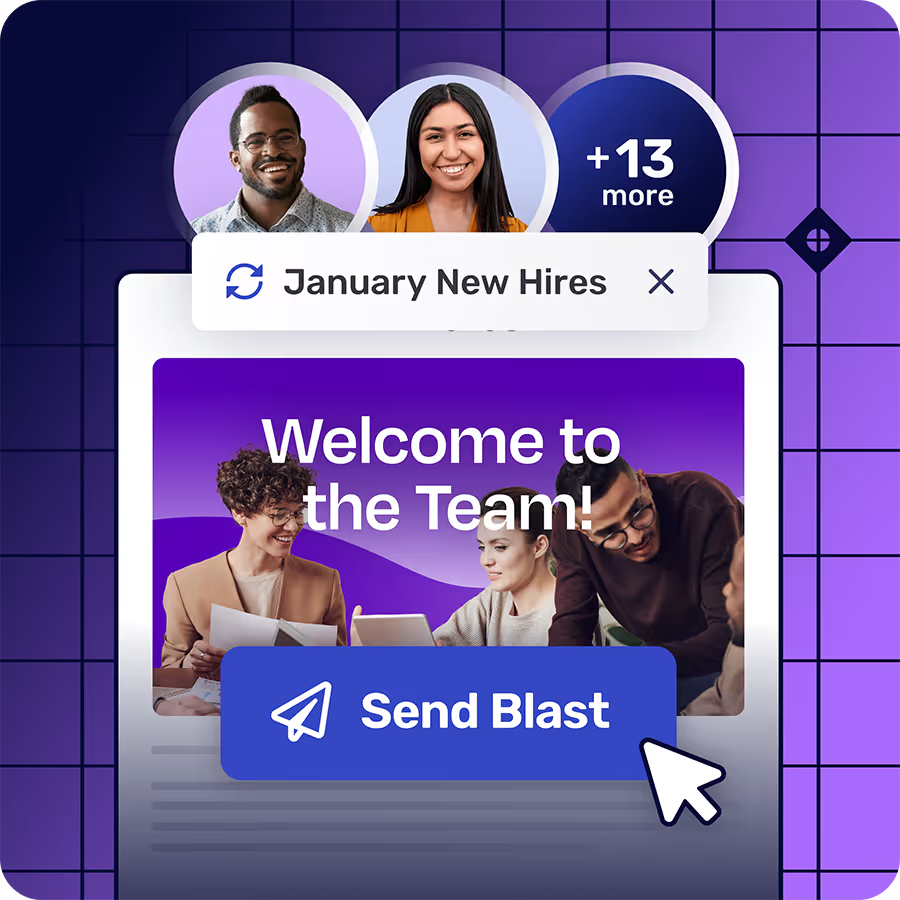
Create the account and connect or import a real audience slice (a department or a synced segment you already trust). Build the message you already planned to send this week, using a template or the drag-and-drop builder. Send it, then open Insights for basic proof of delivery and engagement so the next message is informed by who saw this one.
Cerkl Foundations is the free path for that loop. Foundations accounts have Blasts, Audience Manager, and Insights, with no contract and no credit card. If you are comparing what easy-to-use employee communication platforms look like in day-to-day work, the ease-of-use guide covers the operator experience. "Live" here means a real internal send on a real audience with measurable results. Omni-channel publishing across Teams and SharePoint arrives on Omni AI when the program needs that breadth, so ship the first email before you wait for it.
When IT should run the heavier engagement
Most teams can run internal communications without server SQL work, and that is the default path. Some orgs still need a fuller IT engagement, which fits multi-instance governance and conflicting multi-HRIS systems of record, or enterprise change-control calendars and regulated dual-control rules that keep communicators from holding audience and send authority alone.
Even then, start with the configuration path for the first audience and first send. Expand scope with IT when the risk model requires it. Skip the assumption that every IC tool purchase is a platform migration. For a fuller vendor criteria set, use the guide to choosing internal communication software alongside this stand-up checklist.
IC can stand up the program this afternoon on Foundations with a mapped audience and a live blast. IT reviews security once while the communicator runs launch as configuration work. Keep the intranet and the IdP, and let the ticket queue go.
If you're frustrated with Outlook or Gmail for your employee emails, we understand.
That's why we built Foundations. Purpose-built for internal email with all the features you wish you had - drag-and-drop email builder, analytics, employee segmentation and much more. All for free (forever). No credit card, no contracts, no setup fees.
Learn more about FoundationsFAQ
Can you stand up internal comms without an IT project?
Yes. Treat security and identity trust, including data handling, as an approve-once review for IT, while IC owns the audience and the first blast with basic engagement proof. Sync the HRIS or directory with no code and add SSO against the existing IdP, and stand-up stays configuration work on a path short of a server or SQL migration project.
What is no-code HRIS sync for internal communications?
No-code HRIS sync maps employee attributes from systems such as Workday, SAP, PeopleSoft, ADP, Paycor, or Active Directory into your communications tool without custom ETL. Dynamic segments then update as people join and move, so communicators stop re-exporting CSVs for routine org-structure audiences.
Does SSO for internal communications require a migration?
No. Federation adds the communications app as a relying party on your existing IdP (for example Okta, Azure AD, or Google Workspace via SAML). Users keep their current credentials. On Cerkl Foundations, SSO is an add-on; on Foundations+ it is included. The win is SSO without ripping out mail or the IdP.
How do you launch internal comms in an afternoon?
Open a Foundations account and connect or import a real audience slice. Send the message you already planned for this week, then check delivery and engagement in Insights. "Live" means a purpose-built internal email send with measurable results. Save the finished multi-channel enterprise rollout for later.
When should IT still run a fuller implementation for IC tools?
Bring IT into a fuller implementation for multi-instance governance and conflicting multi-HRIS systems of record, or for strict change-control and regulated dual-control requirements. Even in those cases, run the first audience and first send on the configuration path, then expand scope when the risk model demands it.
Did you enjoy this content?
Please share it with your internal comms friends and colleagues.
Just click on any of the links below.