

 Employee Communication Best Practices
Crisis Communication: Navigating Turbulent Waters with Clarity
Master the essentials of crisis communication with practical strategies to build a clear, responsive, and resilient plan for any emergency scenario.

.avif)
Internal Comms Plan Template
Start planning smarter. Download your free internal communications plan template now!
Access NowFundamental Facts About Crisis Communication
- Crisis planning is non-negotiable: Every organization needs a clear, strategic communication plan outlining roles, messages, and channels before a crisis strikes. Preparation reduces panic and ensures a faster, more coordinated response.
- Speed and accuracy save trust: Timely, fact-based updates to stakeholders can contain reputational damage and reinforce confidence. Delays or misinformation can quickly spiral into larger issues.
- Transparency builds resilience: Being open and accountable during a crisis helps protect credibility and long-term relationships. Employees are more forgiving when they sense honesty and sincerity.
- Clarity always wins: Clear, jargon-free messaging ensures your audience understands the situation and your response. Confusion can increase anxiety and reduce trust in leadership.
- Adaptability is essential: Monitoring reactions and adjusting messages in real time strengthens impact and shows leadership. Crises evolve, and communication must evolve with them to remain effective.
In today’s unpredictable world, clear and purposeful communication is vital, especially during a crisis. Yet many organizations falter under pressure due to unclear communication goals and poorly defined key messages. The emergence of AI adds a new layer of complexity, challenging traditional approaches and demanding greater precision.
Edelman, a multinational American public relations and marketing consultancy firm, highlights the dynamic and evolving challenges of crisis management in its 2024 Connected Crisis Study. The third edition of this influential global study, shows that the integration of AI across business has fueled misinformation and disinformation. This has created greater reputational threats than ever before, “underscoring the critical need for constant adaptability and resilience in the face of ongoing uncertainty.”
“We are seeing the impact not just on a business's reputation but on its financial performance as well,” says Julian Payne, Global Chair of Edelman Crisis & Risk. “‘The speed at which all forms of information manipulation are now emerging is unprecedented.”
It isn’t just awareness that is important. As Payne states, the crisis communication strategies and tools companies need to protect their business world must evolve to keep pace and be meaningful.
“Organizations are facing a new era of AI-driven reputational challenges that are unpredictable, sophisticated and fast. We are seeing their impact in everything from deep fakes to misinformation-driven boycotts and the consequences of being unprepared are severe.”
Julian Payne
The study, conducted in May 2024, tracked the dynamic and evolving nature of crisis management challenges in the US, UK, Germany, China, and Japan. Of the 78% of business executives who recognize that AI presents a significant shift in how their company needs to prepare and adapt to crises, less than half are prepared to anticipate, identify, and manage these threats.
What is Crisis Communication
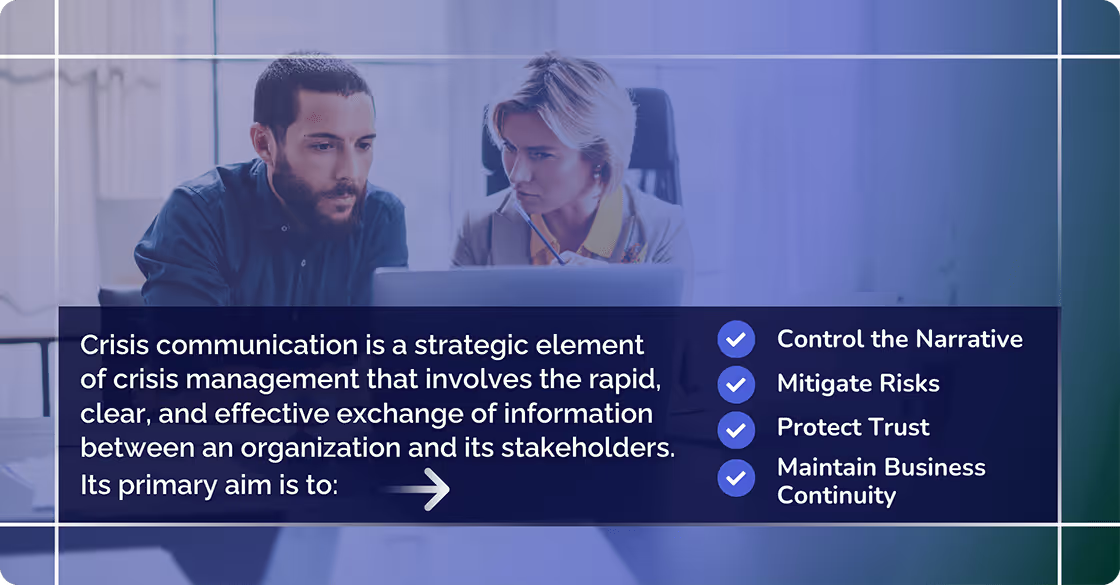
Crisis communication is a strategic element of crisis management that involves the rapid, clear, and effective exchange of information between an organization and its stakeholders. Depending on circumstances and those involved, it may include employees, customers, shareholders, media, government agencies, and the public during unexpected events that threaten the organization’s reputation or operations. Its primary aim is to control the narrative, mitigate risks, protect trust, and maintain business continuity.
Crises commonly involve a volatile combination of public action and reaction. In a business environment, this usually relates to the action and reaction of employees and customers. Knowing that people often fail to communicate because there aren’t clear crisis communication goals should prompt organizations to set goals. But to do this effectively, it is essential to understand what crisis communication involves and what effective crisis management entails.
However it is created, a well-designed, effective crisis communication plan is crucial. In any crisis communication plan, formal or informal, there are key elements that will determine the effectiveness of the response. These include establishing a communication strategy, maintaining consistency, transparency, honesty, and accountability, as well as a timely response. The aim is to retain public or overall employee trust while managing the crisis until it’s over.
Evolution of Crisis Communication
The 2025 Emergency & Crisis Communication Report from BCI (the global Business Continuity Institute), sponsored by Software-as-a-Service (SaaS) provider F24, examines how crisis communications have evolved in the past year.
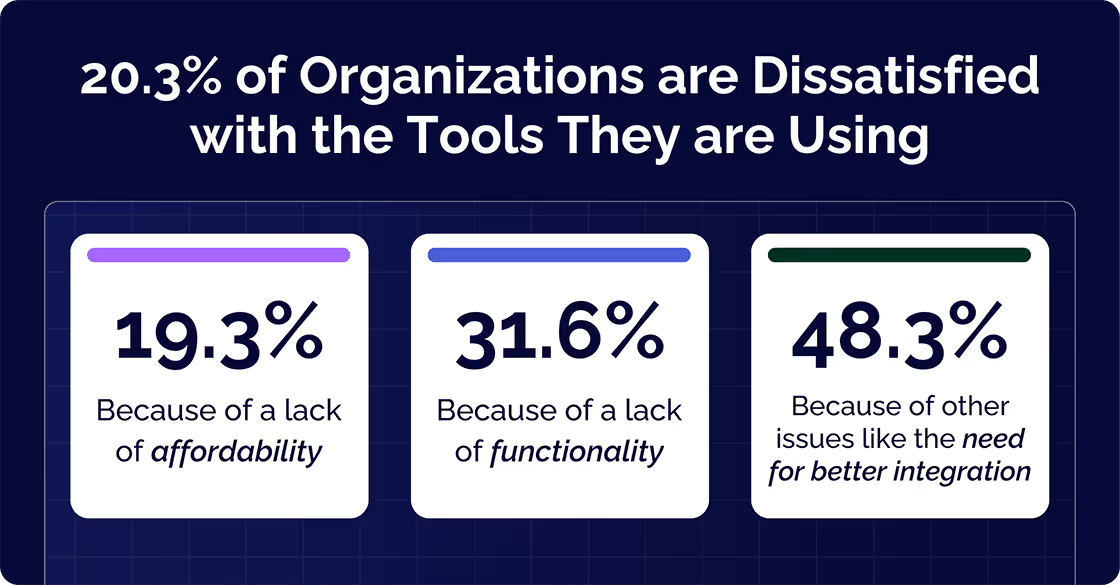
The BCI 2024 report revealed that 20.3% of organizations were dissatisfied with the tools they were using. This dissatisfaction had increased 16,2% since 2023 because of a lack of affordability (19.3%), lack of functionality (31.6%), and various other issues, including a need for better integration (48.3%). It also highlighted that one of the most notable shifts in the past decade was related to the technology used in emergency and crisis communications. Ten years ago, most organizations relied on in-house servers and installed software, with cloud adoption remaining limited. Now, improved security protocols and more dependable, high-speed networks have accelerated the shift toward cloud-based software and full infrastructure migration.
Despite the financial challenges, research for the 2025 report shows that 60.3% continue to use emergency notification or crisis management tools, relying significantly on these solutions as crisis preparedness and response strategies.
“This year, mobile phones and computers remain the dominant devices for managing emergencies, and email or enterprise messengers such as Teams, Slack, or Skype are the preferred methods used to activate crisis management teams. This indicates an ongoing move toward fast, digital solutions suited to immediate global communication, which has been a growing trend since the COVID-19 pandemic.”
2025 BCI Report
Nevertheless, many organizations are still dissatisfied with their current crisis communication tools, citing issues like insufficient functionality, poor integration, and financial constraints.
According to the 2025 report, organizations continue to rethink and reshape their crisis communication strategies. There is a growing reliance on cloud-based solutions, with SaaS and hybrid models taking centre stage due to their flexibility and effectiveness in supporting rapid crisis response.
Essential Elements of Effective Crisis Communication
Essential elements of effective crisis communication remain the same. However, the Edelman report adds a new perspective.
Traditionally, they have been defined in several different ways. Many people find it useful to base strategies on the 5 Cs of crisis communication. These are commonly defined as concern, commitment, competency, clarity, and confidence. Also known as the 5C model for crisis communication, it offers a clear, empathetic framework to guide timely messaging, build trust, and coordinate effective crisis responses.
Others value the 5 Rs of crisis communication that consider responses the other way around. These are responsibility, regret, resolution, restitution, and reform.
Then there are four pillars of crisis management: being proactive, monitoring the situation, taking action, and both reviewing and learning, and being ready to adapt the communication strategy and messaging as needed.
The elements identified by Edelman focus on the “new threat landscape” and their “connected crisis” data that has been identified due to AI-driven reputational challenges. Similar to the four pillars above, they say it is vital to:
- Prepare: Actively monitor public sentiment and align with societal values by building ethical decision-making frameworks that support long-term resilience.
- Defend: Develop strategies to anticipate and counter AI-driven information threats, minimizing potential harm before it escalates.
- Define: Respond swiftly to misinformation to prevent critics and hostile actors from controlling your brand’s narrative.
- Take the lead: As society’s most trusted institution, business must champion truth and take responsibility for protecting the integrity of the information environment.
Collaboration is also vital. It commonly involves multiple teams, including corporate communications, public relations, social media, and legal departments, working together to manage the crisis. The F24 report states that collaborative functionality is now considered the most important feature in an emergency communications tool. 54.6% of respondents considering it to be a critical requirement.
Effective Practices and Principles of Crisis Management Plans
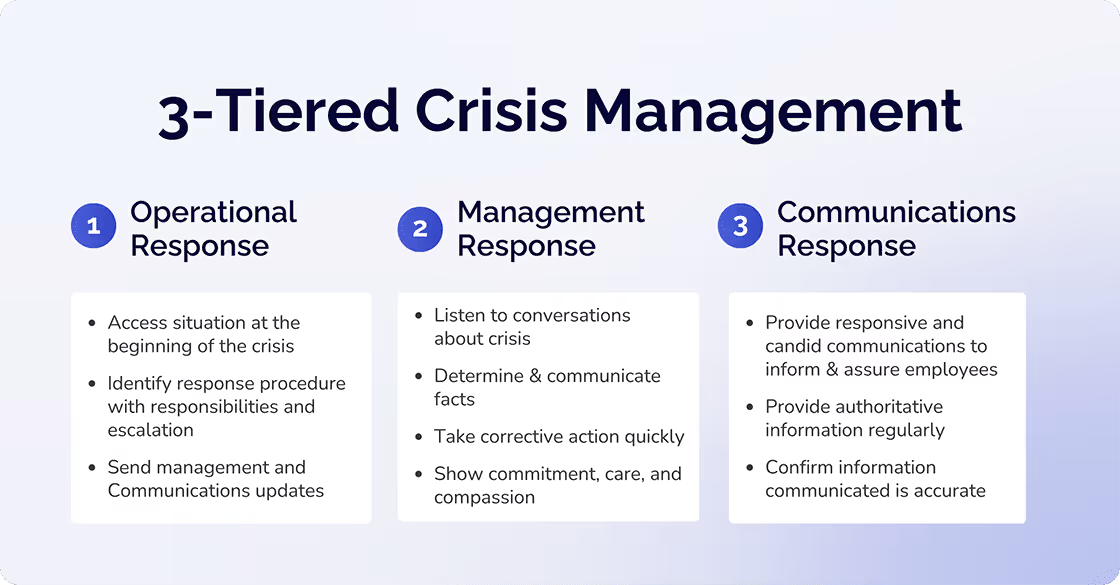
A good tactical crisis management plan will be both simple and sophisticated. But you need to identify and formulate this in advance. Crisis communication plans play an important role at each stage of a three-tiered approach that involves an operational, management, and communications response:
- An operational response will identify a response procedure together with responsibilities and escalation. There needs to be an understanding that the situation will be assessed at the beginning of the crisis. Then there will be ongoing management and communications updates.
- A management response ascertains and communicates facts and takes corrective action. At the same time, it needs to focus on a rapid response that shows management is listening to conversations. Equally, it is vital to show care, commitment, and compassion.
- A communications response provides clear, concise messaging that is responsive, candid, and open, keeping employees informed and assured. It is vital to provide authoritative information regularly and to make sure that it is factual and accurate. It also needs to be confirmed by reliable sources and delivered promptly.
There is no doubt that having a good management plan is crucial. It will ensure that, whether you’re a small business owner, CEO of a large corporation, or a member of a customer service team at a fast food outlet, you will be well prepared to efficiently handle a crisis.
Who Needs Crisis Communication?
First, let’s look at why crisis communication is so important.
- Reputation management: Prompt, effective crisis communication can help protect an organization's reputation and prevent further damage.
- Operational continuity: Crisis communication can often help maintain business operations during an emergency.
- Stakeholder engagement: It allows organizations to communicate with and address the concerns of stakeholders, including employees, customers, and the public.
- Risk mitigation: By preparing for crises and managing them effectively, organizations can minimize the potential for significant negative consequences.
It stands to reason, therefore, that all organizations need crisis communication. This is because risks are inherent in all business operations, and situations can unexpectedly spiral into crises. The Center for Creative Leadership identifies the importance of every leader, regardless of level, learning the art of communication as a fundamental skill. Furthermore, all leaders need to know how to communicate in a crisis, which is why the Center has identified four fundamental communication skills for leadership.
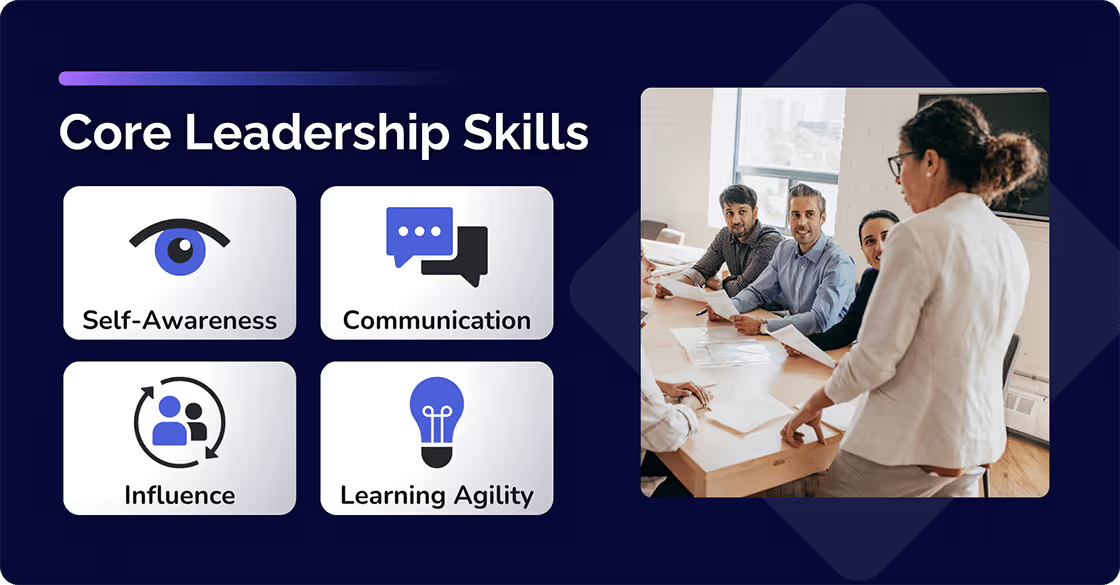
The Fundamental 4 communication skills are:
- Self-awareness: Understanding one's behavior and its impact on organizational outcomes.
- Communication: Effectively conveying goals and inspiring trust.
- Influence: Comfortably persuading, promoting, and delegating.
- Learning agility: Recognizing when to change course and assisting others in doing so.
These competencies are integral to navigating crises, as they enable leaders to respond adeptly to unforeseen challenges, maintain stakeholder trust, and ensure business continuity.
Crisis Communication Strategy Guidelines
The COVID-19 epidemic urged governments and organizations to create effective crisis communication plans to respond to the challenges presented by the coronavirus.
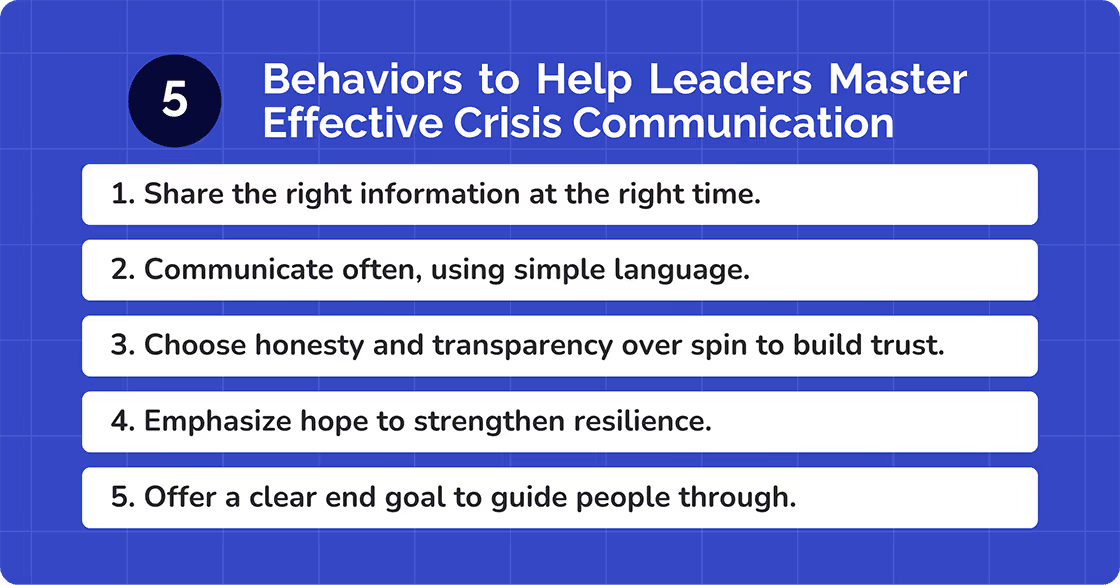
At the time, McKinsey & Company developed a strategy to help organizations communicate about this natural, global crisis. A leader’s guide: Communicating with teams, stakeholders, and communities during COVID-19 highlights five behaviors to help leaders master the development of crisis communication plans
- Share the right information at the right time.
- Communicate often, using simple language.
- Choose honesty and transparency over spin to build trust.
- Emphasize hope to strengthen resilience.
- Offer a clear end goal to guide people through.
While these guidelines apply to the epidemic, they can be used in any form of crisis management.
However, McKinsey & Company recognizes that since the pandemic, some industries, including automotive, have faced enormous challenges due to changes in consumer demand, supply chain bottlenecks, and transformative technological trends like electrification and autonomous driving. This means that “traditional risk management strategies aren’t enough.” As a result, industry leaders have had to rethink their strategies and ask how they can be better prepared for future disruptions. What can they do to anticipate disruptions earlier? And how can they adjust their approach to reducing risks while staying competitive?
It’s complicated, because, as McKinsey states, incorporating resilience into strategic planning is just the beginning. Companies also need to regularly review their strategies and investments against risk. It is critical for them to track resilience needs with key performance indicators (KPIs) and key risk indicators (KRIs), linking them to company costs and the likelihood of disruption. Ultimately, those in charge need to lead with resilience and get everyone on board.
“Training programs and frequent communication about the need for resilience can help everyone understand why changes are necessary and how they contribute to helping the company stay competitive.”
McKinsey & Company.
Free Internal Communications Plan Template for a successful, tailored strategy
Organize communication objectives and create a clear, well-structured plan that you can adapt over time.

Download Free
The Most Common Crisis Communication Examples
There are a myriad of different types of crises, all of which need some type of crisis communication plan. Let’s look at three crisis communication examples that happen often.
Natural Crises
Natural crises are triggered by uncontrollable natural elements that result in earthquakes, floods, wildfires, epidemics, tsunamis, hurricanes, and tidal waves. They invariably cause significant damage and present enormous challenges. These range from human and material losses to operational disruptions and market upheaval. Despite their unpredictability in terms of timing and severity, organizations can prepare by implementing contingency plans with effective emergency notification and crisis communication strategies.
In January 2025, Southern California experienced a series of devastating wildfires fueled by severe drought conditions and powerful Santa Ana winds. The fires resulted in at least 30 fatalities, destroyed more than 18,000 structures, and forced more than 200,000 residents to evacuate. The economic impact was substantial, with insured losses projected to exceed $20 billion, making it one of the costliest wildfire events in U.S. history.
The United States Environmental Protection Agency (EPA) was one of several respondents to the disaster after being assigned by the Federal Emergency Management Agency (FEMA) to assess, remove, and safely dispose of hazardous materials from all burned areas. They were also assigned to provide water infrastructure technical assistance and act as a long-term recovery sustainability advisor. As such, they continue to work with state organizations, assisting in rebuilding and reconstruction.
These and other natural disasters continue to test the preparedness of government and local organizations, highlighting the critical importance of managing crises in the face of natural disasters.
Confrontation Crises
Confrontation crises are deliberately provoked by individuals or groups aiming to assert their demands and expectations. These instigators can be drawn from the general public, activists, protesters, or even employees. Tactics employed to incite a confrontation crisis may include boycotts, blockades, and attempts to involve the media and the public, drawing attention to perceived negative aspects of an organization.
In early 2024, Starbucks faced a significant confrontation crisis when a substantial number of its employees initiated unionization efforts, citing concerns over wages, working conditions, and scheduling practices. The situation escalated as employees organized strikes and garnered widespread media attention, putting pressure on the company's public image and operations.
Recognizing the potential damage to its reputation and the importance of addressing employee concerns, Starbucks' leadership engaged in direct negotiations with union representatives. The company committed to a series of town hall meetings, transparent communication channels, and third-party mediation to facilitate discussions. By mid-2024, Starbucks and the union reached an agreement that included wage increases, improved scheduling flexibility, and enhanced workplace safety measures.
This resolution not only addressed the immediate concerns of the employees but also demonstrated Starbucks' commitment to responsive and responsible crisis management. The company's proactive communication strategy and willingness to engage in meaningful dialogue were pivotal in resolving the confrontation and restoring public trust.
Workplace Violence Crises
Workplace violence crises are sparked by acts of violence, harassment, and discrimination committed by current or former employees against their colleagues within an organization. It’s important to note that workplace violence encompasses not only physical harm but also mental harassment and various forms of mistreatment.
In May 2025, Dr. Cameisha Denise Clark, a dean at Spartan College of Aeronautics and Technology in Inglewood, California, was fatally shot in her office by a former security guard. The incident also critically injured a receptionist and highlighted the pressing issue of workplace violence in educational institutions. The tragedy underscored the need for comprehensive safety protocols and effective crisis communication plans within organizations.
In response to the tragic shooting, the college swiftly implemented a series of measures to address the crisis and enhance campus safety. Immediately following the incident, the campus was placed on lockdown, and law enforcement agencies conducted a thorough search, leading to the arrest of the suspect, Jesse Figueroa, a former security guard at the college. Figueroa was charged with multiple felonies, including murder and attempted murder, and faces a potential life sentence if convicted.
The International Labor Organization highlights constant workplace violence crises that happen globally. They state that “violence is rapidly becoming an everyday reality for many workers” in a wide range of industries. They highlight that shrouding it in silence and secrecy is counter-productive. Ultimately, they address the need for “comprehensive measures, including international conventions and safety protocols, to combat these challenges globally.”
Free Internal Communications Plan Template for a successful, tailored strategy
Organize communication objectives and create a clear, well-structured plan that you can adapt over time.
Download Free
Implementing Crisis Communication Strategies
Any crisis management strategy needs to consider the relevant steps to take before a crisis, during the crisis, and when it has ended. It is also essential to decide what, when, and how you will communicate at all stages of the crisis.
Pre-Crisis Phase: The Role of Planning and Preparedness
The pre-crisis phase involves creating a crisis management plan. A good, proven method is to use crisis communication management plan templates because they can make this task easier. Ideally, these documents will outline the steps that need to be taken from start to finish.
The pre-crisis planning phase also involves assigning and training a crisis management team that will leap into action when there is a crisis. Since there is often not much, if any, warning that a crisis is about to happen, it’s important to conduct exercises regularly to test the plan regularly.
At the same time, a good pre-crisis plan should help to prevent future crises from happening.
Mid-Crisis Phase: Managing and Delivering Information
During the crisis, it’s important to monitor the situation closely. Team members assigned to various tasks should provide regular updates that are communicated quickly and clearly to all the relevant parties. These communications may take a variety of forms from press releases to social media posts, and teleconferences. Internal email is also invaluable.
It is important to monitor a crisis situation carefully and to provide stress and trauma counseling if needed.
Post-Crisis Phase: Evaluating the Approach and Adapting to Changes
Crises do end, and after any crisis, organizations need to evaluate the effectiveness of their crisis management practices. Using a crisis performance grading template can be helpful during this review. The outcome of this assessment may necessitate changes to the crisis communication plan, aimed at improving future responses.
Pavilion Dinfos Online Learning highlights the importance of evaluating how teams handle a crisis, emphasizing the importance of learning from the experience to improve future responses.
“Learning from the latest incident will better prepare you to act quickly and properly the next time crisis communication is needed.”
Pavilion
After all, we all learn from experience!
How to Write a Crisis Communication Plan
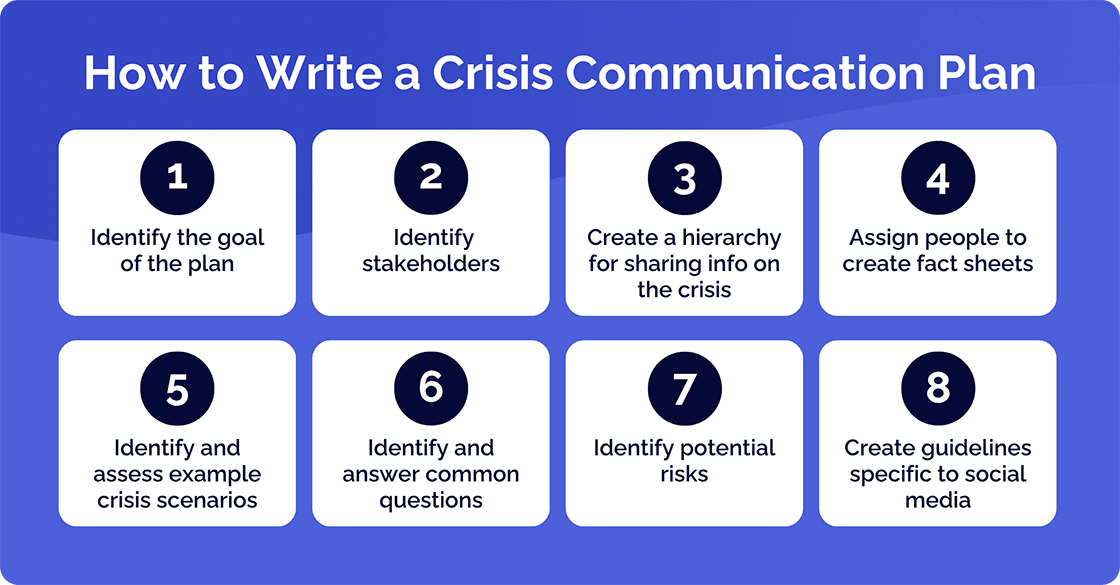
1. Identify the goal of the plan
The goal of any crisis communication plan is to maintain trust in the organization during a crisis. It should aim to limit damage to the business and provide guidelines for managing information flow.
2. Identify stakeholders
Stakeholders include anyone who could be impacted by a crisis. This may include employees, customers, investors, and the local community. Their concerns and how they receive information should be carefully considered when drafting the plan.
3. Create a hierarchy for sharing information on the crisis
Decide who should communicate what information, to whom, when, and through which channels. This helps to ensure consistency and accuracy in information dissemination.
4. Assign people to create fact sheets
Fact sheets are a good way to provide relevant and appropriate information about the crisis and the organization’s response to it. These must be easy to understand and readily accessible.
5. Identify and assess example crisis scenarios
Understanding the possible crises that your organization might face can help you prepare more effectively. By assessing potential scenarios, you can make your plan more comprehensive and responsive.
6. Identify and answer common questions
During a crisis, people will likely have many concerns and questions. Anticipating what these might be and providing clear, concise answers in your plan can save time and foster trust.
7. Identify potential risks
Determine the possible risks faced by your organization due to the crisis. These could be anything from data breaches to product recalls and employee misconduct. Recognizing potential risks will help your team tailor an effective crisis communication plan.
8. Create guidelines specific to social media
Social media can be a double-edged sword during a crisis. It allows for immediate, widespread communication, but can quickly become harmful if not properly managed. It is vital to have a clear set of social media guidelines in any crisis communication plan.
Communicate Your Plan Using the Right Communication Platform
The assurance of knowing that all employees are getting information during a crisis, no matter their location or desk, or email status, offers significant peace of mind.
With Cerkl Broadcast, it won’t matter whether they are desk-based, deskless, email-less, remote, or working on-site. This is because you can use a variety of connected channels to suit every individual employee’s needs, including mobile phones. You’ll be able to send important communications and know with confidence they are reaching the right people.
With Broadcast Manager, you can send real-time crisis communication updates to your chosen channels at the same time. For instance, your messages will be sent across your intranet, mobile app, emails, and employee newsletter, depending on which is relevant for each employee. A highly effective cross-channel strategy will ensure you don’t bombard them via multiple channels.
Also, if you are interested in exploring more types of communication within the organization, we’ve prepared a comprehensive post on the Top 20 Types of Internal Communication.
You’ll also gain access to powerful analytics that help you understand who received and engaged with your messages, so you can follow up where needed and evaluate the effectiveness of your crisis communication. This insight is crucial when refining your crisis plan for the future.
What’s Next?
If you don’t have a crisis communication plan or the one you have isn’t likely to be effective, now’s the time to do something about it. The Cerkl team is ready to help you design the best crisis communication strategy to suit your business.
We have also designed an internal communication plan template to help you streamline your crisis communication strategy. It’s free and you can download it right now.
Free Internal Communications Plan Template for a successful, tailored strategy
Organize communication objectives and create a clear, well-structured plan that you can adapt over time.
Download Free
FAQ
What is crisis communication? Crisis communication is the transmission of information and responses between organizations and those affected by the crisis.
Why is crisis communication important? Crisis communication is a crucial part of crisis management that ensures everybody knows what’s happening and what they need to do. It is used to reassure people and restore confidence, however difficult the stresses and trauma of a crisis may be.
What are the 5 Cs of crisis communication? The 5 Cs of crisis communication are concern, commitment, competency, clarity, and confidence. They are pointers leaders can use to develop an effective crisis management plan.
How do you communicate in a crisis? There are many ways to communicate in a crisis. Possible channels include everything from mobile phones and face-to-face communication to emails, social media posts, and employee newsletter. Ideally, choose a communication platform that accommodates every need whether employees are working on site or in a remote location.