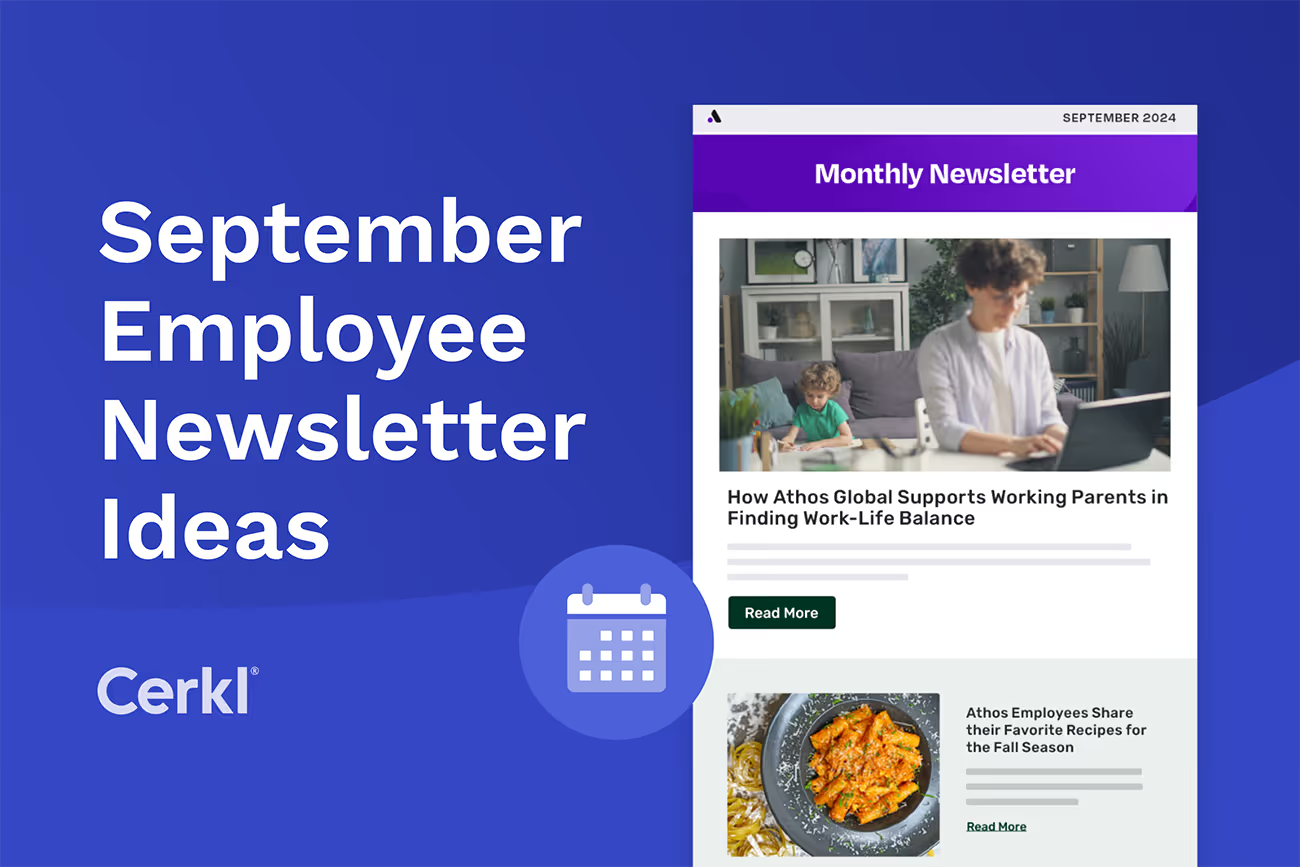
MyNews internal communications means each employee gets a personalized employee news feed assembled from a shared content pool, while communicators still force the stories that everyone must see. In Cerkl Broadcast, that engine ships as News Digests (also called AI Newsletters). One identical newsletter cannot serve a plant technician and an HQ analyst with the same stack of stories in the same order.
A blast can still be the right tool for a time-bound announcement. The gap shows up when the weekly or daily company update is the same document for every role and site. This post covers what MyNews is, how the digest pipeline works end to end, where it changes day-to-day work, and how to start without treating personalization as a full intranet rebuild.
Why One Feed for Everyone Fails
Picture Friday's company newsletter. The safety lead needs a lockout update at the top for one facility. Finance needs a systems outage note for controllers. Talent wants a benefits FAQ for new hires. Leadership wants the CEO note to land first for everyone. The team builds one email, puts the CEO note first, and hopes the rest survive the scroll.
The plant night shift skims past HQ stories and never reaches the safety block. Controllers delete the message after the CEO paragraph. New hires miss enrollment detail buried under unrelated items. Open rate looks fine. The people who needed a specific story never found it, and the people who did not need half the newsletter learned to ignore the brand.
That pattern is employee email overload with a cadence wrapper. Volume is part of the problem. Relevance fails when the default send is identical for every subscriber. Teams then choose between writing five versions by hand or accepting that most of the company gets noise so a few people get what they need.
A shared intranet homepage fails the same way. Intranet content sits until someone visits. Busy employees do not browse for policy changes. Aggregate traffic hides who never saw the update. The operational ask is a feed that reaches people in the channels they already open, ordered for each person, with required stories still guaranteed.
What MyNews Is (and What It Fixes)
MyNews is the name many buyers still use for Broadcast's personalized digest engine. On the product side, that engine is News Digests / AI Newsletters: for each opted-in employee, Broadcast assembles a digest from Stories and Events in the Content Hub, then sends it on the cadence that employee (or the org default) selected.
The unit of value is a per-person feed. Interests, segment targeting, behavioral engagement, and content the person already opened shape what appears and in what order. Communicators keep override control. Posting priorities can force a story to everyone, pin it as the first story, or limit it to a segment, even when interest scores would have left it out.
That differs from mail-merge first names on a blast. A blast is one composed message to a chosen audience. A MyNews digest is a recurring assembly job: one governed pool of content, many individualized editions. Category primers on what an employee news digest is cover the format. Here the focus is the mechanism and the ops jobs that change when the feed stops being identical.
Blasts stay in the toolkit for one-shot sends, surveys, acknowledgments, and campaigns that need a fixed layout. Digests take the recurring "here is what matters this week" load so the communicator stops pasting a universal stack that fails half the company.
How MyNews Works End to End
Content pool. Stories and Events live in the Content Hub. Authors publish once with categories, audiences, circulation windows, and distribution settings. The same record can feed digests and, on Omni AI, other surfaces such as Teams or an intranet launchpad. The digest does not invent content. It ranks and packages what the hub already holds.
Posting priorities. Communicators set how hard a piece must travel. Org-wide required items can go to everyone or as the first story. Segment-targeted items reach the groups that need them. Those priorities override preference exclusions so a safety or compliance story cannot be opted out of by category interest alone.
Signals that shape each edition. For the rest of the pool, the engine weighs explicit category interests, implicit engagement, content the subscriber already saw, followed authors, segment membership, and min/max content thresholds. If someone engaged with a digest that contained a story, that story stops cycling by default. If they skip a week, some stories can return.
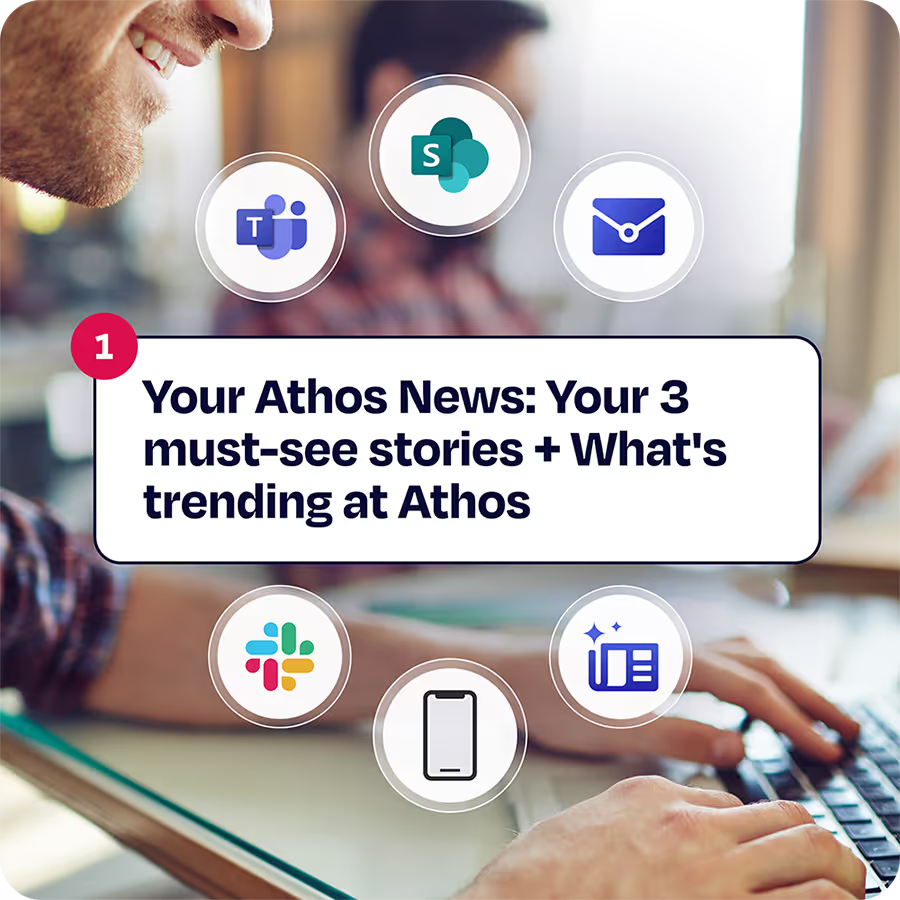
Digest structure. Priority items surface first with chips such as Top Story, Big News, or Just for You. Recommended For You ranks by relevance. Events have their own slots. Traditional layouts can include an Other News block. Optional match and trending chips are org toggles, not something employees configure per send.
Schedule, format, and language. Personalized subscribers pick day, time, frequency, and format (Headlines Only, Headlines Plus, or Traditional) plus language. Non-personalized subscribers get the org default. The Welcome Email and digest footer drive that setup so onboarding is part of the product path, not a side spreadsheet.
Delivery and adjacent channels. Digests send as email on the chosen cadence. On Omni AI, the same personalization model can surface in Microsoft Teams newsfeeds, SharePoint launchpad items, and mobile. Opening or dismissing a priority item on one channel can release it from the others so the person is not chased by the same lead story everywhere.
In Broadcast, AI Newsletters are the product home for this pipeline. Audience accuracy still matters upstream: dynamic segments and live people data decide who is in the digest audience before personalization ranks their edition.
Four Places MyNews Changes the Job
Required and optional content in one send. The safety update and the culture story can share a digest without fighting for the same universal slot. Priority rules guarantee the safety item. Relevance rules place culture content where it earns attention. Communicators stop choosing between a sparse required-only email and a bloated catch-all.
Multi-site and role relevance without five manual versions. A company with plants and corporate functions used to maintain parallel newsletters or accept irrelevance. Category tags and segment targeting, with posting priorities for required news, let one hub feed many editions. Plant staff see site ops higher; corporate staff see corporate items higher; both still receive company-wide required news.
Preference-led engagement. Employees set topics, schedule, format, and language. That reduces "this never applies to me" replies and supports multilingual orgs without a separate production track per language for every story. Preference is a contract. The feed respects it unless a communicator marks the story as required.
Workload shift for the communicator. The weekly paste-up becomes hub hygiene: publish, tag, set priority, trust the assembly. Time moves from layout gymnastics across audiences to content quality and distribution rules. Teams that already chase personalized content delivery at scale get a concrete operating model instead of another slogan about relevance.
In each case the job shifts from composing one universal document to governing a pool and the rules that build each person's edition.
How to Start This Week
You do not need every channel live on day one. You need accurate audiences and a clear split between one-shot blasts and recurring digests.
Get the people layer current first. Live HRIS or directory audiences stop digests from personalizing the wrong roster. The audience sync for internal communications path covers that plumbing. Map department and location before you ask the digest engine to be clever.
On Foundations, start with purpose-built internal email built around Audience Manager, targeted blasts, and Insights. Use that week to retire the worst universal sends and to prove who opened critical messages. Foundations does not include News Digests. MyNews / AI Newsletters ship on Omni AI, together with the Content Hub and omni-channel publishing.
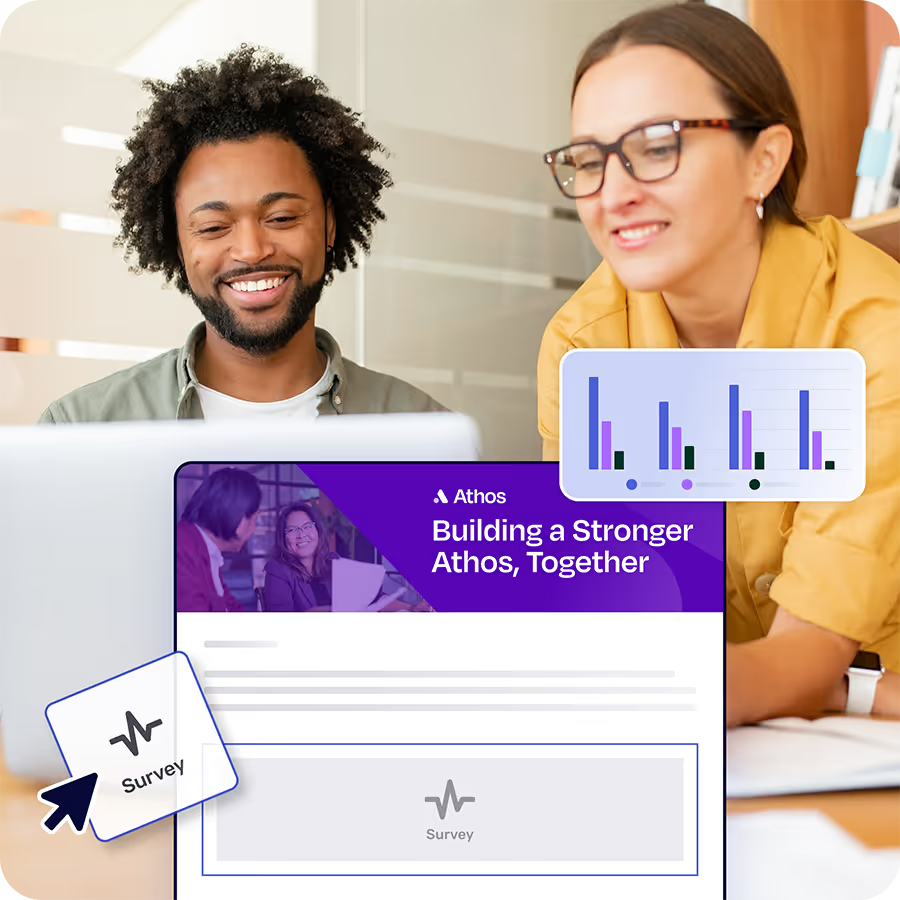
When the recurring company update is the pain, upgrade for digests: turn on the Welcome Email, set default schedule and fallback subject lines, publish a small set of categorized stories, and force one required item so leadership sees that overrides work. Keep true one-shots on blasts. Expand internal email personalization after the audience and priority rules are trustworthy.
If every employee receives the same stack in the same order, you are still broadcasting a homepage in email form. MyNews earns its place when each person gets a feed built for their job, and required news still lands first for the people who must act.
FAQ
What is MyNews in internal communications?
MyNews in internal communications is Broadcast's personalized employee news feed. Each opted-in employee receives a curated News Digest (AI Newsletter) built from a shared content pool, shaped by interests and behavior, with communicator priorities on top. Buyers often search "MyNews"; the live product names are News Digests and AI Newsletters.
How do personalized employee news feeds differ from a blast newsletter?
A blast is one composed message sent to a defined audience with a fixed layout. A personalized employee news feed assembles a distinct edition per person from hub content on a recurring cadence, while priority rules still force required stories. Blasts remain the right tool for one-shot campaigns; digests take the recurring update load.
Is MyNews available on Cerkl Broadcast Foundations?
No. News Digests / AI Newsletters (MyNews) are part of Omni AI. Foundations includes Blasts, Audience Manager, and Insights for targeted internal email. Teams often start on Foundations to fix audiences and critical sends, then add Omni AI when recurring personalized digests are the job.
Can communicators force required stories into a personalized digest?
Yes. Posting priorities can send a story to everyone, pin it as the first story, or target a segment. Those settings override interest-based exclusion so safety and compliance items still appear for the people who must see them.