

View all Cerkl blog posts on the topics of internal communications, news, tips and research.

Frontline employee communication that works: reach deskless workers on the channels they already use, then see who read it by shift, site, and name.
Open enrollment communication plan: send each employee group its own version, time reminders to the deadline, retarget non-engagers, and confirm who read it.
Employee audience manager workflows replace all-staff blasts with live HRIS audiences, dynamic segments, and retargeting for people who did not open or click.
Free email builder buyers need forever-free clarity on builder scope and send limits. SSO and omni-channel stay paid. Start the same afternoon.
Internal communications acknowledgments are timestamped read confirmations in the Blast. See who confirmed a policy send, then retarget only the holdouts.
Stand up internal comms without an IT project: map HRIS attributes with no code, add SSO to the IdP you already run, and send your first blast this afternoon.
Internal communications measurement fails when open rates and ROI hide who engaged. Prove employees read it with per-employee opens and acknowledgments.
How AI is changing the internal communications role: faster drafts, same trust and read gaps. The job shifts to judgment, targeting, and proof of landing.
Cerkl vs Workshop compared honestly: free forever Foundations with per-employee proof against Workshop's paid newsletter floor and 14-day trial.
Reaching every employee in internal communications starts with delivery. The half that matters is proving which employees read the message, by name.
Approval workflows for internal communications put Create vs Approve gates before content can send. How Broadcast Content Hub Queue works, and how to start.

AI internal communications authenticity means human-owned leadership voice plus proof who read the message. Drafts alone cannot make employees believe it.
MyNews internal communications delivers a personalized employee news feed per person. How Broadcast News Digests work, where they change the job, and how to start.

Intranet personalization means delivering relevant updates into channels employees already use and proving who read them, beyond a shared homepage.
Audience sync internal communications keeps HRIS and directory data live so you reach the right people. How it works, why static lists fail, and how to start.

Internal communications personalization means fewer, better-targeted sends. How message overload costs trust and how audience targeting fixes it.
Free internal communications platform buyers need: free forever vs trial vs demo wall, public pricing checks, and what Cerkl Foundations includes.
Per employee read receipts show which employees read internal email by name. Learn how they work, why averages hide risk, and how to use them this week.
Internal comms without replacing your intranet: add a delivery and measurement layer that reaches employees where they are and proves, by name, who read it.
Build an internal communications report to leadership that gets acted on: named-reader data instead of averages, a five-part structure, and a clear ask.
Agentic AI can draft your internal comms from a single prompt. It still can't make employees read the message or prove who did. Why read attribution is the real bottleneck.
.avif)
Internal newsletter software you can start free: how to choose a purpose-built, free-forever employee newsletter tool, what to evaluate, and when to upgrade.

SharePoint personalization for internal comms: a 2026 playbook to target employee content by audience, reach every channel, and measure what actually landed.
How to measure internal communications comes down to five questions every communicator should answer about their last send, from who received it to what to fix next.
When to use AI in internal communications comes down to one test: can you prove the message landed? A practitioner's guide to what to automate, keep human, and verify.

Native Microsoft Teams AI drafts and posts messages, but can't measure internal comms in Microsoft Teams. Here's where native ends and per-employee read tracking begins.
The AI execution layer is what separates real AI for internal communications from generation-only tools. Here are the four layers, and what to ask your vendor.
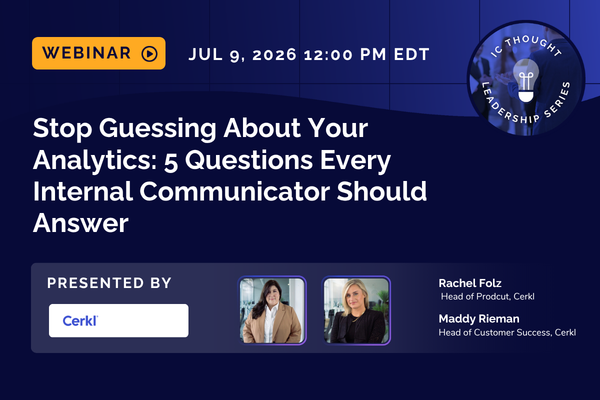
Join Cerkl’s free July 9 webinar to learn five practical questions every internal communicator should be able to answer about reach, engagement, impact, and analytics.
The best free employee newsletter tool isn't a trial in disguise. 7 forever-free internal newsletter tools for 2026, ranked honestly, with the gotchas named.
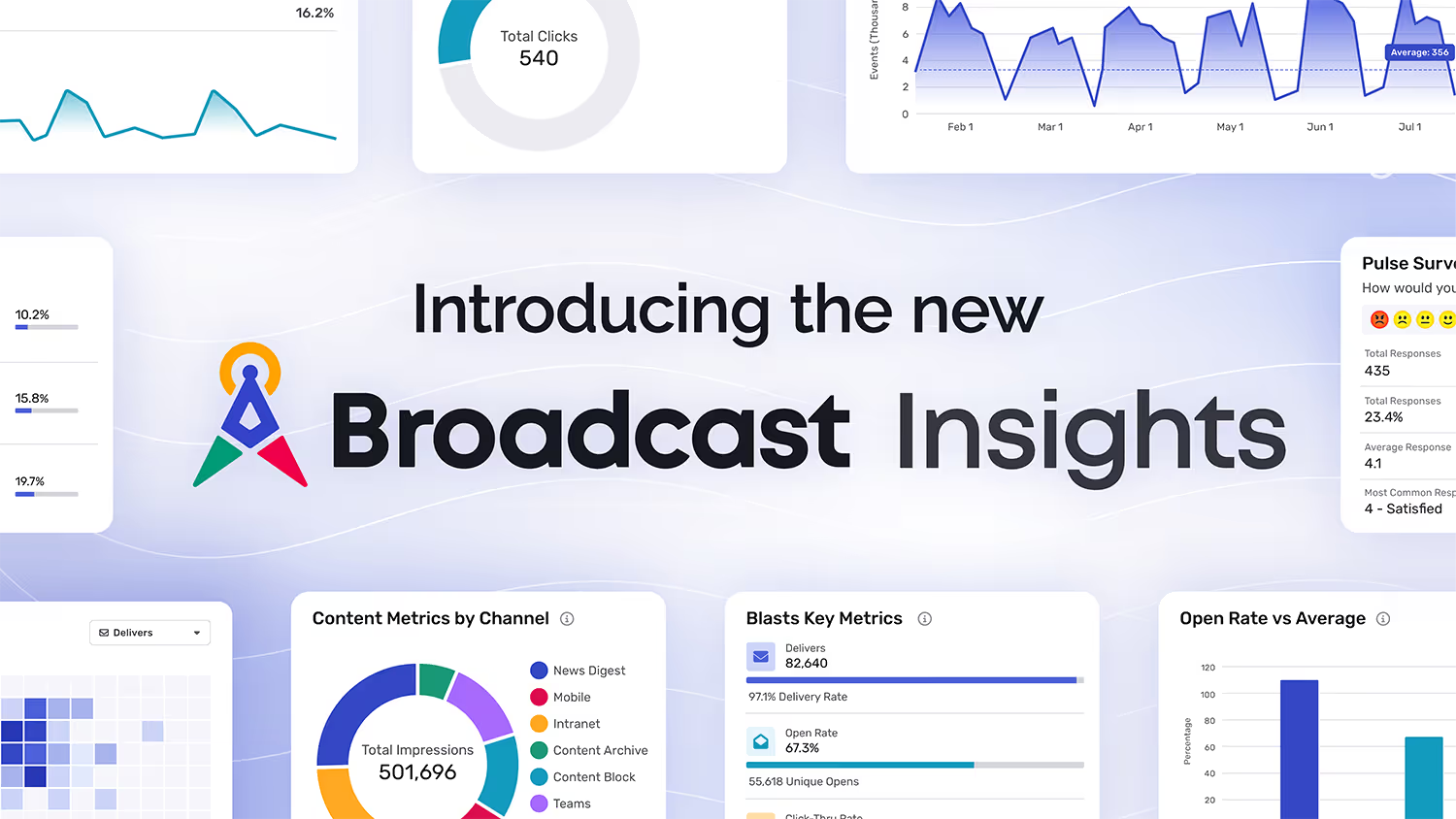
Cerkl Insights is live in Broadcast on June 20, 2026. A rebuilt analytics experience with clearer visuals, faster navigation, benchmark comparisons, and shareable dashboards.
Shadow AI in internal communications is a distribution problem, not a governance one. Here is why employees use unapproved AI tools, and how to fix the channel.

The strategic role of internal communications is changing in 2026. Here is how IC leaders claim the seat at the table, and the conversations that defend it.
Internal communications in financial services run on a double mandate: audit-grade compliance and modern engagement. The 2026 playbook for banks, asset managers, and insurers.
.png)
Microsoft Teams internal communications get a Copilot upgrade in 2026, but native AI hits hard limits for company-wide IC. Here is where Teams AI helps, where it breaks, and how to extend it.

The cross-channel read gap is the share of internal messages read on only one channel by employees with access to multiple. No public IC benchmark measures it. Here is the definition, why it matters in 2026, and what a cross-channel platform can see at scale.
A 4-stage internal communications measurement framework to benchmark your IC team, defend your numbers, and move from open rates to per-employee read attribution.
.png)
Internal communications in manufacturing run on shifts, safety messaging, and multi-site reality. The 2026 playbook for reaching a 17%-engaged frontline workforce across 15 plants.
.avif)
SharePoint internal communications work as a destination, but not as a full delivery layer. Here is what SharePoint personalization needs to actually reach employees in 2026.
.avif)
A practical guide to turning your internal comms metrics into a leadership-ready report — what to include, what to leave out, and how to frame the data so it actually moves the conversation forward.

Companies spend $28,250 per employee on benefits, and most employees never use what they have. The hidden cost is the comms gap, but there’s a fix.

Learn how to prove internal communications ROI with data leaders care about. Build a stronger comms investment case using reach, risk, productivity, retention, and cost-of-inaction data.
.avif)
Your analytics are only useful if you act on them. Learn how to use open rates, click data, and segment performance to write sharper internal comms that actually land.
Internal communications analytics should show which employees read your message and which missed it. What to track, why opens mislead, and how to report it.

Learn how to make safety and compliance updates clear, searchable, and measurable. Build trust with employees through operational communications that prove reach and drive action.
A practical accessibility pre-flight checklist for internal communicators. Learn how to improve structure, links, alt text, contrast, and headings before you hit send, just in time for the April ADA deadline.
Go beyond open rates to measure what truly matters in internal communications. Learn how to track reach, engagement, action, and real business impact.
Use this Q1 internal comms report template to measure what matters beyond opens. Learn which metrics build credibility, save reporting time, and help leaders understand communication impact.
Learn how to run a coordinated employee wellbeing campaign using segmentation, scheduling, and consistent messaging—without relying on multiple all-staff emails or messy spreadsheets.
“All Employees” sounds simple until Gmail and Outlook limits, messy lists, and BCC risks start excluding people. Learn how to make inclusive sends more reliable, targeted, and repeatable.
Accessibility for internal comms is now a practical compliance and workflow issue. Learn what WCAG pressure means this year, what to fix first, and why inbox tools break at scale.

Quarterly reporting for comms doesn’t need to be a slide marathon. Use this 15-minute scorecard to stop guessing, prove reach and impact, and show what to do next—powered by Foundations and Broadcast Insights.
HR tax season communications fail when you can’t prove who saw what. Learn how to make critical HR messages unmissable with Foundations, then validate performance with Broadcast Insights analytics.
Distribution lists vs segmentation is the difference between noisy internal emails and relevant communication. Learn why “All Employees” reduces trust, what Gmail and Outlook miss, and how to fix targeting with better internal comms workflows.
This article explains internal comms metrics that matter in a way internal communications managers can apply quickly. It frames the core concepts, common pitfalls, and practical best practices. Use it to align stakeholders, improve clarity, and strengthen your communication program. It's primarily strategy and education, not tool-specific execution.
.avif)
This article explains how to create surveys in Outlook. While surveys involve feedback, the execution is email-based. The problem centers on using email tools effectively. It aligns with email-centric solutions.

Internal email is still the default channel, but most teams struggle with low engagement and inbox overload. This article reviews free internal email tools using clear criteria: ease of creation, segmentation, delivery controls, and analytics. The takeaway: choose a free tool that supports targeting and measurement, not just hitting send.
.avif)
This article focuses on gmail spam filtering as an internal email execution problem. It highlights practical tactics to improve deliverability, engagement, and consistency. Use it to standardize your approach, reduce manual work, and get better results from employee email. Ideal for teams relying on Gmail or Outlook as the primary channel.
.avif)
This article reviews communication tools used by remote teams, including chat, video, intranet, and email platforms. It clearly addresses a multi-channel technology ecosystem. The problem is not limited to email optimization. It aligns with omni-channel communication strategy.
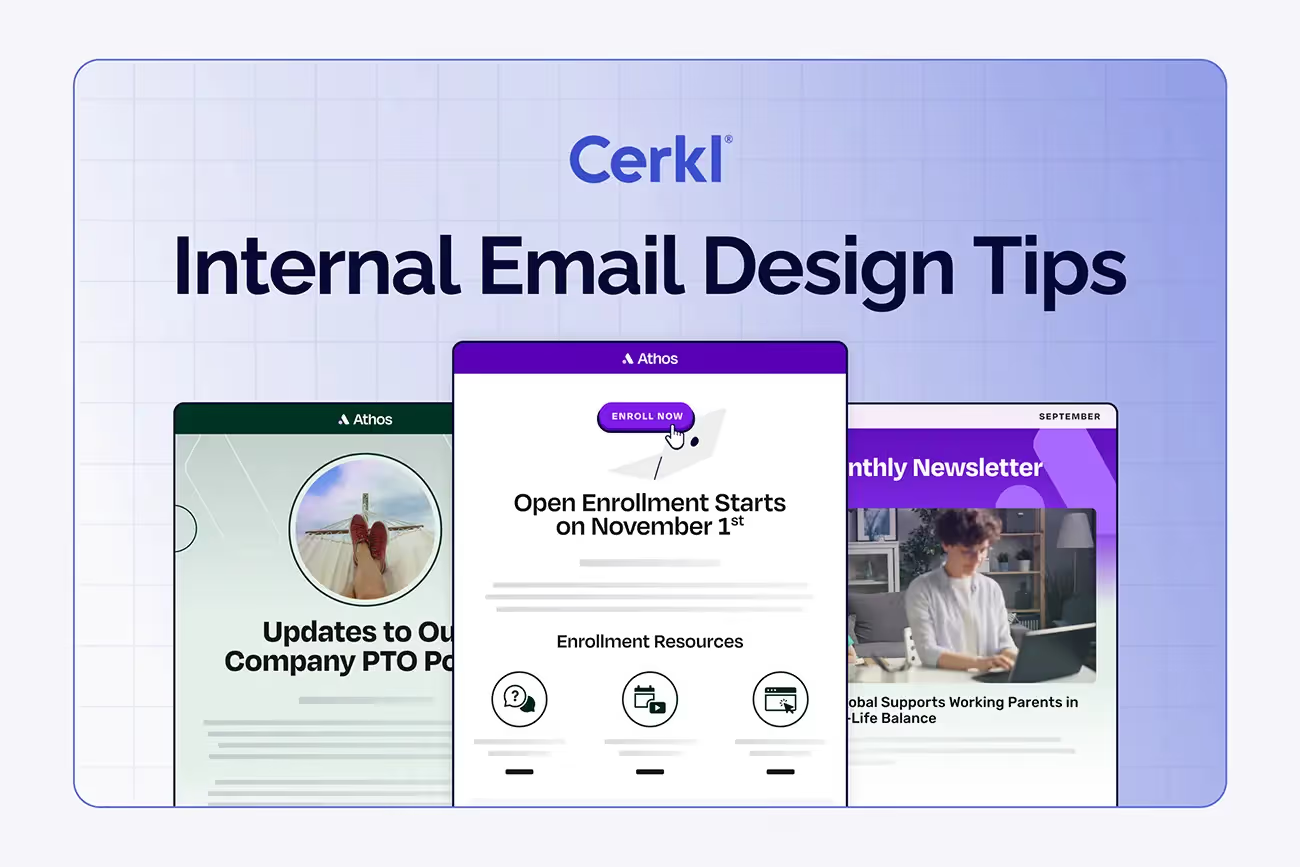
This article focuses on internal email layout, formatting, hierarchy, and readability to increase engagement. It offers tactical guidance on structuring emails for clarity and performance. The problem it addresses is email effectiveness and employee attention. The solution remains rooted in optimizing email itself.
.avif)
This article compares Outlook and Gmail as email tools. It is focused on email platform choice. The problem centers on email selection. It aligns with Foundations.
.avif)
This article explains democratizing internal comms in a way internal communications managers can apply quickly. It frames the core concepts, common pitfalls, and practical best practices. Use it to align stakeholders, improve clarity, and strengthen your communication program. It's primarily strategy and education, not tool-specific execution.

This article focuses on employee distribution lists as an internal email execution problem. It highlights practical tactics to improve deliverability, engagement, and consistency. Use it to standardize your approach, reduce manual work, and get better results from employee email. Ideal for teams relying on Gmail or Outlook as the primary channel.
This article explains sending recurring emails in Outlook. It is focused entirely on email execution. The problem centers on email automation. It aligns with Foundations.

This article focuses on personalizing internal email campaigns. The problem is improving email engagement. The solution is email-centric. It aligns with Foundations.
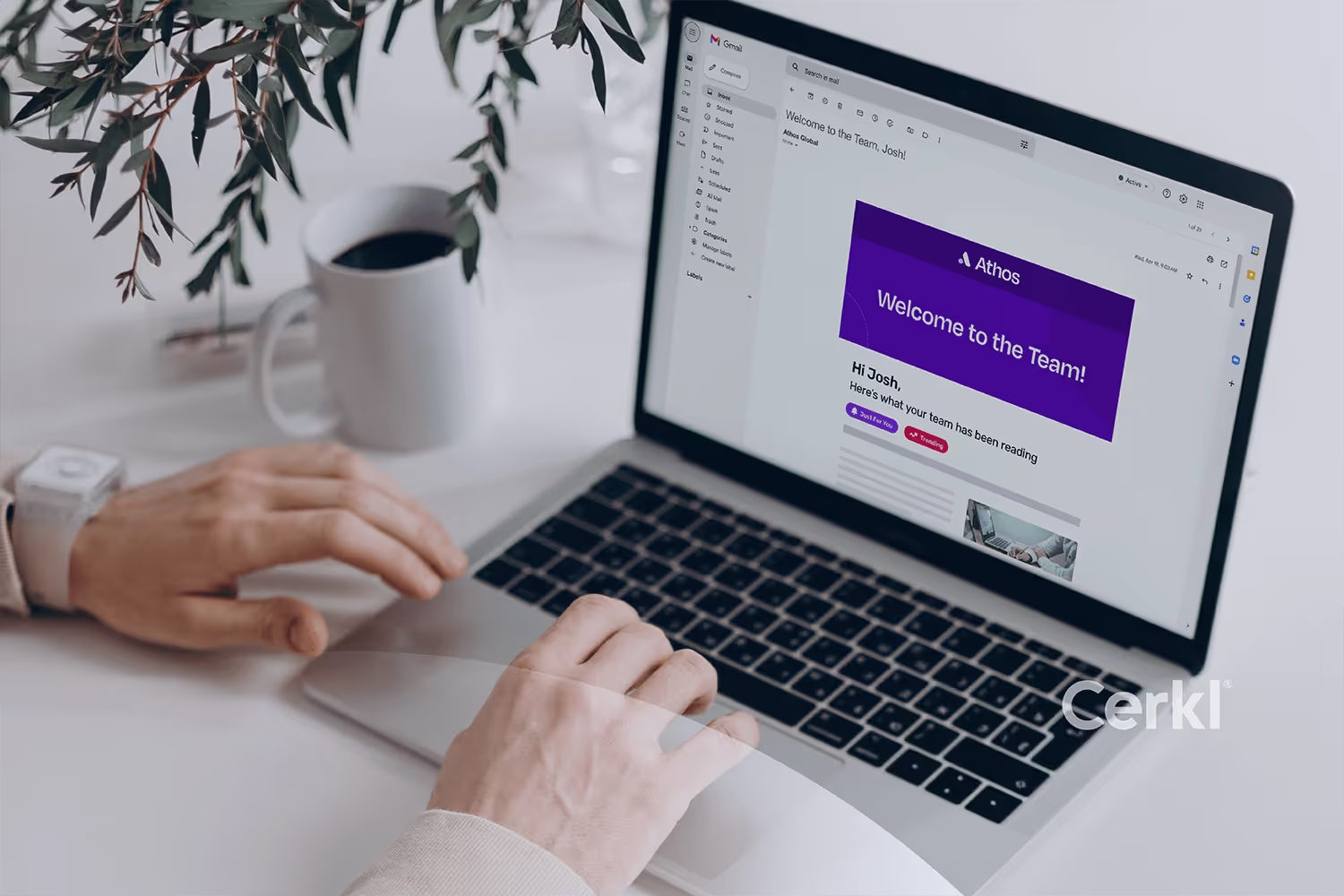
A good welcome message is the first real internal communication a new hire experiences, so it sets the tone for trust and belonging. This article explains why sincere welcomes improve well-being and retention, then shares practical best practices. It provides 20 ready-to-use examples for managers and peers. The takeaway: personalize early onboarding communication so new hires feel seen and supported.

This article focuses on building and sending newsletters via Outlook. It is email execution specific. The problem is optimizing internal email newsletters. It aligns with email-based communication.

Culture is communicated whether you plan it or not. This article shares practical ways to communicate culture consistently, from storytelling and recognition to leadership behavior and two-way feedback. It helps internal comms teams turn abstract values into repeatable signals employees notice. The takeaway: culture sticks when messages match lived reality.
This guide compares leading employee communication software platforms and explains what matters most as comms gets more complex. It emphasizes mass personalization, stronger segmentation, and analytics that link comms to productivity and outcomes. Use it to shortlist tools based on channels, targeting, and measurement depth. The bottom line: platform fit should match your workforce complexity, not just features.
.avif)
This article focuses on outlook email forwarding as an internal email execution problem. It highlights practical tactics to improve deliverability, engagement, and consistency. Use it to standardize your approach, reduce manual work, and get better results from employee email. Ideal for teams relying on Gmail or Outlook as the primary channel.
.avif)
This article explains Gmail forwarding functionality. It is purely email-based and tactical. The challenge centers on managing internal email workflows. The solution remains email-focused.
.avif)
This article explains creating and managing Outlook templates. It is purely email-focused. The challenge is improving email efficiency. It aligns with email optimization.
.avif)
This article explains how to use Gmail templates for internal communication. It is focused on email efficiency and execution. The problem is optimizing email workflow. It aligns with email-centric solutions.
This article provides examples of retirement messages. It focuses on crafting thoughtful content rather than channel strategy. It serves as a creative resource. It is educational.

This article explains Outlook scheduling functionality. It is email execution specific. The solution remains email-focused. It aligns with Foundations.
.avif)
This article explains scheduling recurring emails in Gmail. It is purely email-focused. The problem centers on email automation. It aligns with Foundations.
.avif)
This article expands on segmentation as a strategy for improving workforce engagement. It discusses personalization across employee touchpoints. The challenge involves coordinated targeting beyond email. It aligns with omni-channel orchestration.
.avif)
This article discusses Gmail sending limits and how to handle volume constraints. It focuses entirely on email execution challenges. The solution centers on email infrastructure. It aligns with email optimization.

This article provides tactical guidance for tracking Gmail traffic and click-through rates. It is focused on email performance measurement. The problem is internal email optimization. The solution remains email-focused.

This article explains creating and editing distribution lists in Outlook. It is purely email-focused. The challenge is managing internal email distribution. It aligns with email optimization.

This article explains how to create contact groups in Gmail. It focuses entirely on email list management. The problem is email workflow efficiency. It aligns with email-centric solutions.

This article provides sample pulse survey questions to help organizations gather employee feedback. It discusses timing, clarity, and using responses to inform strategy. While surveys can be distributed via email, the focus is on question design and engagement measurement. The content is primarily educational and strategic.

This article outlines building an internal email strategy. The focus remains email-specific. The problem is optimizing internal email planning. It aligns with Foundations.
This article shares examples of work anniversary messages to help organizations recognize employee milestones. It emphasizes personalization and authenticity to strengthen morale and retention. The content centers on message crafting rather than delivery technology. It serves as a creative resource for communicators.
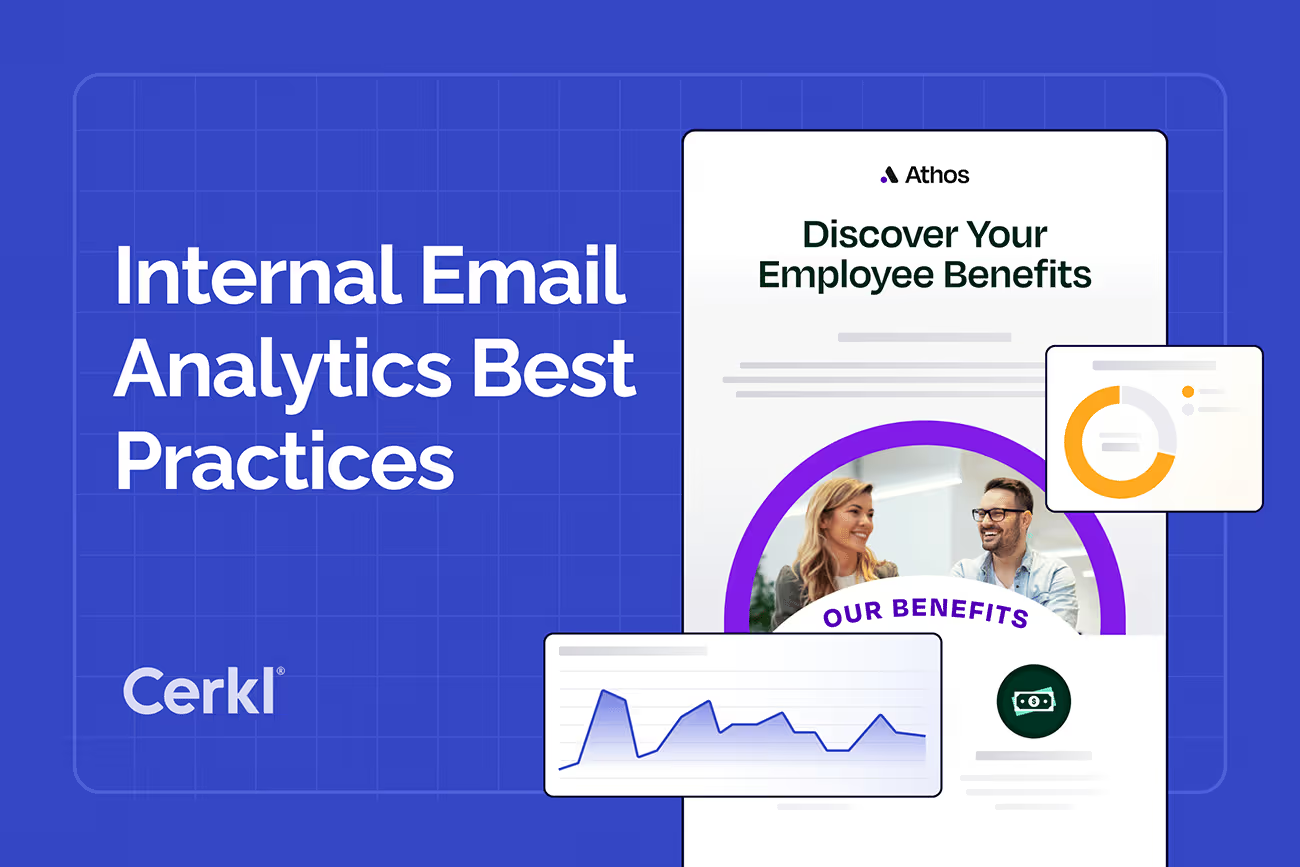
This article reframes internal email analytics to focus on metrics that matter for engagement and business outcomes. It discusses how to segment audiences, compare performance, and tie results to organizational goals. It guides communicators to move past surface metrics to insights that inform decisions. The focus remains on email measurement and improvement.
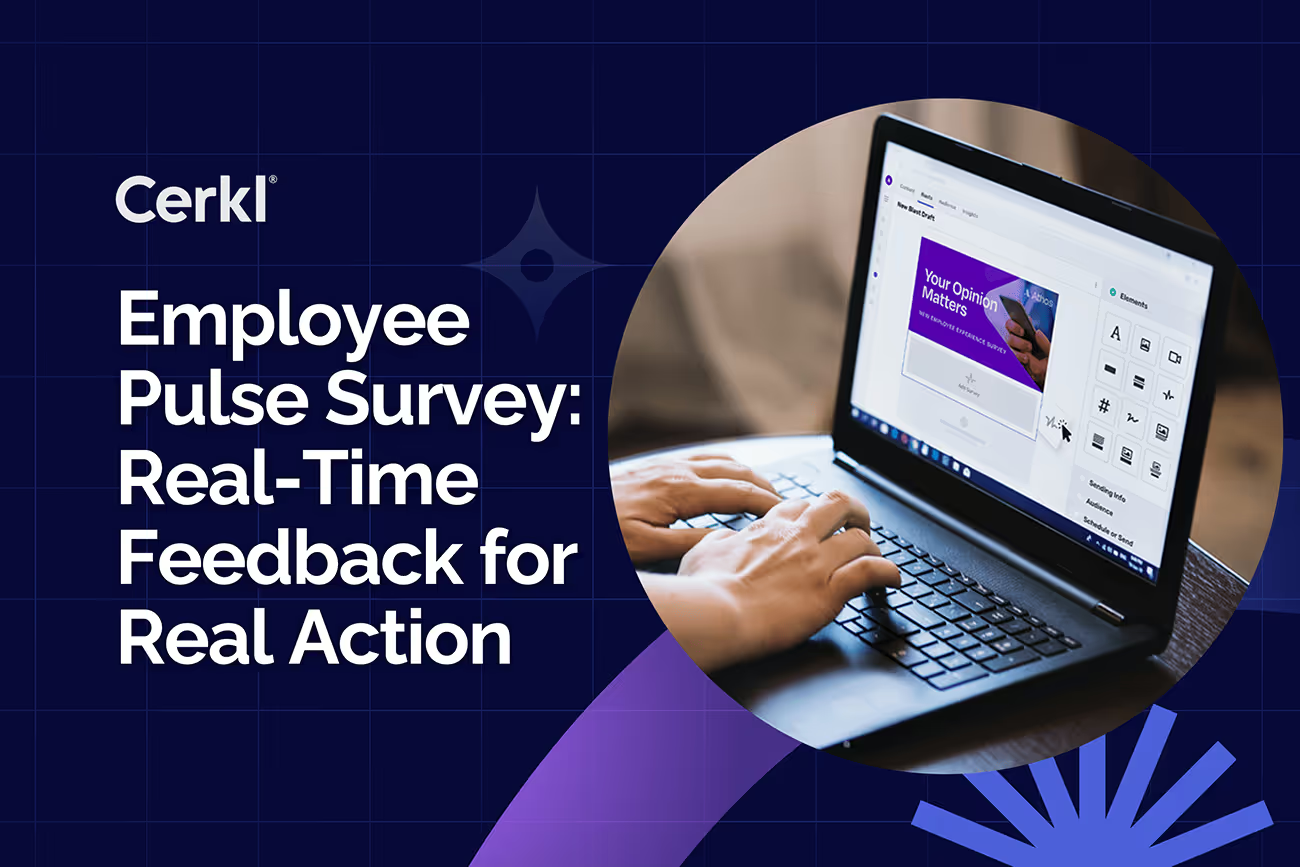
This article explains how to conduct employee pulse surveys and analyze results. It discusses frequency, question design, and follow-up actions. While surveys may be delivered via email, the focus is strategy and feedback loops. It serves as educational guidance.
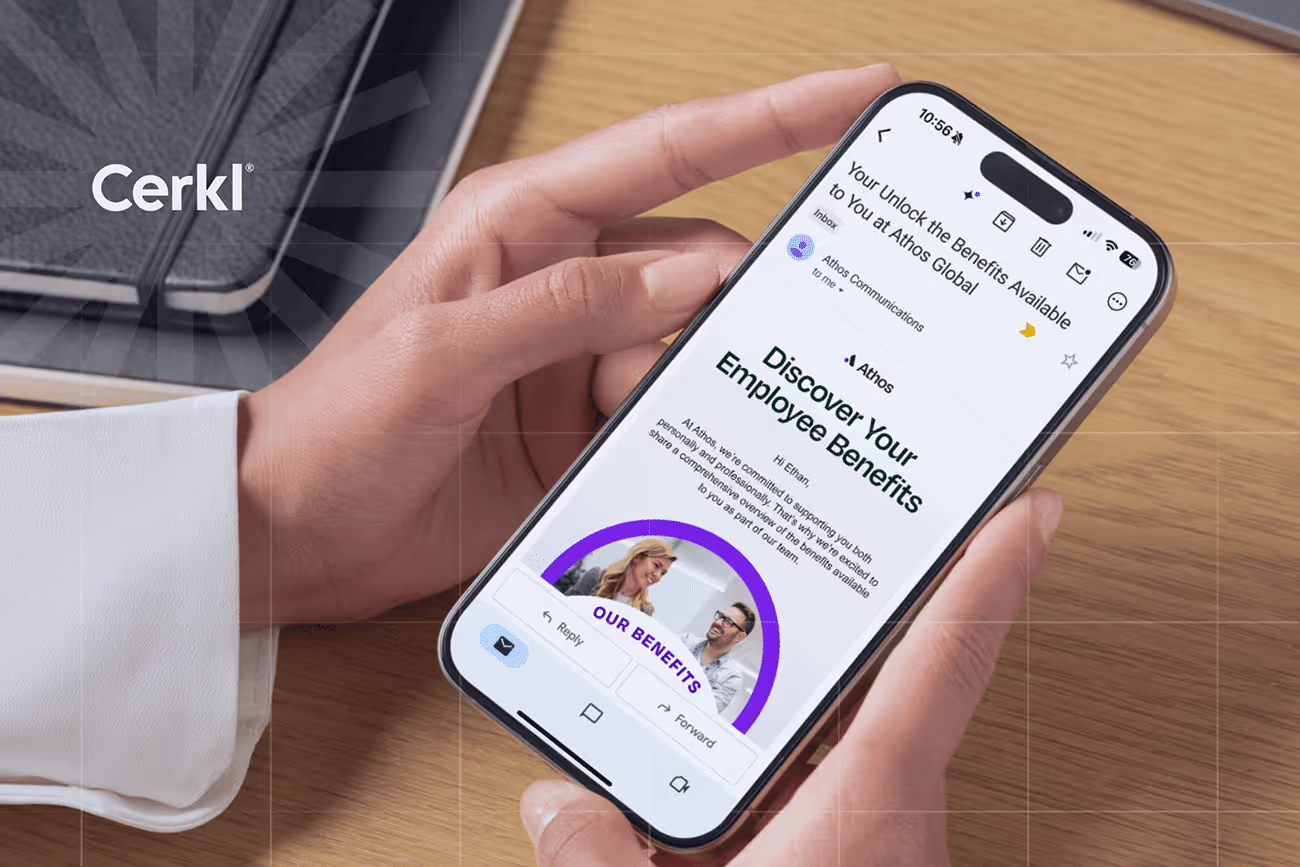
This article discusses optimizing internal emails for mobile viewing. It focuses specifically on email formatting and responsiveness. The challenge centers on email usability. It aligns with email execution optimization.
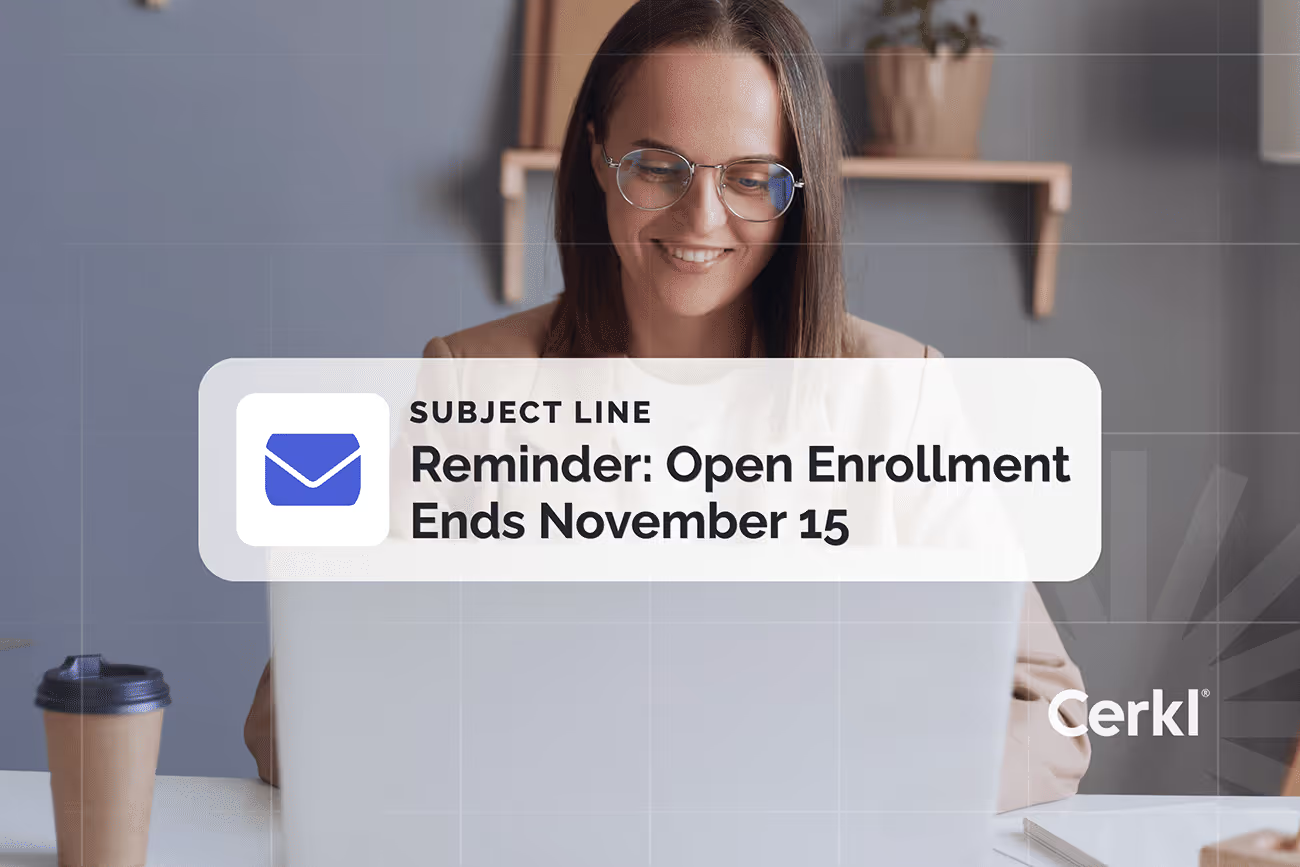
This article focuses on crafting effective internal email subject lines. The problem centers on improving email engagement. The solution remains email-focused. It aligns with Foundations.

This article discusses selecting cloud-based email communication tools. It centers on email delivery, scalability, and usability. The primary problem is optimizing internal email systems. The solution remains email-focused.

This article offers guidance and examples for writing holiday messages to employees. It emphasizes tone, gratitude, and inclusivity. The content focuses on message development rather than channel strategy. It is a creative planning resource.

This article explains two way communication in a way internal communications managers can apply quickly. It frames the core concepts, common pitfalls, and practical best practices. Use it to align stakeholders, improve clarity, and strengthen your communication program. It's primarily strategy and education, not tool-specific execution.
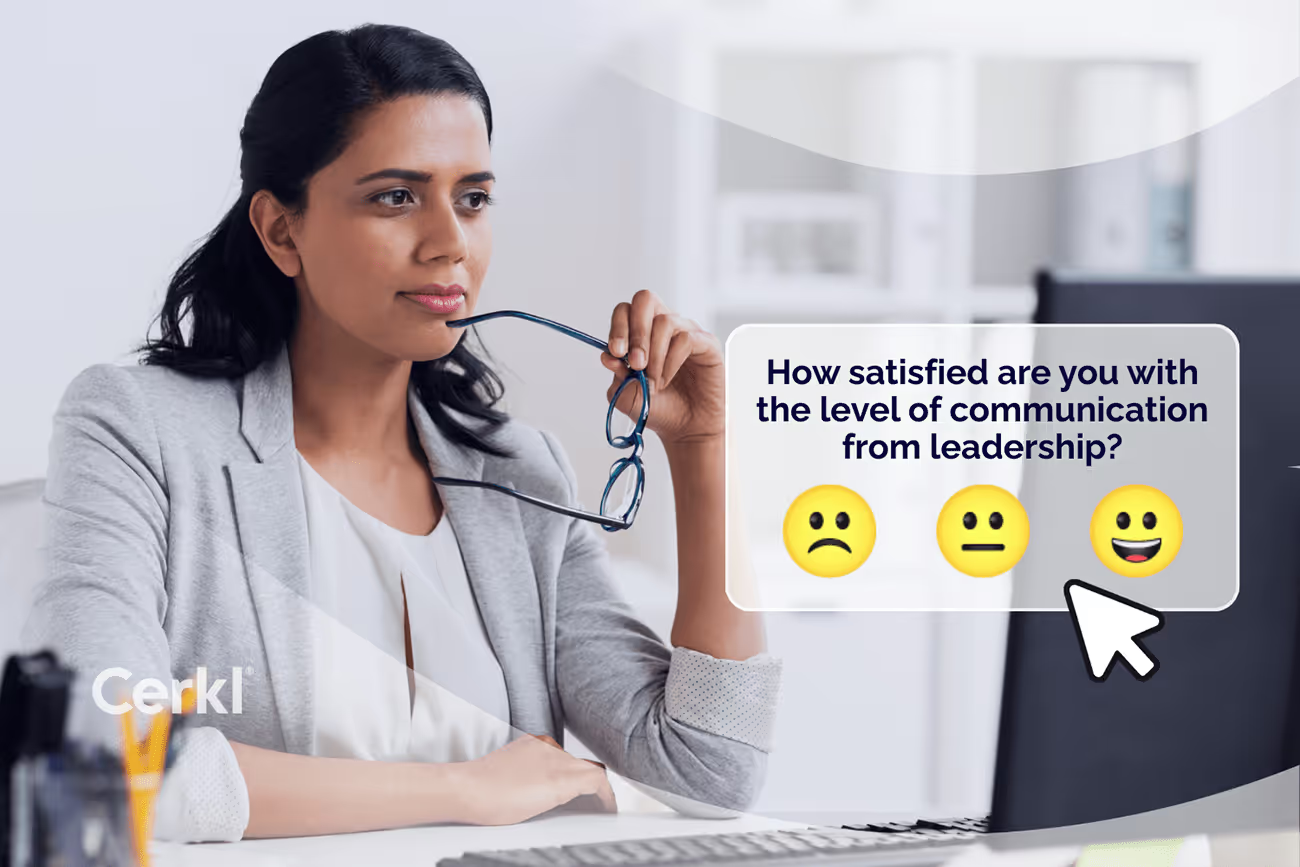
Engagement surveys fail when questions are vague and results go nowhere. This article provides 30 employee engagement survey questions across formats, audiences, and topics, plus clear design best practices. It also explains how to balance quantitative and open-ended questions and avoid bias. The takeaway: the survey is step one; impact comes from sharing results and taking visible action.

This article focuses on employee email overload as an internal email execution problem. It highlights practical tactics to improve deliverability, engagement, and consistency. Use it to standardize your approach, reduce manual work, and get better results from employee email. Ideal for teams relying on Gmail or Outlook as the primary channel.
Internal communications metrics show whether messages reach the right people and drive action. This article defines what IC metrics are, why many teams struggle to measure, and which data points matter most. It emphasizes aligning metrics to business priorities and using email engagement signals like opens and clicks. The takeaway: measurement builds credibility and improves results.

This article focuses on best time to send internal email as an internal email execution problem. It highlights practical tactics to improve deliverability, engagement, and consistency. Use it to standardize your approach, reduce manual work, and get better results from employee email. Ideal for teams relying on Gmail or Outlook as the primary channel.

This article explains employee personas in a way internal communications managers can apply quickly. It frames the core concepts, common pitfalls, and practical best practices. Use it to align stakeholders, improve clarity, and strengthen your communication program. It's primarily strategy and education, not tool-specific execution.

This article discusses communicating benefits enrollment updates. It references reminders and multi-channel outreach. Enrollment campaigns typically span channels. It aligns with omni-channel orchestration.
Protecting your organization from evolving cyber threats begins with implementing robust email security best practices to safeguard sensitive data and maintain employee trust. This guide explores essential strategies, from enforcing multi-factor authentication to utilizing advanced encryption and DMARC protocols, to defend against sophisticated phishing attacks. By prioritizing these security measures and fostering a culture of cyber awareness, you can ensure your internal communications remain a secure and reliable foundation for your business operations.

This article outlines metrics used to measure employee experience. It discusses surveys, performance indicators, and feedback loops. The focus is measurement frameworks rather than channel execution. It serves as educational strategy content.

This article explains internal communication benchmarks in a way internal communications managers can apply quickly. It frames the core concepts, common pitfalls, and practical best practices. Use it to align stakeholders, improve clarity, and strengthen your communication program. It's primarily strategy and education, not tool-specific execution.

Internal email fails when messages are unclear, poorly targeted, and too frequent. This article shares 17 best practices to improve readability, relevance, and employee engagement. It's designed for HR and internal comms teams trying to cut noise while increasing action. The takeaway: better structure and smarter targeting make email feel helpful again.